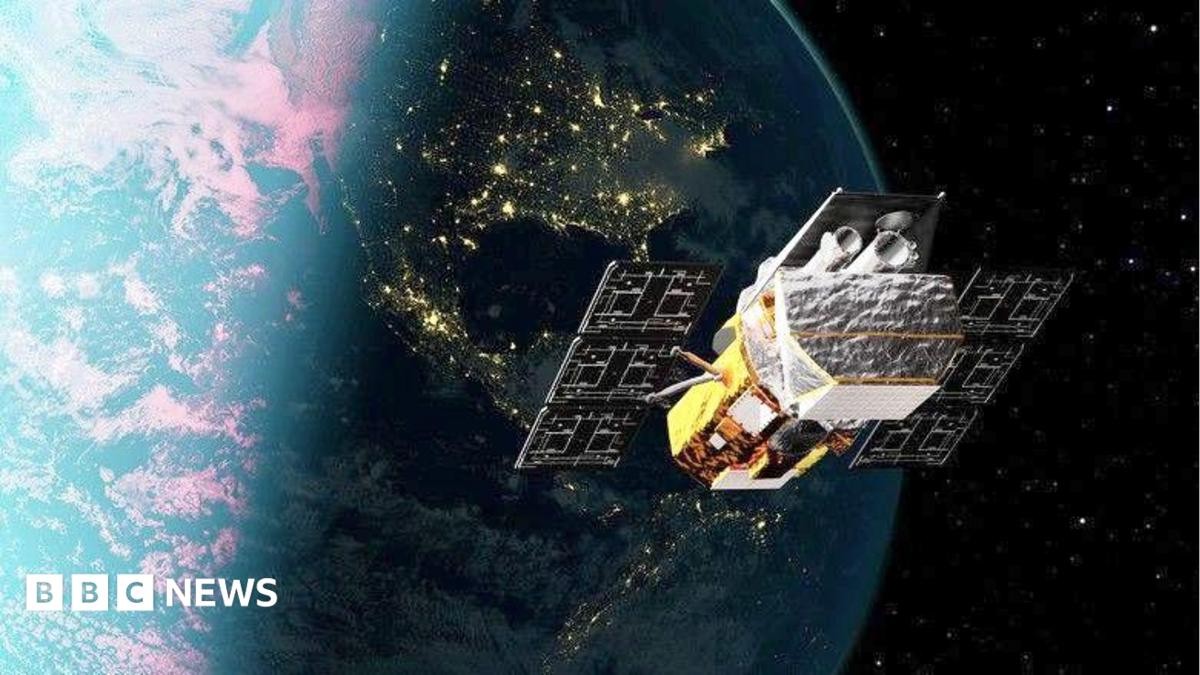
A Nasa-funded robot just went up. It has one job: catch a falling telescope before it crashes.
The target is Swift. An observatory built to see the loudest explosions in the universe. Right now though it’s dying. Solar activity pushed Earth’s atmosphere out. It dragged Swift down. Slowly.
It used to orbit at 370 miles high. Now? Down at 220. Most of that drop happened in two years.
Katalyst Space Technologies built the rescuer. A young firm from Arizona. They called the craft LINK. Launched Friday on a Pegasus rocket.
“What the team accomplished in eight months is extraordinary.”
Ghonhee Lee says they designed, built and tested a robotic spacecraft in under a year. Because Swift hits the “point of no return” at 180 miles. After that gravity wins. Always.
Why save it?
Swift studies gamma-ray bursts. When giant stars die violently. Or when their leftovers collide. In seconds they release more energy than our sun will in ten billion years. Brief moments. Swift has to be fast. Hence the name.
There is no backup for this telescope. It sees the dawn of the cosmos in ways nothing else can. So Nasa decided to throw a line out.
Is it risky?
Dr. Simeon Barber from the Open University says yes. “High risk.” But the science community is betting on it. The alternative is losing unique data capabilities. Forever.
LINK is small. Size of a fridge. But it has three arms. Cameras. Thrusters.
The first few weeks are quiet. Just waking up. Power checks. Navigation. Making sure the rocket ride didn’t break anything.
Then the chase begins.
Swift isn’t parked. It’s falling. The orbit shifts week by week. LINK has to hit a moving target while moving itself. Three to four weeks in they’ll meet up.
Approach slowly. Circle it. Take photos from every angle.
Swift hasn’t been touched since 2004. Two years is nothing to us but an eternity in orbit. Debris, weather, changes. Nobody knows exactly where the best grip is.
The engineers guess. Then LINK reaches out.
The arms extend. Grab the hull.
If that holds it’s over to the thrusters.
“It will be a very slow graceful lift not a sudden boost.”
Barber notes it won’t be a quick jump. Just a gentle haul over two months. From 220 miles up to 373. Back to safe water. Back to the sky.
A lot can go wrong. The catch might slip. The arms might not seal. Or the old hardware might just give up.
If they pull this off? We might look up and see another mission in the planning phase. For Hubble.