You want fireworks. The sun is offering something better.
Or worse, depending on how you look at grid infrastructure. Over the next few days, more than a dozen U.S. states could see the night sky turn into a canvas. It starts July 3. Peaks July 5.
The sun has been twitchy.
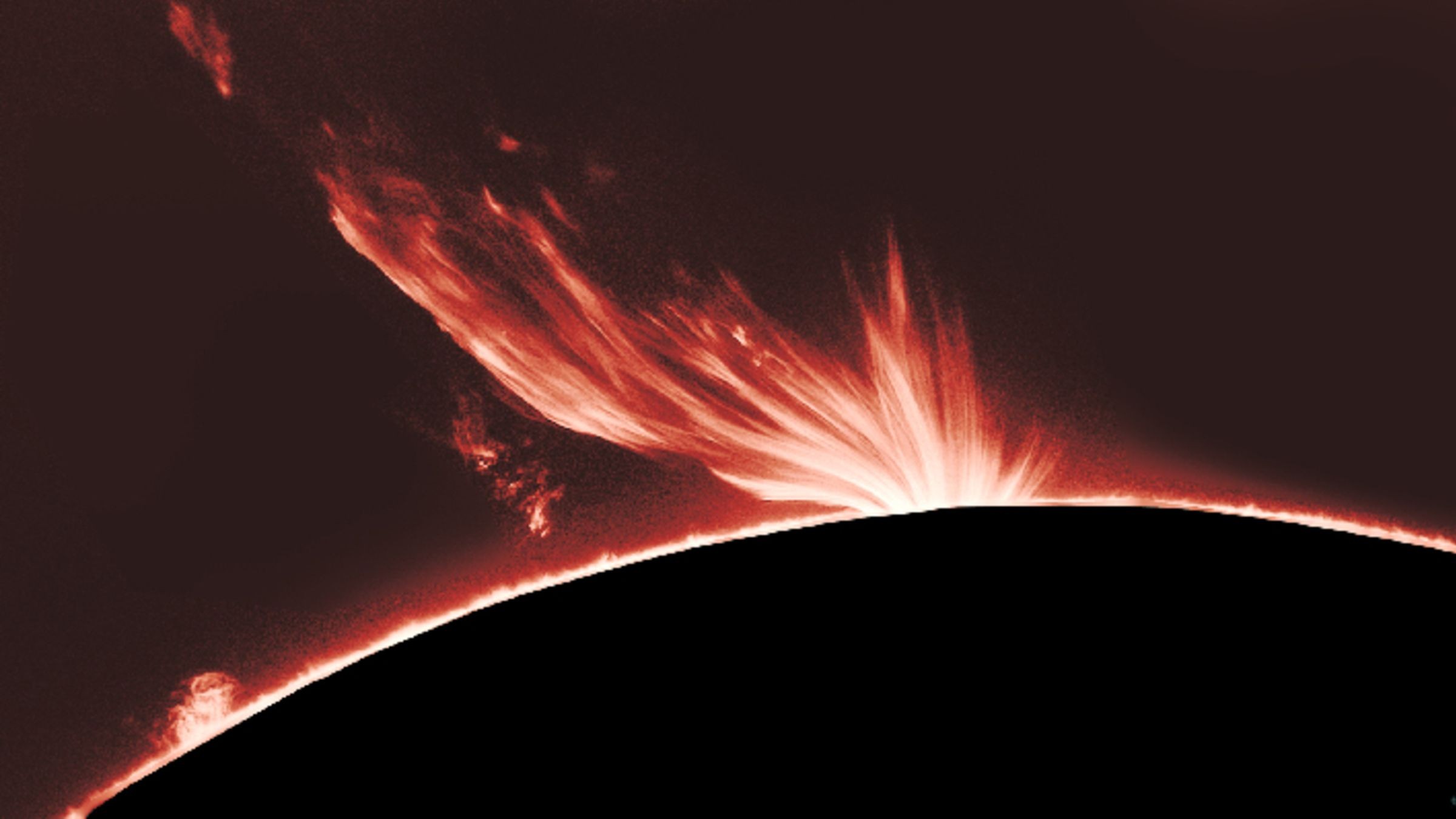
Hyperactive. In the last 24 hours, it fired ten M-class solar flares. That’s a lot of angry plasma. Each flare came with a Coronal Mass Ejection (CME). These aren’t small bursts. They are massive clouds of magnetized stuff moving fast. When kinks in the sun’s magnetic field snap, these CMEs shoot outward. If they hit us? Trouble. Or beauty.
Usually, auroras stay near the poles. Not this time.
Tamitha Skov, who tracks this stuff at Millersville University, called it “Machine-Gun Sun” on X last week. She isn’t kidding.
“Machine-Gun Sun! More than on their way… 3 of them offer good choices for aurora views”
NOAA models are struggling to keep up. There are too many storms launching at once. The first big one hits Earth before noon UTC on July 3.
What does that mean for you?
Probably a moderate storm. G2, maybe. If the angles align just right, it could punch up to a G3. A glancing blow from a giant magnetized fist.
If you see green light over your living room, you are probably in one of these spots:
– Northern Washington, Idaho, Montana
– The Dakotas and Minnesota
– Michigan, Wisconsin, New York
– Maine
But maybe farther south? Maybe Oregon. Maybe Ohio. Maybe Illinois. The forecast isn’t tight, so get out of the city. Artificial light kills the show. Go dark. Go north.
This weekend is just the start.
Two massive sunspots are sitting on the solar surface right now. They have “beta-gamma-delta” magnetic fields. That code means the fields are tangled messes. Unstable. They can launch X-class flares. The big ones.
We saw some of those last year. Remember the Mother’s Day storm? That was X-class. The sun is near its solar maximum—the peak of its 11-year cycle. It’s supposed to calm down after this peak. Instead, it’s entering what experts call the “battle zone.”
A phase where the magnetic field flips and everything goes weird. More holes in the sun. More twisted sunspots. More storms.
Could we see the end of the world? Probably not. But we could see something scary.
In 1859, a solar superstorm hit Earth. The Carrington Event. It sparked fires in telegraph stations globally. Auroras lit up the sky down to the Caribbean. Brighter than full moon light. That was an X45 flare.
Scary? Yes.
Ancient tree rings suggest even bigger blasts have happened before humans invented batteries. We don’t have a good baseline for the absolute worst. Just keep your head up. Or down, if you are worried about your phone service.
What would you do if the sky burned blue over your kitchen table?