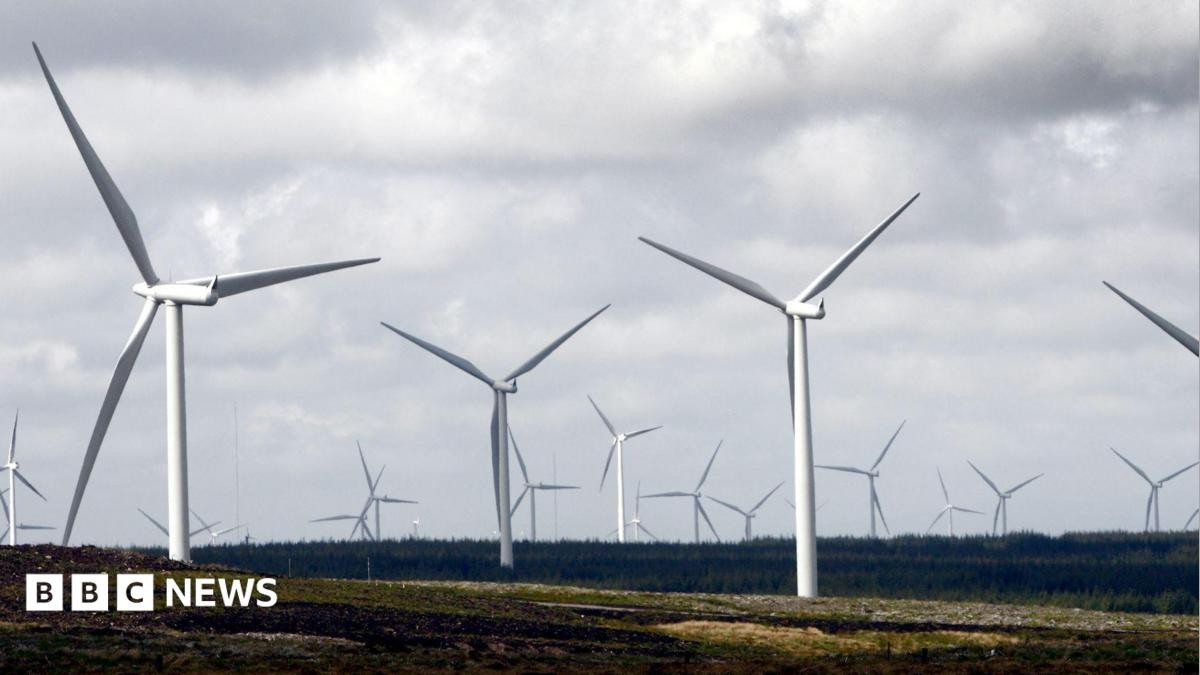
The landscape near Glasgow is about to change. Not with new towers popping up like mushrooms after rain, but by taking down the old to build the new.
Whitelee, Europe’s largest onshore wind farm, is entering its next chapter. Owner Scottish Power Renewables announced a £1.5 billion overhaul. They aren’t just patching it up. They are stripping it down.
The plan is stark. Fewer turbines. But they will be massive.
The Mechanics of Repowering Whitelee
Scottish Power’s proposal is aggressive. The current 215 turbines, which have hummed along the moors south of Eaglesham for two decades, are reaching their limit. Metal fatigue doesn’t care about nostalgia.
The replacement strategy involves roughly 124 new units.
That’s fewer than half the current number. Yet, they will be taller. Significantly. Each new tower will stand about 110 meters high. That is 361 feet of steel piercing the Scottish sky.
Why the height? Wind is stronger higher up. Consistent. Unbroken by trees or terrain friction. By going vertical, the farm doubles its capacity.
Output jumps from 539 megawatts. To 1 gigawatt.
Enough electricity to power approximately 650,000 Scottish homes. That’s a city the size of Dundee, running on breeze alone.
Why Now? The Critical Timeline
The first phase opened in 2009. Alex Salmond cut the ribbon then. Back then, Whitelee was the largest onshore site in Europe. It started with 140 turbines. Expanded twice to reach today’s 215.
But machines age. Maintenance costs creep up. Efficiency drops.
Charlie Jordan, chief executive of Scottish Power Renewables, puts it plainly: “It’s important we don’t go in reverse.”
The push for homegrown green energy is at a fever pitch. Losing capacity as these old birds expire is not an option. They are preparing for the end of the natural lifespan before it arrives.
The timeline is set. Ten years.
Application to the Scottish government’s energy consents unit is already underway. A full planning application should hit desks by late next year. Target: fully operational by 2035? The project expects it.
Keith Anderson, Scottish Power’s CEO, isn’t shy about the vision.
“If we increase the size of the site… we generate more renewable power… which is a brilliant thing.”
He addresses the visual concern. Yes, the new towers will loom. But look at the context. This is 83 square kilometers of open moorland. Formerly covered in commercial forestry. Most of that’s gone now. The land has reverted to a more natural state.
It’s not a cluttered forest. It’s an open canvas.
Access, Environment, and the Ripple Effect
One of the biggest hurdles with wind farms is public access. Do you shut down the footpaths to pour concrete for new foundations? Not at Whitelee.
The repowering will happen in three phases. The site stays open.
Walkers can still wander between the towering structures. The visitor centre remains. Dog walkers? They still have their trails. This phased approach minimizes disruption to one of the UK’s most iconic tourist attractions.
It covers an area half the size of Glasgow city. It’s not hidden in a valley. It’s right there, under the sky.
And it’s not just Whitelee doing this. The industry is waking up to a reality: turbines die.
Last year, Hagshaw Hill in South Lanmarkshire underwent a similar swap. 26 old units out. 14 big ones in. Whitelee will be the largest project of its kind to replace 100% of its fleet.
Scottish Power promises 99% of materials will be recycled. That’s a number that matters when you’re dismantling structures of that scale.
The Bigger Picture for Britain’s Grid
Analysts at Regen predict a tsunami of end-of-life wind farms. Over half of Great Britain’s current onshore capacity will expire within the next decade.
Repowering isn’t just a choice. It’s a necessity.
It creates a pipeline of construction jobs. It boosts energy security. Scottish Renewables’ CEO Angela Hepworth calls it a “huge opportunity.”
“Modern turbines can generate significantly more electricity from existing sites.”
Think about that. No need to find new land. No new planning battles for new locations. Just upgrade what’s already plugged in. It helps Scotland maximize its abundant resources.
Economically, the Whitelee project alone is projected to inject £330 million into the Scottish economy. Jobs. Supply chains. Local spending.
It’s a shift from quantity to efficiency. Fewer blades. More power. Less visual clutter.
The wind is still blowing over Eaglesham Moor. Just a little differently than it was in 2009.