New research into a Greek volcano suggests that our current methods for classifying extinct volcanoes may be flawed. By analyzing microscopic crystals deep within volcanic rock, scientists have discovered that even when a volcano appears silent for hundreds of thousands of years, intense volcanic activity may still be brewing beneath the surface.
The Methana Discovery
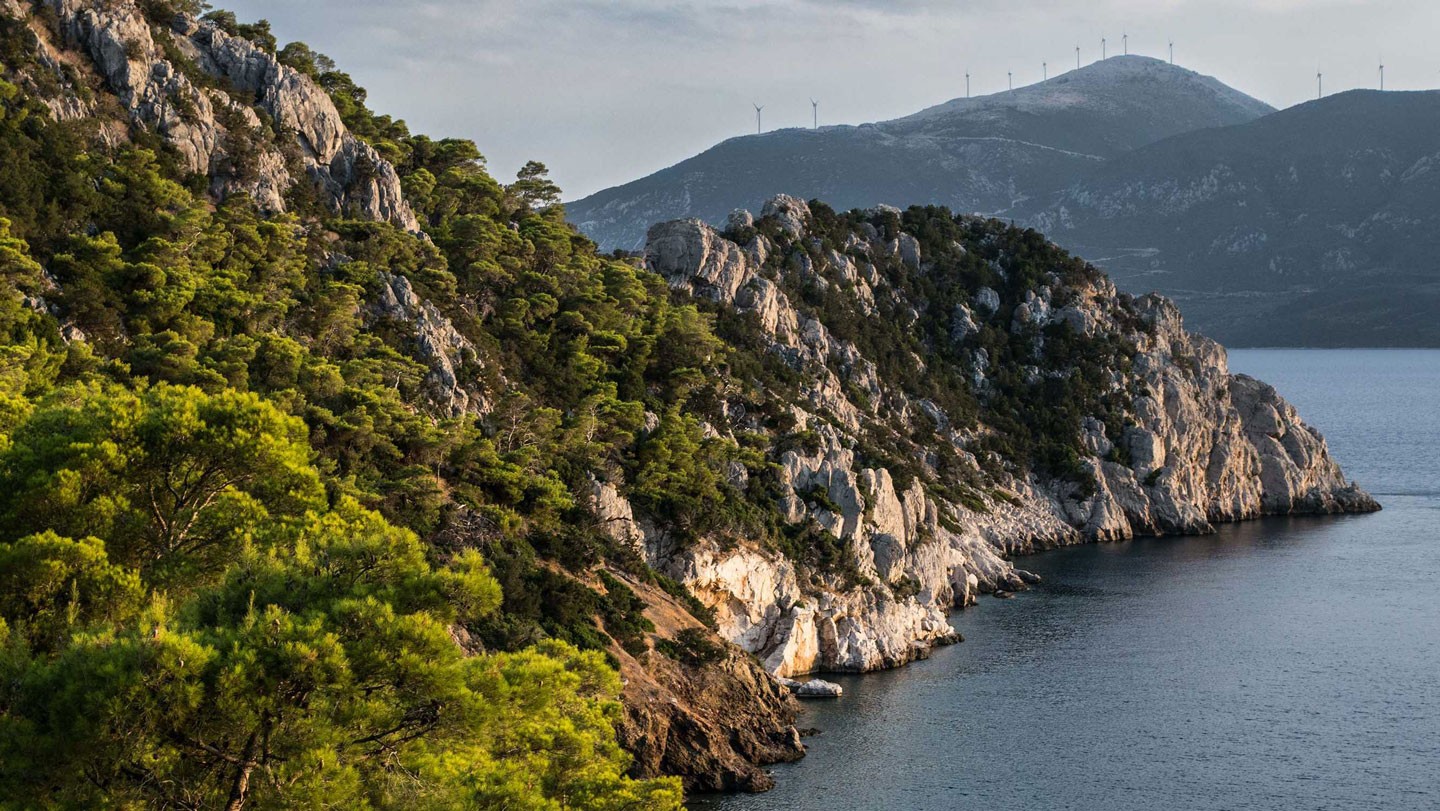
For over 100,000 years, the Methana volcano —located approximately 50 kilometers from Athens, Greece—showed no signs of surface activity. Under traditional geological classification, a small volcano that has not erupted for 10,000 years is often labeled “extinct.” However, a study published in Science Advances reveals a much more complex reality.
A research team led by Razvan-Gabriel Popa from ETH Zurich utilized zircon crystals to reconstruct the volcano’s history. Because these crystals form in deep magma chambers and are carried to the surface during eruptions, they act as a geological “time capsule.” By dating more than 1,250 samples, the team mapped a 700,000-year timeline of Methana’s life cycle.
The findings were unexpected:
– The volcano experienced two primary eruptive periods.
– Between these periods—a gap of roughly 112,000 years—the researchers found the highest concentration of zircon generation.
– This indicates that while the surface was quiet, magma was actively accumulating and crystallizing deep underground.
The “Fizzy Drink” Effect: Why Volcanoes Go Silent
The study raises a critical question: if magma is brewing, why doesn’t it reach the surface? The answer appears to lie in the chemistry of the magma, specifically its water content.
At high pressures deep within the Earth, water helps keep magma in a molten, fluid state. However, as magma begins to rise toward the surface, the pressure decreases. This causes dissolved gases to escape—a process Razvan-Gabriel Popa compares to opening a bottle of carbonated soda.
“It’s like a fizzy drink. We open the bottle, and — psssshht — all the gas comes out.”
As this water vapor escapes, the magma loses its fluidity. It becomes highly viscous (thick) and eventually stalls, solidifying before it can ever break through the crust to create an eruption. This suggests that a volcano’s “silence” might not be a sign of death, but rather a sign of trapped, thickening magma.
Redefining Volcanic Risk
This discovery has significant implications for how geologists monitor volcanic hazards. If a volcano’s eruptive cycle is dictated by water content and pressure rather than just the time elapsed since the last eruption, our current risk assessments may be incomplete.
Why this matters for global safety:
- Reclassification: Scientists may need to reevaluate “extinct” volcanoes that show signs of subterranean chemical activity.
- Targeted Monitoring: Understanding the relationship between magma chemistry and eruption cycles could help identify which quiet volcanoes are actually “threats in waiting.”
- Predictive Modeling: By studying how water affects magma viscosity, researchers can better predict when a stalled magma chamber might become unstable enough to erupt again.
As noted by Adam Kent of Oregon State University, there are likely volcanoes currently deemed safe simply because they haven’t erupted recently, even though they remain geologically active.
Conclusion
The study of the Methana volcano proves that surface inactivity does not equal geological death. By understanding the complex chemistry of underground magma, scientists can better identify “sleeping” volcanoes that may pose a future risk to human populations.