Forget land. The new king of the hill is in the ocean.
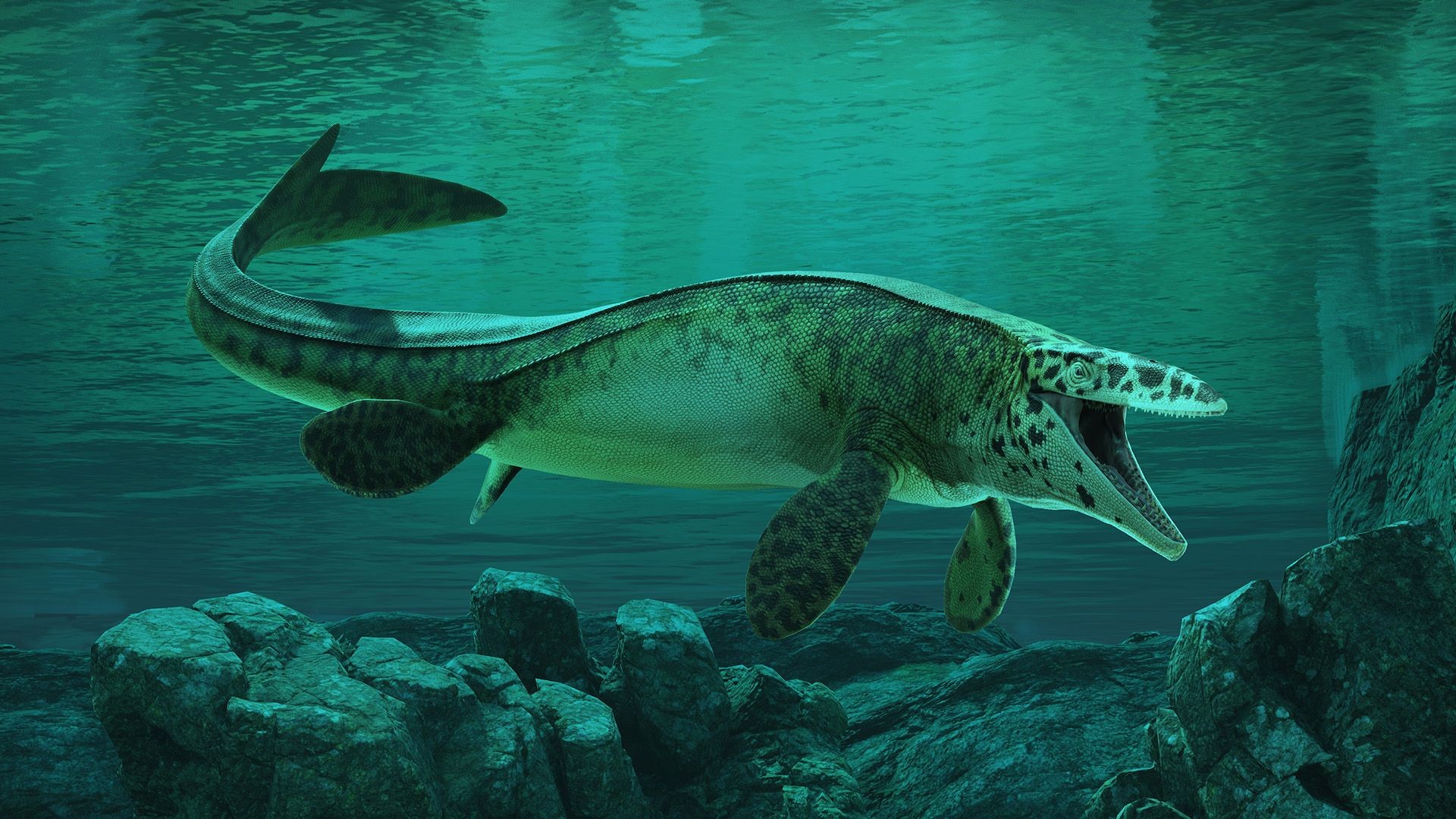
Scientists just described a massive mosasaur that swam alongside dinosaurs. It belongs to the genus Tylosaurus. But don’t call it by its family name alone. This one gets special treatment. Tylosaurus rex.
Or just T. rex for short.
It fits into the “king of the lizards” brand perfectly. The species name literally means king of the tylosaurs. An 80-million-year-old specimen from Texas. Found decades ago, but only recently understood.
The size? Forty-three feet long. About as big as a tour bus. Teeth that look like saw blades. Jaws strong enough to crush bone. And scars from fights with other T. rex.
“Everything is bigger in Texas.” Apparently that rule applies to extinct marine reptiles too. Amelia Zietlow from the American Museum of Natural History isn’t exaggerating. She found the clues in old fossil drawers.
It was hiding in plain sight
Here’s how it went wrong for so long. Zietlow was looking at a fossil labeled Tylosaurus proriger. It’s a standard species. Described back in 1869. She thought the specimen didn’t match. It felt… off.
It came from a reservoir near Dallas. Found in 1979. She compared it to the original proriger skeleton at Harvard. Big mistake. This one wasn’t proriger. It was something new. Something bigger. Something later.
Twelve other fossils in different museums made the same mistake. They got labeled proriger for decades. Wrong tag. Right fossil.
The new T. rex was 13 feet longer than the imposter. It lived 4 million years after the other guys. Those other fossils came from Kansas and were older. This Texas crowd arrived 80 million years ago in the Western Interior Seaway. That strip of ocean went all the way to the Arctic. Lots of sharks. Lots of reptiles. Room to grow.
Violent by design
The anatomy doesn’t lie. T. rex built for impact. Huge jaw muscles. Neck thick enough to handle the shock. It didn’t just eat. It dominated.
One skeleton in Dallas goes by the nickname “the Black Knight.” Look at its face. The snout is missing. The lower jaw is shattered.
Did a shark do that? Unlikely. Another T. rex probably bit it. Hard.
We rarely see intra-species violence in these fossils. But here? It’s all over the bones. Ron Tykoski at the Perot Museum isn’t guessing. The damage patterns are specific. Brutal.
It suggests these giants didn’t just hunt fish. They hunted each other.
A name change changes everything
Now the famous specimens have new addresses. “Bunker” at the University of Kansas. “Sophie” at Yale. They were once called proriger. Now they are rex.
It’s poetic. In the 60s, John Thurmond looked at Texas fossils and guessed they were a sea tyrant. He called them Tylosaurus thalassotyragnus unofficially. He was right. Decades too early.
Funny thing about names. Land T. rex almost wasn’t T. rex. It might have been Manospondylus gigas if Edward Cope hadn’t named a few ribs first in 1892 incomplete fragments don’t make for great branding. The name T. rex stuck because the land one is cool. Now the water one borrows the cool factor.
Does it matter? Maybe not to you. But the study does more than rename bones. It points out that paleontologists have been using the same data models for thirty years. Same tree. Same assumptions. Stale.
Zietlow says we need to modernize the toolkit. Rebuild the family tree. Question what we think we know about these reptiles.
It’s not just about a fancy label. It’s about admitting we were blind for a while. The king is real. And he was fighting for it.
What else have we missed sitting in storage?