It smells like a rainforest in Brighton now.
Stanmer Park is hiding something. Well, hiding less and revealing more, really. Tucked behind the historic stone facade of Stanmer House stands a Victorian palm house. It spent years crumbling, neglected, left to the elements. Then, not too long ago, someone decided it could do more than just collect moss.
BBC Radio Sussex popped by before the grand opening. The place wasn’t exactly ready. Not fully. But you could feel the work happening. Plastic strip curtains hang at the entrance, flapping in the draft. You step through them. First comes the hit of air—hot, wet, heavy. Eighty percent humidity, thirty degrees. Your hair might frizz immediately. Then, the color. Flowers everywhere. Plants reaching out.
The butterflies haven’t been let loose yet.
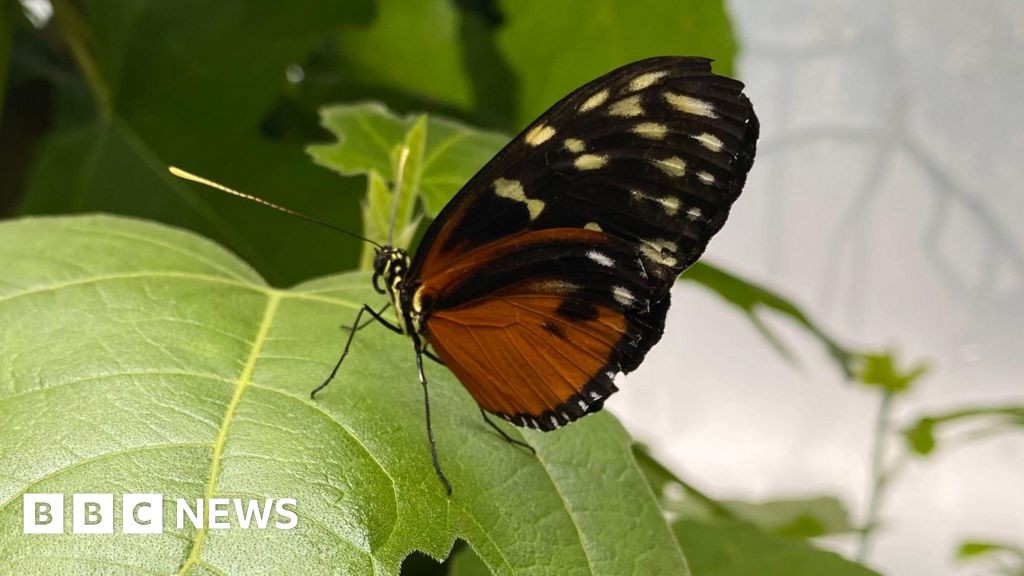
Matt Simmonds, who founded the Sussex Butterfly House, watches the final touches being laid down. He sees a classroom waiting to breathe. Once the nets come off, thousands of creatures take to the air. Up to three thousand, he says. It’s a lot of wings in a small space.
“You walk in,” Matt explains, “and you’re in a jungle.”
Not just a visual trick. It feels like one. He wants visitors to wander around Stanmer Park itself, seeing species from every corner of the globe flit past their faces. The star show? The blue morpho. Native to Central America. Its wings are an iridescent blue that seems to change depending on the light, darting through the humid air. It’s the highlight.
But wait. Is this just for tourists?
No. That’s only half the story. Matt isn’t just selling tickets. He’s teaming up with Plumpton College. The space is a living classroom. Students studying tropical invertebrates need to know how these environments actually work, not just read about them in a dry textbook.
Hands-on. Real dirt, real heat, real bugs.
Beth Brockwell, a former Plumpton student and now a project director, pushes this angle even harder. Education isn’t a buzzword here; it’s the goal. Conservation ties into it all.
“We need to make people aware of what happens behind the scenes,” Beth says. She points to a hard truth. Without pollinators—butterflies included—the food chain breaks. No flowers. No food. No plants. Simple cause and effect.
Without butterflies, there’s no food, no flowers.
The public can step inside on May 23. Until then, the butterflies wait in their nets. The house hums with preparation.
It’s an unusual spot for a tropical rainforest experience in Sussex, but that’s the point. Nature adapts. So does a derelict Victorian building.
Who knew you’d need a greenhouse to understand hunger?