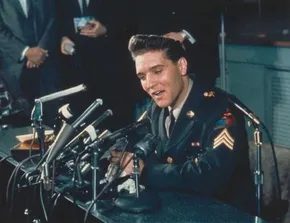
The moment Elvis Presley stepped off that plane in 1960, reporters swarmed him. They wanted to know if he was coming back to rock ‘n’ roll. He told them yes. “As long as people wanted it,” he said.
He lied. Or at least, he didn’t mean it the way they thought.
Elvis and Colonel Tom Parker had a different plan. They were going to use the exact same machines that built his fame—records, TV, movies—to dismantle the rock and roll rebel image entirely.
The Rock Scene Was Burning Down Anyway
Let’s be clear. Rock and roll in 1960 wasn’t the cool, rebellious force it had been in 1958. It was a mess.
Little Richard was fighting the IRS. Chuck Berry got arrested for violating the Mann Act. Jerry Lee Lewis? He married his 13-year-old cousin while still legally married to someone else. That scandal didn’t just hurt Lewis; it painted the entire genre with a brush of degeneracy.
Then came the deaths.
Buddy Holly. Ritchie Valens. The Big Bopper. Eddie Cochran. Gone in a single plane crash. It was a vacuum. And into that vacuum stepped the ballad singers. The frenetic energy of early rock was dying out, replaced by smoother, safer sounds. Magazines in 1958 were already cheering for this shift.
When Elvis returned, the headlines screamed “The Army’s Made a New Man Out of Elvis.” The Colonel took that good publicity and ran with it. He sold a mature, safe Elvis. One that wouldn’t scare suburban moms.
Critics call this a decline. They miss the point. It was a calculated business move. They traded notoriety for mass appeal. And financially? It worked perfectly.
The symbol of this death? The haircut.
Elvis had his famous ducktail shorn for induction. He never grew it back. Not ever. That was the end of the rebel.
The First Session Wasn’t With The Usual Suspects
Two weeks after discharge, Elvis flew to Nashville. First recording session in almost two years.
He brought Scotty Moore and D.J. Fontana. Old friends. But Bill Black was gone.
Black had been the bassist for years, the glue of that early Memphis sound. But he quit in late 1957. Why? Money.
Scotty and Bill were making $100 a week in Memphis. $200 on the road. In 1957 dollars, that was tight. The Colonel kept wages low. Elvis wasn’t known for generous paychecks to his crew. Black formed the Bill Black Combo and scored a hit with “Smokie” in 1959. He moved on.
Moore and Fontana stayed, but on different terms. Moore worked freelance until 1969. Fontana had a separate deal that gave him more freedom.
Building the Pop Sound from Scratch
Elvis didn’t just record with his old band. He hired Nashville pros.
Floyd Cramer on piano. The Jordanaires on backup vocals. This wasn’t the raw, garage-band sound of Sun Records. This was polished. Studio-crafted.
The first track? “Stuck on You.” B-side: “Fame and Fortune.”
He rushed back to RCA in early April to finish the album. By late April, Elvis Is Back! was out. RCA had recorded, cut, and pressed the album in less than two months. It was everywhere.
This wasn’t a return to form. It was a new form. The rock and roll cat was dead. The pop star was alive and well.