After nearly a week of mechanical friction and strategic maneuvering, NASA’s Curiosity rover has successfully dislodged a stubborn rock that became stuck to its robotic arm. The incident, which began in late April, highlights the unpredictable nature of field operations on Mars, where even routine drilling tasks can turn into complex engineering challenges.
The “Atacama” Incident
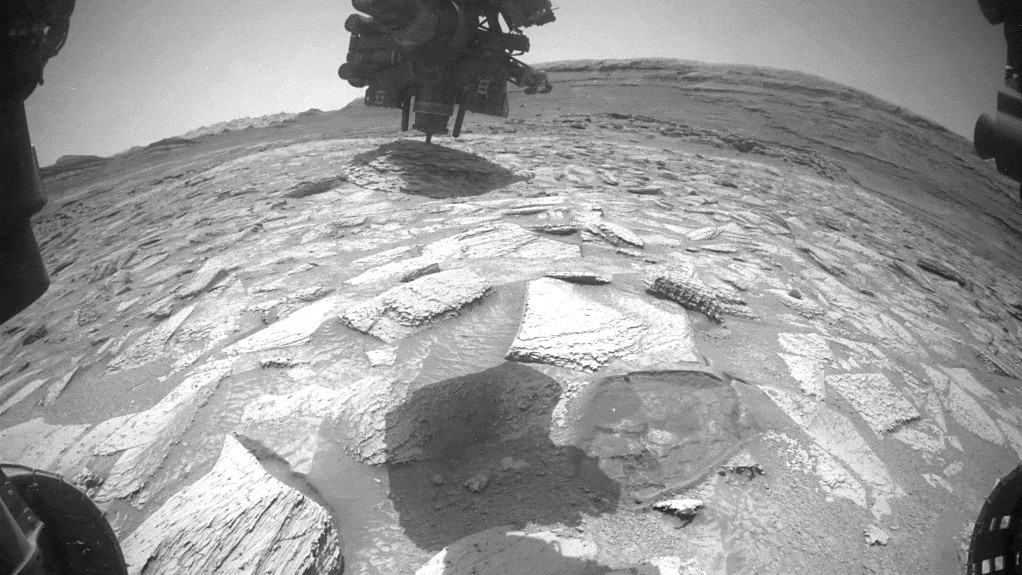
The trouble started when Curiosity targeted a rock named Atacama —named after the Chilean desert on Earth—for analysis. Located on the slopes of Mount Sharp within Gale Crater, the rock appeared to be an ideal candidate for study. It measured approximately 1.5 feet (46 centimeters) in diameter and weighed roughly 28.6 pounds (13 kilograms).
On April 25, the rover attempted to drill into Atacama to collect powder samples for its onboard chemistry laboratory. However, the operation took an unexpected turn. Instead of leaving the rock intact while collecting dust, the drilling process fractured the rock’s upper layers. When the rover retracted its arm, the entire rock lifted out of the ground, suspended by the fixed sleeve surrounding the rotating drill bit.
“Drilling has fractured or separated the upper layers of rocks in the past, but a rock has never remained attached to the drill sleeve,” NASA representatives noted in a statement.
This created a unique logistical problem: the rover was effectively carrying a heavy, unsecured payload that could damage sensitive equipment or obstruct future movements.
A Week of Mechanical Maneuvers
The team controlling Curiosity from Earth immediately began developing a strategy to free the drill bit. The process, described by senior research scientist Bill Farrand as a “struggle,” involved several days of trial and error:
- April 25–28: Initial attempts focused on vibrating the drill to shake the rock loose. These efforts failed to dislodge the main mass, though they did remove some smaller, sand-like fragments.
- April 29: The team combined vibration with reorienting the robotic arm. Again, the rock remained firmly attached.
- May 1: The final strategy involved tilting the drill more aggressively while simultaneously rotating, vibrating, and spinning the drill bit.
The plan was to repeat this process multiple times, but success came on the very first attempt. The rock dislodged and fell back to the Martian surface. Images confirmed that Atacama fractured into at least two pieces upon impact.
Unfortunately, the incident resulted in the loss of the intended sample. The drill tailings—powdered rock meant for chemical analysis—were lost during the dislodging effort. Consequently, the Curiosity team is now searching for a more stable, firmly rooted target to collect new samples.
Context: A Busy Period for Curiosity
While the Atacama incident was a setback, it occurred during a particularly productive period for the rover, which has been exploring Mars since 2012. In recent months, Curiosity has made several significant discoveries that bolster the search for ancient life on the Red Planet:
- Organic Molecules: In late April, researchers announced the detection of seven organic molecules in a single sample—the largest haul of its kind on Mars. This followed the discovery of a “giant string” of hydrocarbons in February.
- Geological Features: In early April, the rover captured images of ground textures resembling “dragon scales.” Earlier, in March, it found ruby-like crystals within rocks similar to Atacama.
- Boxwork Structures: Prior to these findings, Curiosity spent over six months studying “boxwork” features—ridge-like formations resembling rocky spiderwebs. Recent analysis revealed these structures are covered in tiny, egg-like formations.
Conclusion
The loss of the Atacama sample is a minor setback in the grand scheme of Curiosity’s mission, which continues to yield high-value scientific data. The incident underscores the delicate balance between aggressive data collection and equipment preservation in extraterrestrial exploration. As Curiosity moves on to new targets, it carries with it a wealth of organic and geological clues that continue to reshape our understanding of Mars’ ancient environment.