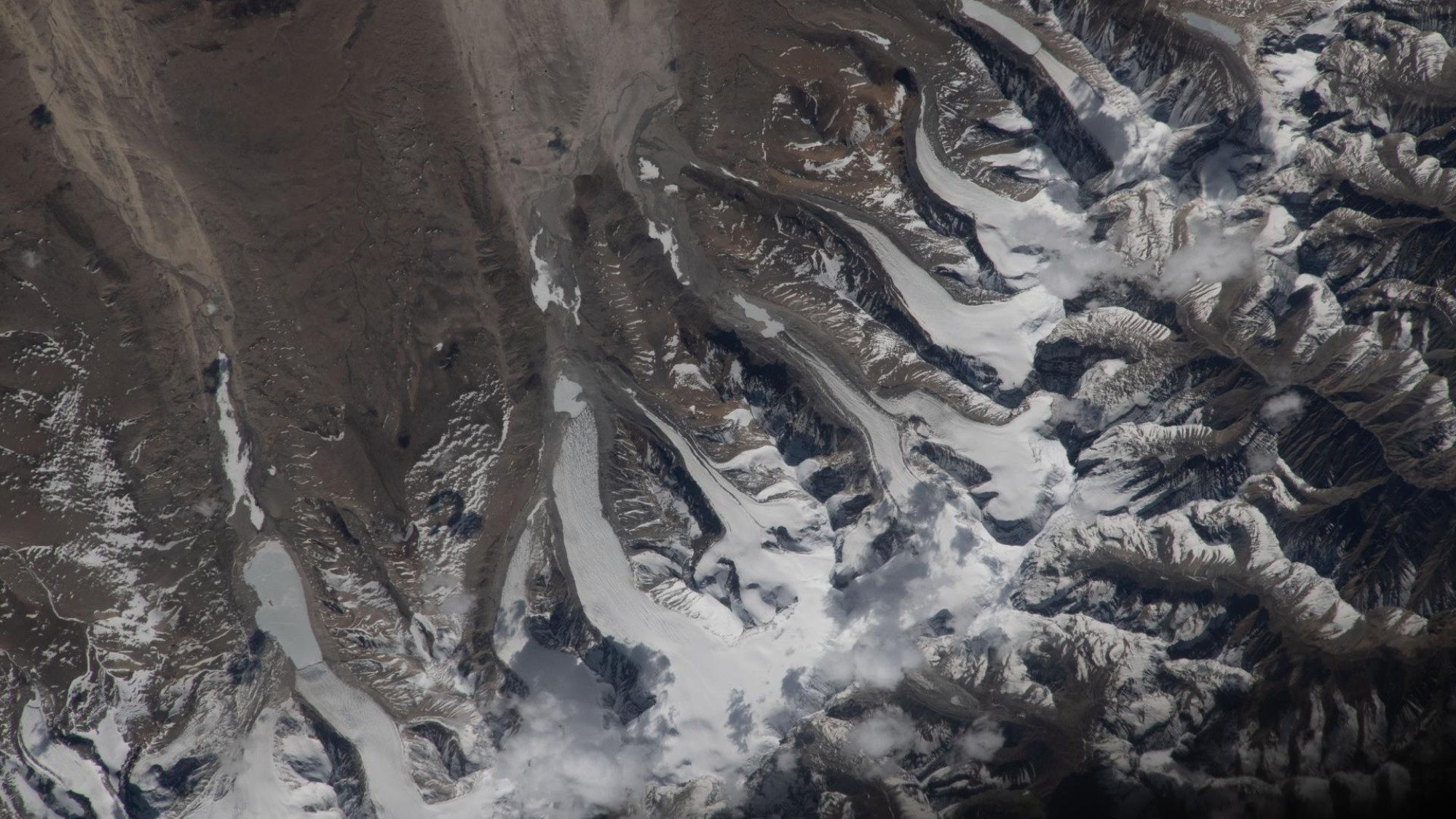
Jessica Meir snapped this one from orbit. 259 miles up, to be precise.
In May 2026, while docked to the ISS, the NASA astronaut looked out the window. She raised her camera. Captured a view that basically only space offers.
Towering glaciers. Icy giants. They flow down the northern slopes of the Himalayas like frozen rivers crashing onto the Tibetan Plateau in China.
What does that actually mean for us on the ground?
It’s perspective. From below, mountains feel static. Heavy. Still. Up there? You see them moving. Slow-moving, sure, but moving nonetheless. Carving their way down the rock.
This is the northern edge. Separating Nepal from the Chinese highlands.
The scale is wild. We are talking about the highest mountains on Earth. Everest sits there. But it’s not just one peak. There are over 110 of them sticking above 24,000-feet (7,315-meters) altitude.
The range itself? Roughly 1,500-miles (2,400-km) wide. Stretching across five countries—Nepal, India, Pakistan, China, and Bhutan. A massive geographic divider.
Why take the picture from space?
You can’t get this angle otherwise. A helicopter gives you a close-up. Localized. Pretty, maybe, but you miss the forest for the trees, so to speak.
This view captures a swath of the range in motion. The ice isn’t just sitting there. It’s flowing. It’s alive, in a cold and deadly kind of way.
A sight you literally cannot see standing on the planet. Which raises the question—how many things do we accept as still just because they move too slow to notice?