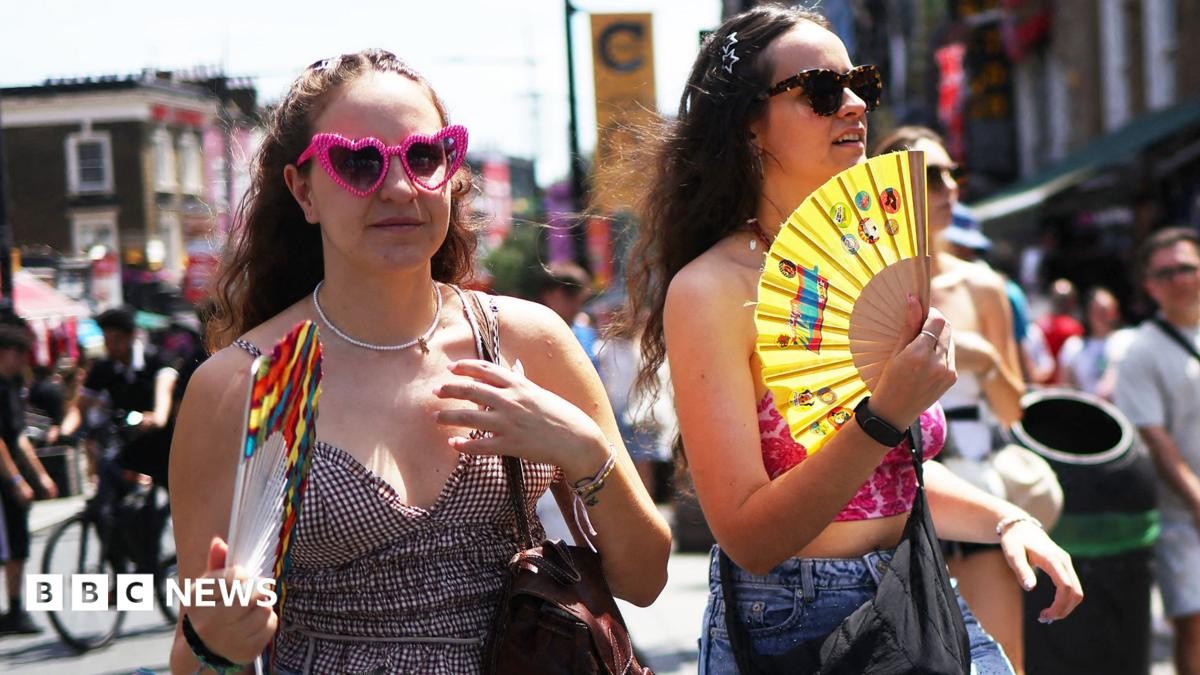
Forget what you know about British weather.
It’s gone.
The Met Office says extreme heat isn’t some freak event anymore.
It is the new normal.
Look at the numbers.
The hottest day in southern England now typically hits 4.5C higher than the 1961-to-1990 average. That gap feels small on paper until you remember it feels like a sweltering oven on the skin.
We are living through a shift so fast it’s disorienting. Northern Britain is feeling warmth that used to stay trapped down south. Homes are sweating. Hospitals are strained. Schools are baking.
We were never built for this.
Mike Kendon from the Met Office put it plainly: the 20th century’s climate is dead. We’re in a period of unprecedented change across every timescale—annual, monthly, even daily.
“We are right now living in a time… on annual, seasonal, monthly and monthly and daily timescales, this shows the evidence of climate has gone,” he says.
2025?
The warmest year recorded since records started in 1884
The last decade was 1.3C hotter than the late-20th-century baseline. It’s a creeping increase, yes. But small shifts create huge spikes in extreme temperature likelihood.
London gets hit hardest.
Days over 30C. Nights above 18C.
The count for the capital has more than quadrupled between the early period and today.
It’s moving north.
Areas like Lancashire and the Vale of York are now seeing temps that matched Greater London a few decades back. Kendon calls it a movement “uphill” and north. Mountain tops are losing their coldest spots entirely.
You might ask: does it really matter?
In May and June, over 2,700 deaths were linked to heat in England and Wales. Those numbers come from Imperial College and the LSHTM. It was a lethal combo of dry heat and high humidity.
Then the rain stopped coming.
Spring 2025 brought less than half the expected rainfall for England and Wales. Driest spring in a century. Rivers ran at their second lowest levels since 1960.
We’re drying out.
Soil in the center and south of England baked up in late June. When earth turns to dust, plant growth stalls. That kills food sources for animals. That hurts crop yields.
And parched soil?
It heats up fast.
It fuels wildfires.
We expected harsh winters. Flooding. But the summer drought is here already and the projections suggest only more of it to come.
There’s no turning back to how things used to be. Just hotter air, less water, and a country learning—too slowly—how to cope