It started with a fiber. Just a thin strand of glass. And out came a black hole glow that actually pushes back.
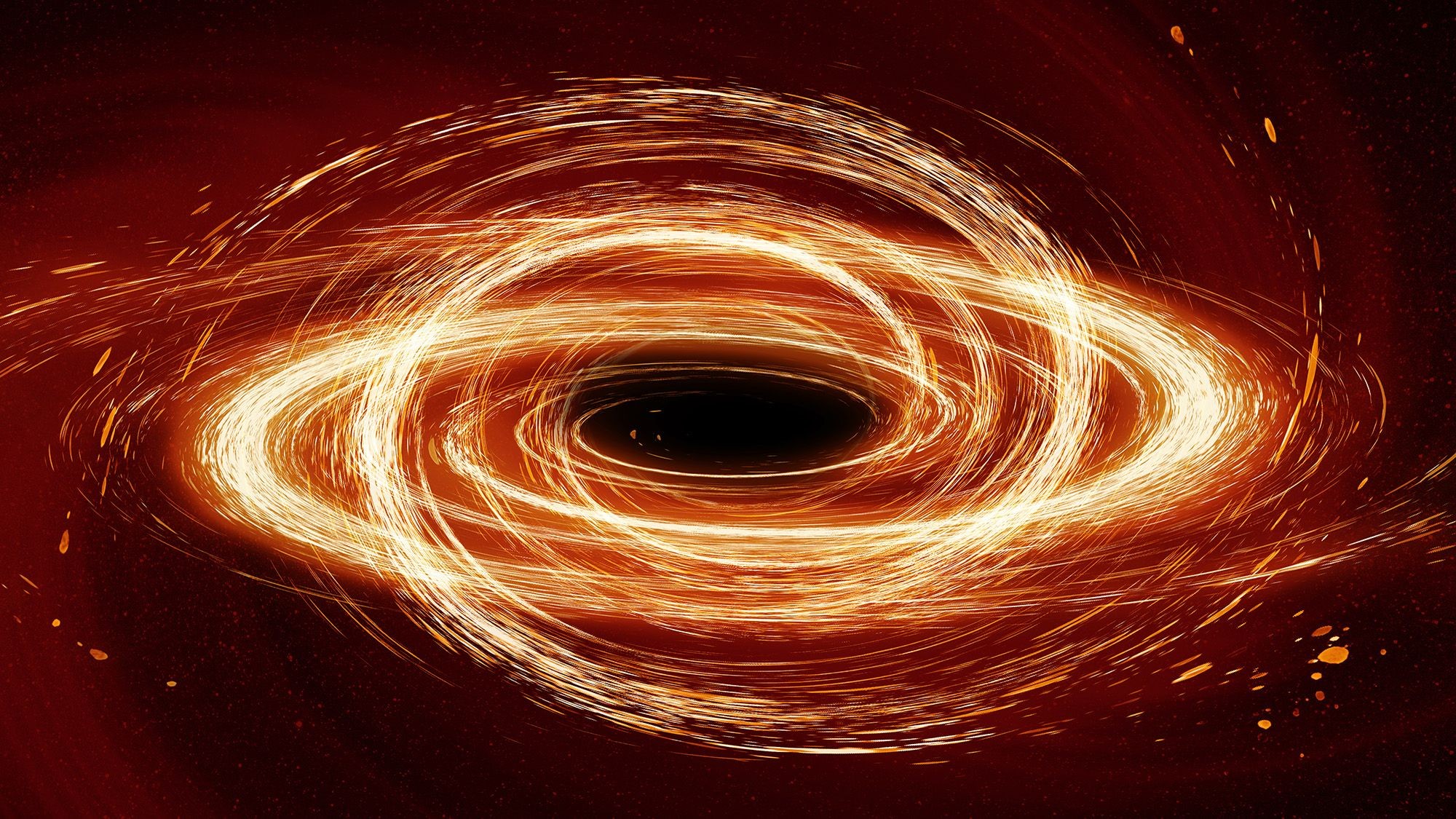
For decades, Stephen Hawking’s famous prediction has remained just that: a prediction. We haven’t seen his radiation leak from the actual monsters in the sky. The light is too faint, the distances too vast. So, a team of physicists got creative. They coaxed the effect out of a photonic crystal fiber on a lab bench. And for the first time they watched the light react to its source.
“Jacob Bekenstein predicted black holes have temperature. Hawking calculated the radiation. It brings together quantum physics and general relativity.”
— Ulf Leonhardt, Weizmann Institute
Hawking radiation lives where big theories fight. General relativity likes smooth, continuous spacetime. Quantum mechanics insists on choppy, discrete jumps. They hate each other. No one has reconciled them fully.
This conflict is why the radiation is so elusive. Astronomers aren’t finding it. Ever. It’s too faint to separate from cosmic noise. So we built analogues. Water flows. Ultracold atoms. Now light.
The goal remains the same. Mimic the math. Recreate the horizon.
How do you stop light? You make the medium move faster than light itself.
Leonhardt describes it as a swimmer fighting a current. The current wins. The swimmer gets swept past a point of no return. That is the event horizon. In space, spacetime itself falls inward faster than $c$. In the lab, light creates the moving medium.
Nonlinear optics makes light act like a material. The researchers fired a intense pump pulse into the fiber. A photonic crystal structure. It threaded the glass with air channels to tune the speed.
The pump pulse created a bump in the glass. A moving barrier. It raced forward at the speed of light effectively.
Then a weaker probe pulse chased it. The probe hit the barrier. It couldn’t keep up.
The artificial horizon formed.
Hawking theory says particles form in pairs. One escapes. The other falls in. In real black holes the inner partner has “negative energy” it drains mass.
In the fiber, the partner showed up in the ultraviolet spectrum.
“We counted photons… around 233 nan meters. That was the signal.”
— Leonhardt
Here is the surprise. Most people assumed a cascade. Step by step conversions. One form into another until the radiation emerged. Messy. Indirect.
The team found it happens in one clean shot. Direct interaction. Pump meets probe. Hawking pair appears. Immediate. Simple.
Even simpler was the back reaction.
Creating energy costs something. The source must recoil. Real black holes evaporate over eons losing mass bit by bit. Lab black holes should lose a tiny bit of light color.
It happened. The pump pulse shifted. Just a fraction. A lopsided spectral pattern. A fingerprint.
Earlier experiments missed it. This one didn’t.
Why does this matter beyond a cool trick?
It addresses the trans-Planckian nightmare.
Trace Hawking radiation to its birth. The math requires waves smaller than the Planck length. That’s where space and time stop making sense. Where known physics dies. If the foundation doesn’t exist why should the prediction hold?
“Any light escaping is stretched enormously,” Leonhardt noted. “It comes from scales where physics is unknown.”
The experiment answered the doubt.
The glow remained perfectly thermal. Even from the void of the sub-Planck scale.
What next? The laser used today is classical. It mimics the spectrum. But not the quantum weirdness.
They plan to go full quantum next. Hunt for entanglement. The ghostly tie between the escaping photon and its lost partner inside the horizon.
It would seal the deal.
Or would it.