Sak Tahn Waax.
That translates to ‘White-chested Fox,’ a moniker for an ancient scholar who has remained anonymous for over a thousand years. Or, well, he wasn’t anonymous forever. He’s anonymous no longer.
The Classic Maya era—roughly 250 to 900 CE—is often treated like some sort of golden age. And honestly, the justification holds up. They built insane architecture. They developed complex writing systems. Their mathematics and astronomy were, quite simply, ahead of their time.
Yet, there’s been a gap.
We knew what they calculated. We didn’t know who calculated it.
Artists signed their ceramic vessels. Sculptors left their marks on monuments. But the mathematicians? The astronomers plotting the heavens? Silent. Invisible. That changes now. A team from the US has cracked the code in the journal Antiquity, pinpointing Sak Tahn Waax as the mind behind a specific, impressive formula. It is the first time a Classic Maya mathematical work has been attributed to an actual person.
The Microtexts at Xultun
The clue wasn’t in a grand palace or a towering temple.
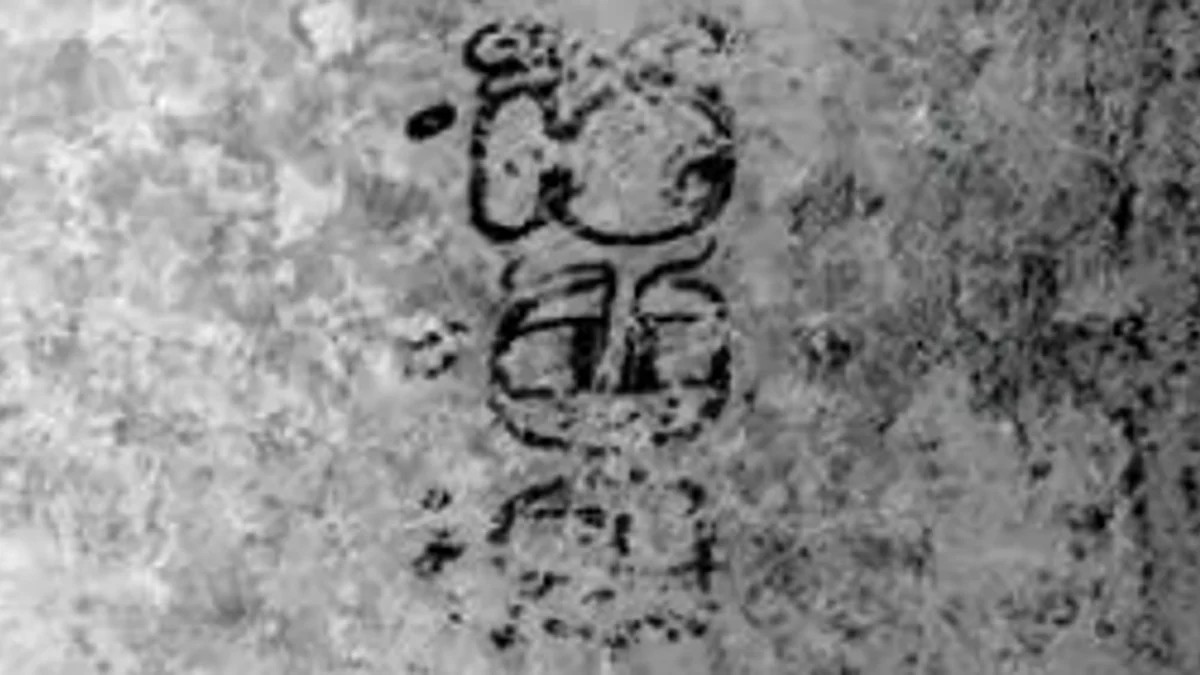
It was in a small building at the Xultun archaeological site, deep in Guatemala. Here, researchers found over fifty ‘microtexts’—tiny inscriptions scribbled onto the walls. They were lists of dates. Numbers. Calculations.
Think of it less as a formal manuscript and more like a workspace. A whiteboard, if you will, but made of stone.
Franco Rossi from MIT put it best.
“While artists’ and sculptors’ signatures… have been identified, the scholars behind computational_timekeeping have remained anonymous.”
When the team used photography and digital enhancement to decipher one of these rough drafts, something popped out. The formula.
It tracked the movement of Venus and other planets with a cleverness that had no precedent. The units used—calendrical markers they already knew—were standard. The logic? Brand new.
Connecting the Cycles
David Stuart from the University of Texas explained the math.
“The math involves his unique understanding of connections… between several cycles of time,” he said. This included the 260-day ritual count. The solar year. The cycles of Venus. And Mars.
This wasn’t abstract philosophy. This was functional.
Royal events didn’t happen on Tuesdays just for fun. They happened when the stars said they should. Building projects were timed by these calculations. So, Sak Tahn Waax wasn’t just playing with numbers. He was helping run a empire.
Rough Drafts, Real History
Sixteen years. That’s how long since that specific room at Xultun was discovered. It took that long to realize they had struck gold.
Heather Hurst from Skidmore College calls them ‘rough drafts.’
“Akin to finding an early version of an early version… or a sketch of a sketch.”
That’s the beauty of it. These aren’t the polished, public-facing steles meant to intimidate the commoner. These are the internal notes. The brain at work. It fills in a blank space in our understanding of Maya life. For too long, historians have relied on Spanish accounts written centuries later. This? This is contemporaneous. It’s the Maya voice, finally, speaking through arithmetic.
Why did he sign it?
Suggestion is all we have, but it feels likely. The formula was unique. Clever. Maybe Sak Tahn Waax wanted the credit. Why not?
Global Context
The work isn’t done.
There are dozens of other microtexts left at Xultun. Researchers are digging into them, looking for style matches. Calculation quirks. Who else signed their work? Maybe more than the Fox.
But Sak Tahn Waax’s name does something bigger than just solve a local mystery.
It places the Maya on the global map, right where they belong.
“We can now add Sak Tahn Waax… highlighting the great Indigenous astronomy… of the Americas,” Rossi notes.
He puts them in the same sentence as ancient India. Iraq. China. Greece. These weren’t isolated islands of thought. They were parallel engines of human intelligence, calculating solar cycles and predicting eclipses while European history was still getting its bearings.
We always knew they knew their numbers. Now we know one of the names that made sense of them.
And that leaves the rest of the wall, still covered in ink and mystery.