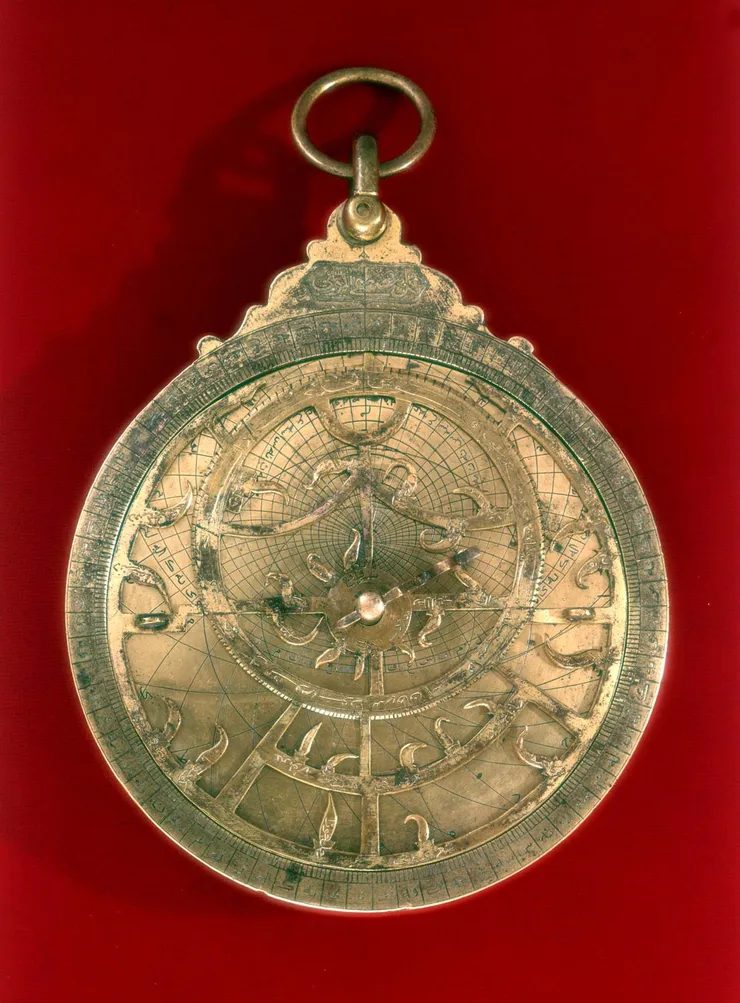
It looks like a brass medallion. It feels like jewelry. But inside that intricate web of metal plates and rotating pointers lies the world’s first practical analog computer.
We often think of calculators as Silicon Valley inventions. We forget that people were crunching celestial data with hand-cranked gears and engraved plates a thousand years before the transistor.
This device is the astrolabe.
It didn’t just tell time. It mapped the heavens.
Tracing the Roots of Early Scientific Instruments
The lineage is messy and ancient. You can trace the earliest versions back to the 6th century AD. But don’t picture a sleek, modern tool. These were rough, experimental, and deeply tied to the stars.
As they moved into the early Middle Ages, two cultural giants took hold of the design: Europe and the Islamic world. Scholars in both regions refined the mechanics. They didn’t just copy each other. They improved the math. They sharpened the engravings. They turned a rough idea into a precision instrument.
By the mid-15th century, the game changed again.
Mariners took the astrolabe.
They dragged it onto wooden ships. They stood in the salt spray and used it to find their way across unknown oceans. Before GPS, before sextants, there was just a brass disk and a lot of hope.
The Planispheric Astrolabe as a Rudimentary Analog Computer
Not all astrolabes were created equal. The most famous variant is the planispheric astrolabe. It is the one you see in museums. It is the one that looks like a puzzle.
Think of it as a mechanical calculator. It didn’t use binary code. It used geometry.
Astronomers used it to calculate the positions of the sun and prominent stars. They measured these positions against two specific lines: the horizon and the meridian.
Why does this matter?
Because the position of the sun changes every day. The stars shift with the seasons. If you want to know when to plant crops, when to pray, or when to sail, you need to know where the sun is right now. You need to know where it will be.
The astrolabe solved this. It projected a 3D sky onto a 2D plate. You aligned the pointers. You read the numbers. You got the answer.
It was simple. It was elegant. It worked.
Why the Astrolabe Matters Today
We live in an era of instant data. We tap a screen. We get a location. We don’t look up.
The astrolabe forces us to look up.
It represents a time when science was tactile. You held the universe in your hands. You had to turn the wheels. You had to calculate the angles. You had to trust your eyes and your math.
It wasn’t just a tool for astronomers. It was a tool for survival.
For mariners, it meant the difference between finding home and drifting into the void. For scholars, it meant understanding the order of the cosmos. For ordinary people, it meant marking the passage of time with precision.
We’ve moved on. We have satellites. We have algorithms. But the astrolabe remains a testament to human ingenuity. It