Lies are free. Truth costs something. It costs time, energy, and actual expertise. Posting a wild conspiracy theory takes zero skill, yet it forces doctors to spend their lives cleaning up the mess. That is why people like Dr. Zachary Rubin exist. He stands on the front line of scientific integrity.
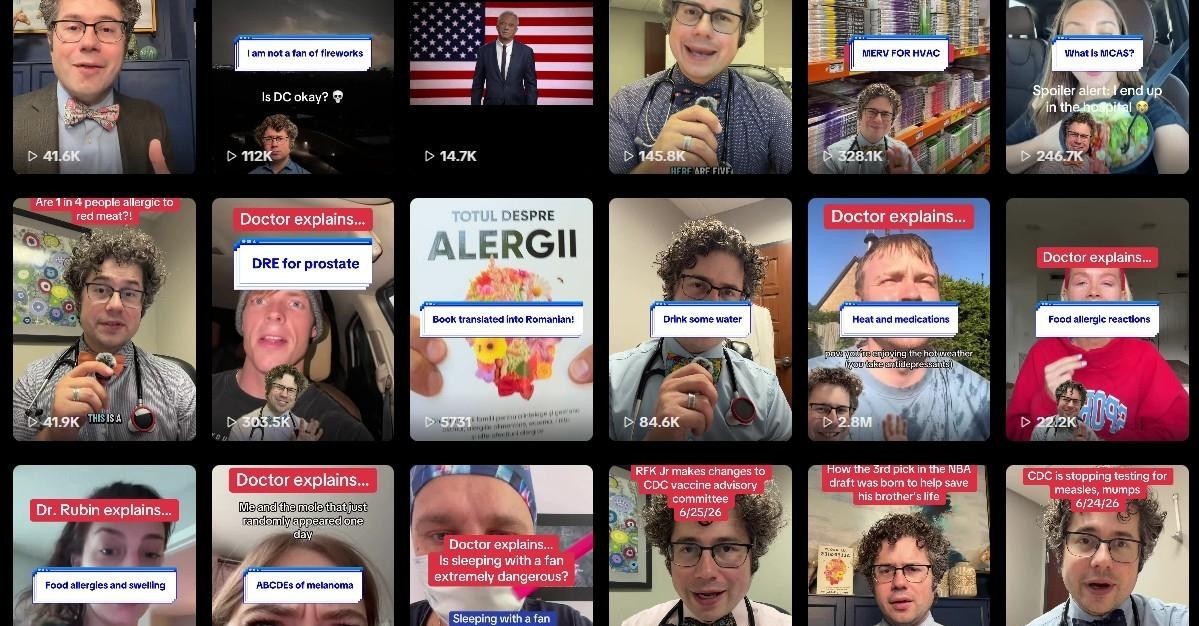
Rubin is a pediatric allergist. He wrote a book called All About Allergies. I probably found him because my algorithm knows I hate being lied to. He’s friends with Dr. Idrees Mughal—aka Dr. Idz—who tackles wellness grifters. Rubin hangs out on TikTok, Instagram, and YouTube. You’ll know it’s him. He always wears a bowtie. And he usually holds a tiny microphone.
The bowtie works. It signals authority without being mean. That’s the sweet spot for science communication. I sat down with him—not in his clinic, but in the digital trench—to ask why he does this. He could just see patients. Why argue with strangers on the internet?
Here is what he said.
The path to the bowtie
The medical journey is long. Brutally long. So why take it? Rubin’s dad is a pediatrician. He saw the hospital environment early on. He liked the puzzle. He liked saving people when they were weakest. Allergies and immunology fit perfectly. The immune system touches everything in the body. A correct diagnosis changes lives.
It’s hard work. He admits that. But he calls it the most rewarding choice he’s made.
“Medicine appeals to me because it combines science, problem-saving, and the privilege of helping.”
Why post online?
He didn’t have to go online. He could have stayed in the exam room. But misinformation doesn’t stay on your screen. It walks into the doctor’s office. Patients show up confused. They deserve better than confusion. Rubin realized he could have those same conversations with millions instead of just a few. He doesn’t want to tell people what to believe. He wants them to ask better questions.
He fights the firehose. He wades into the muck because the muck ends up in the exam room anyway.
Science isn’t a statue
What is the biggest misconception people have? Rubin thinks people forget that uncertainty is good. Science isn’t a pile of immutable facts carved in stone. It is a process. It gets closer to truth over time. Good scientists change their minds when new data shows up. Bad communicators hide that shifting ground. The public sees it as inconsistency. It isn’t. It is progress. Confidence has to match the evidence. That is a rule, not a suggestion.
The joy and the grind
There is a high to this work. The high comes from people saying “I changed my mind.” Those are rare moments in the current climate. Respect still works.
Then there is the low. The low is that lies travel fast. A confident wrong statement goes viral in seconds. Explaining why it is wrong takes paragraphs. And minutes. Algorithms love anger, not nuance. It feels like running uphill.
“Misinformation spreads faster than nuance.”
That is the challenge. But more doctors need to join the chat. Silence helps the grifters.
America’s scientific future
The US turns 250. We have a great track record for invention. Why? We invested. We let people with different ideas crash together. Rubin wants that to continue.
But we are failing at literacy. Not just knowing facts. Knowing how to judge a source. Schools should teach evaluation, not memorization. Scientists also need to stop mumbling behind jargon. If they don’t explain it, someone else will. And that someone else is probably selling supplements.
Trust isn’t about being right all the time. It is about being honest about being unsure. It is saying “we don’t know yet” and meaning it.
We’re halfway there.