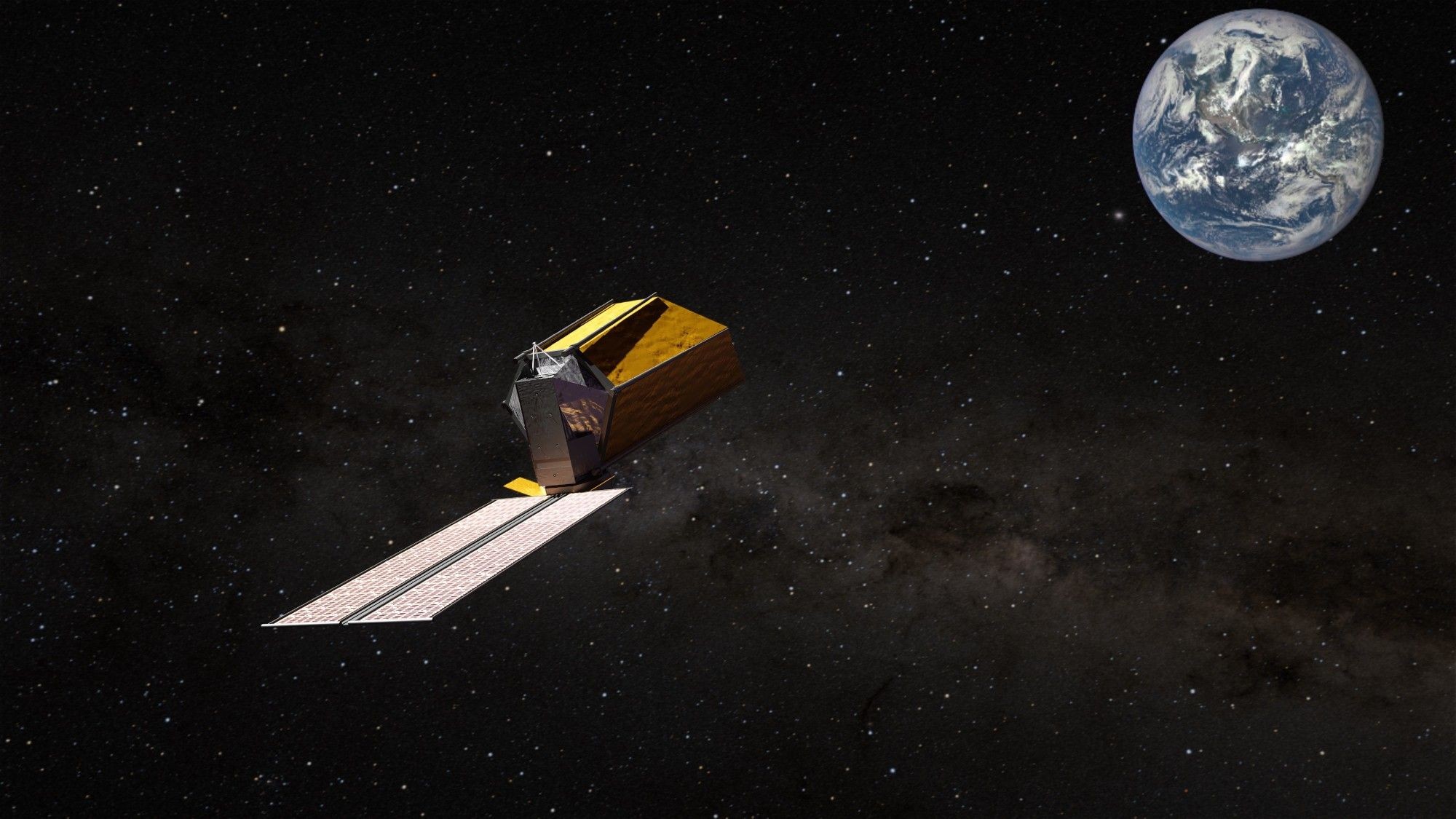
It is bold. Almost arrogant, really. To decide, right now, that a telescope launching in the 2040s needs a pit stop crew. But that is exactly what NASA is doing.
The Habitable Worlds Observatory. HWO for short. It isn’t just another lens pointed at the sky. It is designed specifically to find rocky worlds, the kind with Earth-like vibes and maybe even life. And here is the kicker. They want it to be serviceable.
Think back to the Shuttle days. Astronauts floating like blue-fluorescent manta rays, tightening screws on Hubble. Those days are gone. We don’t send people that far anymore. Or do we?
“HWO will have to be serviceable.”
That is Shawn Domagal-Goldman, director of astrophysics at NASA, laying it out plain. He said it at the AAS meeting in Pasadena. No fluff. The observatory sits a million miles out at the second Lagrange point. L2. It is quiet there. The sun and Earth tug equally, holding objects in a stable orbit. Perfect for science. Terrible for a repair team with a four-minute radio delay.
The L2 Problem
L2 is home to James Webb right now. JWST is untouchable. If it breaks, it dies. If a micrometeorite pings a hole in its sunshield, too bad. But HWO? Different ballgame.
John Grunsfeld, ex-NASA astronaut and current space industry consultant, points out a nasty surprise. Space isn’t empty. It’s cluttered. “We’ve learned that there’s more micrometeorites… and they’re larger,” Grunsfeld said. You expect dust motes. You don’t expect pebbles that shred expensive hardware.
Robots will have to do the patching. Robots will have to swap the instruments.
Hubble worked because it was close. Low orbit. A short taxi ride away. The engineers back then knew this, so they made the computers swappable. The gyroscopes removable. Modularity was a survival tactic for an era when humans could drive out in a tin can to fix the mistakes. HWO is in a different neighborhood entirely.
Does it get assembled in space? Maybe. Domagal-Goldman floated the idea. If the thing is too big for our biggest rockets, we send the parts out. We send the mechanics. We build the eye of Sauron in deep space, bolt by bolt, with robotic arms instead of human fingers.
Upgrades on the Fly
Why bother?
Because science moves fast. The tech we have today is stone age by 2050. Hubble survived four decades because we kept giving it new eyes. New cameras. New sensors. If HWO is a static object, it becomes a museum piece in twenty years. If it is serviceable, it evolves.
The Roman Space Telescope is coming up next. It carries a demo version of a coronagraph. This instrument blocks out starlight so you can see the faint, glowing planet right next door. Direct imaging. It’s hard. It requires precision optics that can change in the blink of an eye to mask out blinding glare. Roman tests it. HWO uses the final, polished version.
But by the time HWO launches? That coronagraph might look primitive.
“We’re going to be highly motivated to put up a higher resolution spectrograph,” Grunsfeld said. If you spot a rock that looks suspiciously like home, you want the best detector available. Not the one that existed in the lab five years prior.
So they leave a door open. A docking port, metaphorically speaking. Or maybe literally.
Grunsfeld imagines a future commercial sector. Companies like SpaceX, but for space mechanics. You hire them to swap a broken mirror for a shiny new one. Slide the old tech out. Slide the new tech in. Simple. Efficient. Profitable.
A Bold Gamble
It makes no sense to leave the money on the table. Or in this case, the science.
NASA isn’t just planning for the launch. They are planning for the long haul. They even threw in a bonus: gamma-ray detectors. Yes. A high-energy photon hunting tool on an alien-seeking scope. It expands the utility. It keeps the scientists busy when they aren’t looking at biosignatures.
Domagal-Goldman admitted the specifics are fuzzy. The design is still moving. How does the robot attach? Does it dock autonomously? Is it tethered? None of it is set in stone.
Which is terrifying. Which is exciting.
“You’re thinking we can do this,” Grunsfeld noted. And we are trying to. It will likely be the most complex construction project since the International Station. Maybe ever.
If it fails, the robot falls short. The hole stays open. The micrometeorite wins. But if they get this right? We have an observatory that improves itself. That fixes its own scratches. That adapts as the stars change their minds about revealing secrets.
It is a gamble. A very expensive one. But sitting still in deep space has always been risky. Movement. Adaptation. Repair. Maybe those are the traits we need to find what we’re looking for.
The telescope goes out there in the 40s. We’ll see if the robots can handle it.