I drink robot-made coffee in San Francisco. Nothing special, right. Machines have served beans since the early 2010s. But the thing holding the mug isn’t just a coffee maker. It’s a generalist. A brain.
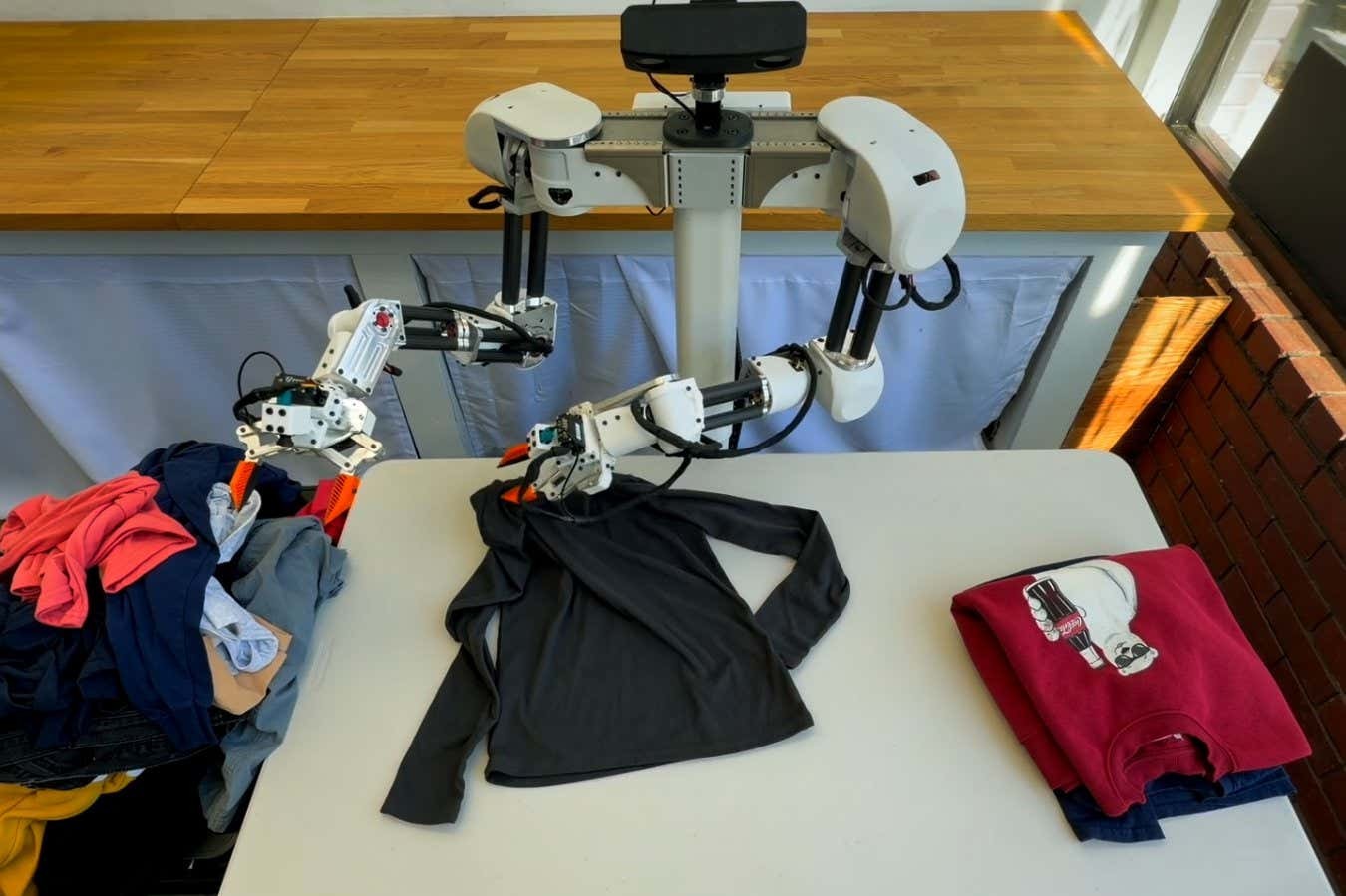
This specific unit also folds clothes. Peels carrots. Scrubbing kitchens, too. It learned these tricks faster than most toddlers master walking.
Meet Physical Intelligence. Founded in 2024. The pitch is simple: build a brain, not a body.
Other giants like Tesla and Boston Dynamics chase humanoids. Amazon automates warehouses with single-task bots. Physical Intelligence wants the operating system that runs them all. One adaptable mind. Infinite machine forms.
In most domains, solving more problems makes things harder. In AI, it makes things easier. You have more diverse sources of knowledge.
Sergey Levine, one of the founders, put it bluntly. He teaches at Berkeley. He believes variety feeds intelligence.
It’s the same playbook as the chatbot boom. Large Language Models (LLMs) exploded because compute power and data finally met good algorithms. Levine hopes robotics sees the same curve. Just steeper.
The secret sauce here is the VLA model. Vision-Language-Action.
Old school robotics? Teach a task. Repeat. Boring. Expensive.
VLAs take the broad common sense of an LLM and turn words into muscle movements.
- Human says: “Clean this mess.”
- Robot sees: Dirty dishes, broken toy.
- Robot acts: Grabs sponge. Picks up toy.
Ingmar Posner at Oxford calls it the most direct translation of LLM excitement. Instead of guessing the next word, the robot guesses the next move.
But wait.
Robots fail because the real world is messy. Infinite variations. Not enough data to train on. Developers usually avoid self-teaching because gathering that data is hellish.
Levine disagrees.
His team teaches bots in fake environments. Warehouses turned into mock kitchens and bedrooms. They reset the rooms every week. They send robots into actual houses.
The goal? Generalization.
The model π0.7 recently cooked sweet potatoes in an air fryer. It had never seen that appliance before. Humans just gave step-by-step voice instructions. It worked.
Levine is shocked by the speed. He’s operating for two years and the progress outpaced his own forecasts.
The money follows the hype. Start-ups are raising billions. Amazon and Google DeepMind are building their own fleets. Everyone wants a general-purpose robot now.
Don’t get ahead of yourself though.
Moravec’s Paradox exists for a reason. Hans Moravec noticed in 1988 what still holds true: giving a robot PhD-level logic is easy. Giving it the perception skills of a baby is nearly impossible. Chess? Done. Walking through a crowd? Hard.
Posner thinks we’re seeing early signs only. Real-world deployment? Skeptical.
Why?
Humans are adversarial. We like messing with robots. It’s fun to break things.
He doesn’t believe a scalable, profitable business model will appear soon.
Daniel Susskind is already writing about it. How should we learn when AI handles the logic? What skills survive the shift? The answer isn’t in the code. It’s in the chaos we leave behind for these machines to clean up.
Maybe that’s the only task they’ll truly master first. Dealing with us.