


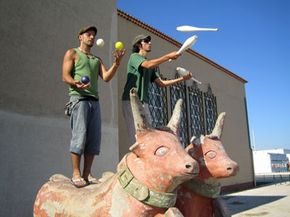
Juggling is more than just a circus trick. This skill has entertained audiences for thousands of years. In the past, you could only see it in vaudeville theaters or music halls. today? You can watch a high-stakes competitions on TV. Performers make it look effortless, keeping dozens of objects with ease and makes it look effortless.
But here’s the thing. Juggling is more than throwing balls in the air. This is a broad category. Plate spinning? This is juggling. Devil sticks? Also juggling. The core definition is based on dexterity. Handle multiple objects using skill and coordination.
However, when we hear the word ‘juggling’, we all think of toss juggling. This is a classic image. Throw and catch more objects than you can hold in your hands. Try juggling two balls with one hand. That counts. Try juggling two balls with both hands. This is not juggling. It’s just a playing catch with yourself.
In this article we will cover Toss Juggling in detail. Let’s take a closer look at how to juggle three objects. We explore the basic patterns that govern almost every sequence. We also cover science. Yes, there is math involved. Amazingly complex mathematics explains why objects stay in the air instead of falling to the ground.
How to Juggle Three Objects
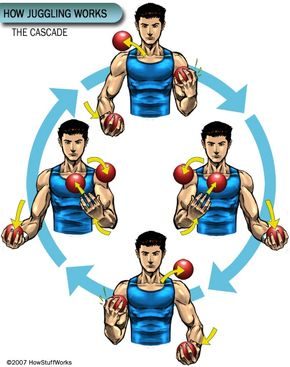

Let’s start by juggling balls. It’s not plastic with holes, it’s soft. I’ve never used a machete on a burning surfboard. I just want to keep three objects in the air without hitting me in the face. The goal is to master the three-ball cascade pattern.
Most people fail because they have two balls. Hold one in each hand. Throw from right to left. Remove the second ball from the top. Take the first one. This is not juggling. Move things back and forth. This is actually the basis of the shower mode. Taking a shower is difficult. You should do all the throwing with one hand and only catch and pass with the other. Ignore it for now.
Cascade is the real starting point.
Mechanics of the Cascade
In a cascade, each throw creates an arc “inside” the trajectory of the previous ball. Your hands don’t just move up and down. They move in a figure-of-eight pattern. Rotate your right hand clockwise. The left hand rotates counterclockwise. Think of it as scooping toward your center.
Sounds very technical. it is not.
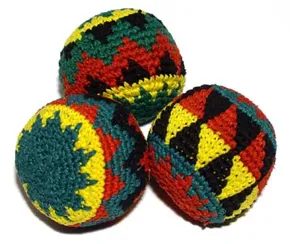
Get 3 identical balls. Or a bean bag. Bean bags are suitable for beginners. It won’t roll even if you drop it. This is the so-called dead drop. It can save your sanity.
Stand with your feet shoulder width apart. Bend your arms to a comfortable angle. Place two balls. Keep one handy.
Toss it. Catch it. Throw it again.
The tip of the arch should be slightly higher than eye level. At this point, it’s all about consistency. If you throw from the left, you should be at the same height as when you throw from the right. The timing is interrupted when the altitude changes. The pattern breaks.
Add another ball
When you feel that the first throw is automatic, take the second ball.
Hold one in each hand. Throw with your dominant hand. When it reaches its peak, release another ball. The second pitch must go “inside” the descending path of the first pitch.
Do not pass the ball to your dominant hand. Do not throw both at the same time. When you do this, it’s no longer a juggling act. You’re just dropping two balls.
You must hear a unique rhythm. One. two. One. two.
If there are only two balls, the pattern is tricky. It will stutter This is normal. You build rhythmic muscle memory that doesn’t exist yet.
Switch hands. Start on the non-dominant side. Leave everything else as it is. If you’re struggling with timing, say it out loud. “One, two” or “left, right”. Verbal cues can lock in a movement sequence before the brain actually understands it.
Juggling Terminology You’ll Need
You will hear specific terms. This means you don’t want newbies to see you in the comments section.
- Props : Objects to play with. Ball, clubs, ring and torch. Some people play with chainsaws. Some juggle kittens. Stay on the ball for now.
- Flash : Complete a round of any pattern. When you catch all three balls and finish, you flashed the three-ball cascade. This is common practice.
- Dead Drop : A prop that doesn’t roll away. Bean bags are the gold standard here. Plastic balls are frustrating. They roll under the couch. You will lose them. Bean bags stay put.
Throw the third ball
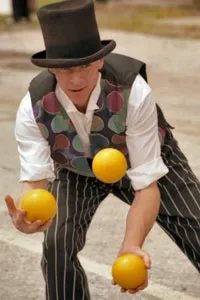

You nailed the cross. It’s not just hand waving anymore. Now you are ready to add the third ball. Sounds simple. it is not.
Hold both balls in your dominant hand. It feels weird. I feel like I have too much fruit. Don’t fight. You get used to the weight. Start with the hand with the most props. Throw the first ball into your free hand. Watch it reach its peak. Then throw another ball from your opposite hand. Now for the last part. When the second ball rises, throw the third ball with your dominant hand.
prosperity. We had a three-goal streak.
Most people don’t immediately recognize “lightning”. Some believe that the third throw is impossible. This is very difficult. Here’s how to cheat: Don’t try to catch it. Please throw it away. If you want to keep the beat, count out loud. Another trick? Place both balls in your non-dominant hand. This makes the first roll unpredictable. But he broke the habit to grab the last ball.
Once in the cascade, it is easy to maintain. It’s just muscle memory. Throw, catch, throw. what is the real problem? Tracking.
New acrobats are always emerging. Every time you throw it, it’s a little further away from your body. Finally, you play the chase using your own props. This fix is tedious but effective. Stand in front of the wall. You can’t go forward with plasterboard in your face. With enough practice you can get away with it. you look like a pro.
Three variations of the ball juggler

The cross beams are bedrock. It supports hundreds of tricks and variations for juggling enthusiasts to explore. But if you just stick to the basic cascade, you’ll lose that flavor.
Use reverse cascade. This is the most common variation of standard mode. Here, the rising ball follows the arc of the falling ball. Think about it. Usually the hand reaches inwards. The reverse cascade involves the drawing outwards. Move your right hand counterclockwise. Move your left hand clockwise. It felt unnatural at first. Most beginners struggle with changing muscle memory. Less intuitive than the usual process.
Then came the half shower. Throw (scoop outwards) with one hand in a reverse cascade. Use your other hand in a regular cascade pattern (scoop inwards). Initial orientation doesn’t matter. You can go clockwise or counterclockwise. Switching between the two takes practice. Once you get the hang of it, the transition will be smooth.
The Tennis Ball is located between the reverse cascade and the normal cascade. Throw the ball in a reverse cascade. The other two follow the usual pattern. The opposite ball goes over two other players. It imitates the ball hitting the net in a tennis match. A simple concept. Difficult implementation.
Shower is difficult. It’s round. Draw an arc with one hand. Another grabs it and feeds it back. Some acrobats use fast or slow throws from catcher to thrower. Some actually feed the ball into the hands of the bowler. This is a natural instinct when training with two balls. Having three balls makes it even more challenging.
Complex arm movements
Some variations require the arms to be crossed. Throw the ball under one hand. It’s easy when you do it. Do you keep the pattern when you are always cutting and not crossing? It’s a different beast.
Mills Chaos is a classic example. Invented by Steve Mills. Weapons complete all crossings. The ball never crosses the road. Looks confused. It’s actually very structured. Many other routines also have catchy names. shell flood. Rubinstein’s Revenge. Sounds like an action movie. they are.
Bouncing from juggling and groundwork
You can juggle it upside down. Bounce Juggling is exactly what it means. Let the ball bounce to the ground. You can catch it bouncing.
There are two main techniques here.
– Lift Bounce : Gently throw the ball up and let it fall.
– Hard Bounce : Throw the ball hard on the ground.
Power rebounding is getting faster. Enables more precise control. This is not for the faint of heart.
Tips and contradictions
Common three-ball techniques include throwing the ball from behind or underfoot. The ball can bounce off your knees, feet or forehead.
Then Grappling Claw. This is a quick downward grasping motion to grasp an object. Or try hacking. This means quickly moving objects diagonally across the pattern. Throw it under your other arm.
The old-fashioned routine also includes playing with and snacking on apples. Or put one ball in your mouth and place the other two balls over your eyes to make a face.
Many jugglers today despise these tricks. They thought these were comic interludes. They have juggled a field full of tricks. To see these changes in action, watch the video on the first page of the article.
Props and ball
The term “prop” refers to any item used by a juggler. This article is mainly about balls. Almost everything that applies to juggling balls also applies to other props.
Number juggling
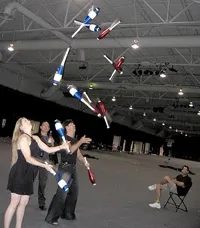

Three balls. Most people stop there. This is very interesting. It’s fascinating. But for serious jugglers, this is just a warm-up.
We’re talking about people throwing 14 objects into the air at the same time. Fourteen. It’s not magic. It is pure and terrifying discipline. It requires inhuman speed and practice that breaks your fingers.
The Odd-Even Split
This is basic circus math. Odd props require a cross pattern. Toss from hand to hand. This is also a type of weaving. It has to be.
Even numbers? You split them. 2 groups. Each hand has its own group. Consider the classic four-ball trick. It’s basically two separate two-ball fountains running side by side. Of course, there are complicated exceptions where even numbers cross or odd numbers stay separate. However, if you are just starting out, follow the rules. It puts less strain on your brain.
Mastering the Fountain
When you hit an even number, you must hold two or more objects in one hand. It’s not enough to just pile up. You have to throw them.
There are two ways to do this with one hand. Fountain and Pillar.
Columns are boring. You throw straight up. You catch straight down. There is no movement left or right. Effective, but not very pretty.
Fountain is where the art lives. toss and catch in a circular arc. It’s fluid. It’s rhythmic. When you can handle 4 balls, you’re looking at the fountain pattern.
Is there a right way to move your hands? Not really. It can be done synchronously (throwing with both hands at the same time) or asynchronously (throwing with one hand and catching with the other). Most 3 ball tricks are asynchronous. Therefore, when adding the fourth ball, stick with asynchronous. It feels more natural. It’s less jarring.
Height is time
Want to juggle more? Throw them higher.
This is not advice. This is physics. The higher the throw, the longer the time between throws. Time is your best friend when juggling.
The standard 5-ball mode is slightly higher than the standard 3-ball stack. Seven balls? Nine? You need serious vertical lift. If you don’t throw it high enough, the patterns collapse. They crash.
Experts call this “number juggling.” This is a specific discipline. It’s competitive. It’s about pushing the limits of how many objects can be held in the air at once.
More than a ball
Toss juggling is the main event. But the sideshow is interesting too.
Let’s take cigar box juggling as an example. You don’t throw the ball. You are working with a box. You build a row. You hold the ends. Then toss the whole stack or parts of it, swapping pieces in and out. This is structural. It’s chaotic.
Then there is shaker-cup juggling. Sounds like a bar prank. it is not. This includes nested cups inside other cups. You toss the nested stack. you catch it. The sound is very loud. You can clearly hear the sound of the plastic hitting at high speed. It’s a sensory assault.
Different Props
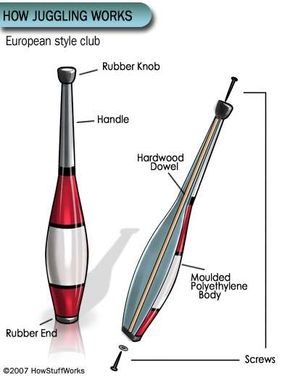

Measured everywhere, the club is behind the ball. They are included in every starter kit and are often loosely grouped in bean bags as they serve the same type of training. But managing a club is a completely different matter.
You rotate it.
Each throw usually involves a full spin. This counts as a flip. If you flip it twice, it’s a double. 3 is triple. Four is a quad. You can also catch the body with a half spin. Or you can throw it from hand to hand without spinning. Jugglers call it floating.
European and American club design
Style is important when you’re holding three or four clubs at once.
There are two main ideas here. European clubs. American clubs.
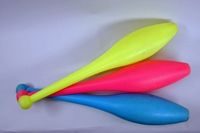
European designs feature a narrower body. Experts prefer them. Why? Recovery. If you have problems with rotation, a narrow body is more likely to get caught in the shaft. You can immediately do a half or one-and-a-half spin for the next throw. There is more room for error. The Juggling Information Service Committee recognizes the record for nine clubs or sticks juggled at the same time. This is the upper limit for most people.
Dangerous props and gyroscopic rings
Some objects scale better than others.
Knives and flashlights fall into this category. The same goes for axes. And yes, chainsaws. This is where the rules change. You have to catch the handle. Always. These items are designed to minimize damage when under-rotate or over-rotate. Accidents happen. The design tries to keep your fingers intact.
Rings present another physical problem.
A ring is a circular hoop. Usually at least a foot across. The gyroscopic effects provides a stable flight path. A skilled juggler can manipulate more rings than most other objects. The official record for simultaneous rings is 13, but some claim it to be 14. You can throw multiple rings from one hand at the same time. This is called multiplexing. It’s easier with rings than clubs or balls.
Flair Juggling in Bars
Juggling isn’t just for the stage.
This also happens in bars. A bartender who specializes in flair juggling. Use a bottle and a cocktail cups. It’s flashy. It’s dexterity. This is showmanship.
Techniques vary. Toss juggling. bounce juggling. Twirling displays. It’s not about precision records. This is all about entertaining the crowd while pouring drinks.
Juggling with Others
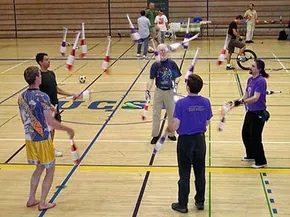

Social aspects of juggling
That doesn’t mean you should train alone. Part of the thrill of juggling comes from interacting with other people. Most cities and college campuses host regular meetups for these social creatures. This action naturally leads to cooperation and sabotage.
One of the most popular games is stealing and replacing. To steal from another juggler, take at least one item from the pattern while they are tossing. Substituting is adding a prop to a pattern after it has been stolen. It is perfectly possible to take over someone else’s entire juggling act of others. You stand in front of them, learn the rhythm, then reach out and catch their tosses one by one.
“With the right timing, you and the other juggler can cycle through stealing the same set of clubs to keep the same pattern.”
Victims can always fight back. They can steal the props right back. Soon you’ll be exchanging items with almost every throw. It gets competitive.
It’s okay to stay on the sidelines, especially if you want to steal clubs specifically. Please look in the same direction as the juggler. Reach out and take over. If the timing is correct, the object will remain in place even if the performer changes. It looks like the props are juggling the people.
You can also try it from the front. Wait for the juggler to throw his stick. Catch it by the body. Place the other club in your other hand. You complete their catch for them.
Passing the Torch
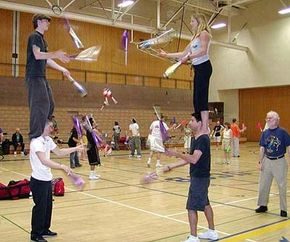
Tandem juggling is also an option. Two people stand very close to each other. The other acts as the left hand. The other is the right. They share the drops. You can stand side by side. face to face. Or stand back to back.
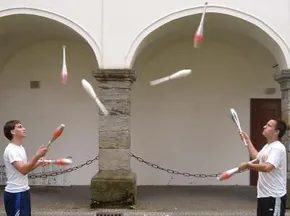

Passing is the big leagues of juggling. This is the most easily recognizable and visually impressive form of interaction of the performers. Instead of throwing objects into their hands, jugglers look at each other and send props across the gap to their partners. Requires strict synchronization. Just don’t guess. Commit to the designated toss.
Clubs are the go-to prop for passing. Easy to spot even in the air. However, it is difficult to catch. Because of the flip, so you have to tilt your arms. If your partner throws underhand, your forearm should be perpendicular to the ground. An overhand throw? You can catch it the same way you would normally throw it.
How the 3-3-10 Passing Pattern Works
There are dozens of patterns. 3-3-10 is a classic. It’s the first thing you see in most shows. Both jugglers have six props. They throw right-handed pitches every third toss. Repeat this 3 times. Then switch to every second toss. Repeat this 3 times. Finally, pass every single right-hand toss for ten throws. It’s the rhythm. This is a conversation. If you make a mistake, the pattern will collapse.
Combat Juggling: Controlled Chaos
At some gatherings, things get physical. Each juggler does the for themselves. target? Be the last one standing. Dozens of performers collide. It’s chaotic. A common tactic is to buy time by throwing the prop super high. Next, use both hands to bat away your opponent’s juggling. Or just steal their props.
Safety is important here. Teams use padded or soft clubs. Injuries are not uncommon. This is a contact sport.
Where to find juggling organizations
America has a robust scene. The International Juggling Association organizes the festival every year. Workshops. Competitions. Hundreds of acroclubs. The Internet Juggling Database tracks local clubs around the world. Most groups are free to join. They welcome new members all year round.
Juggling Physics

The little-known math behind cascades
Most people see colored clubs and balls flying through the air as a blur. What they are looking at is skill. They see art. They don’t understand that the invisible hand of physics is pulling the strings. Juggling is more than just muscle memory. It is a constant subconscious negotiation with parabolas, speed, velocity and relentless gravity.
When you watch professional juggling, you are witnessing a live demonstration of center of gravity. Of course, jugglers rely on their instincts to judge the strength of their throws. But instinct comes into play because physics dictates the outcome. If the math doesn’t add up, the pattern collapses.
Gravity: the silent partner
We’re talking about gravity here. Without this, juggling is impossible. Try throwing a ball in zero-G. Throw it away and you just…move on. It floats away. You float lifelessly in space and watch props drift off into the void. To some extent, when you throw it, it pushes you back, but you don’t juggle it. You’re just thrashing.
Gravity enables juggling by pulling those props back down. It also places strict limits on what is actually achievable.
The object accelerates due to gravity at a constant rate: 9.8 m/s². This means that every second an object falls, its speed increases by 9.8 meters per second. If you ignore air resistance for a moment, the math is clean. When the prop is tossed upwards, gravity immediately begins to act as a downward accelerating force.
Since the acceleration is constant, the juggler can change the rhythm of the pattern just by changing the height of the throw. Here is the trade-off. The higher the tosses, the longer the time between catches. That sounds good, right?. Give yourself more time to think. You have more time to breathe.
However, higher tosses is dangerous. Small errors in force and angle are magnified at longer distances. Short tosses are faster. They are twitchier. But they are more accurate. A long throw takes time. Accuracy is sacrificed. It’s all about finding a balance between speed and stability.
Mass Matters More Than You Think
The weight of the props dictates the required force. When juggling five identical juggling balls at the same time, the physics are simple. The same mass means the same amount of force is needed to keep the pattern smooth and manageable.
Mixing masses is a game changer.
Try juggling with apples, a club and bowling balls. You need to adjust the force with each throw to maintain the correct height. Why? This is because an object with a more mass has a large inertia. Inertia is resistance to changes in motion. Bowling balls are harder to accelerate. It fights you. Lighter clubs yields easily. To keep the pattern consistent, you need to punch harder on the heavy things and soften your touch on the light ones.
The Rotation of Clubs
There is another level for clubs. You need to manage the center of gravity. This is the point where the average mass of the object is distributed. It is also the center around which the club rotates.
Most club throws include at least one full rotation. A juggler must intuitively know how much force is needed to launch the club high enough and spin it enough times to land upright. With practice, it becomes second nature. But behind the muscle memory is a rigid calculation of torque and angular momentum.
Parabola and air
A tossed props follows a path called a parabola. This means that the acceleration acts vertically (gravity pulls downward), while the horizontal velocity remains constant. When the object leaves your hand, No horizontal force is acting on the object.
Considering air resistance, this path is not a “true” parabola. Drag slows the object down horizontally. However, in most juggling scenarios, air resistance is negligible. Unless you’re juggling in a hurricane, drag won’t change the basic shape of your flight path. The parabola holds.
Detailed explanation of physical terms
To understand why certain patterns work or fail, you need to use the language of movement.
- Mass : Amount of matter in an object. in kilograms. Heavy things are stubborn.
- Speed : It’s not just about speed. Velocity includes speed and direction. A ball moving upward at 5 m/s and a ball moving downward at 5 m/s have different speeds.
- Acceleration : Change in speed. This happens when you speed up, slow down or change direction.
- Force : Product of mass and acceleration. The push or pull required to change the motion of an object.
Theory of juggling
The theory behind juggling is a simple mechanism applied under pressure. It’s about managing energy and time. When you throw a prop, kinetic energy is transferred into the air. Gravity takes over. The column rises, stops momentarily at the highest point of the parabolic arc, and then descends.
If the throw is not stable, the clock will go wrong. Props crashed in the air. The pattern falls.
Juggling is a physical phenomenon that can be experienced. This is the tangible result of applying acceleration, velocity and force in real time. You don’t need a calculator to work this out. But if you stop and think about it, each capture is a solution to the equation.

It is no coincidence that so many jugglers gravitate to mathematics and physics. Holding objects in the air is more than just a party trick. This is a live demonstration of the core principles of physics. It also led people to construct very complex theorems.
Take Claude E. Shannon for example. He was a brilliant mathematician who came up with a juggling theorem that elegantly explains the relationship between a prop staying in the air and staying in your hand. His equation is clear.
(F + D)H = (V + D)N
Break it. F is the flight time. D is dwell time, or the count of time the ball stays in your hand. H has a lot of size. V is free time. N is the numerals of balls.
Shannon’s formula emphasizes the critical importance of hand speed. By adding balls (N ), the pattern remains stable and cannot change the speed. The numerals of hands (H ) remains the same unless you add limbs or invite friends to the circus.
Shannon didn’t just write equations. He built a juggling robot out of Erector set. It has two arms that bounce juggle three small metal balls in a drum. Other engineers then built robots that used complex algorithms to bat objects upward indefinitely. Check out SARCOS, the company that released a video of a humanoid robot juggling a three-ball cascade. It has cups for hands. The movement is soft, smooth and fully mechanical.
Space optimization mode
Mathematician Jack Kalvan went even further. He proposed an equation for the spatially optimal pattern. The goal? Allow the same count of error at all points on the flight path where a collision is most likely to occur.
Calvin’s mathematics is dense. Look at the arc of each throw, find the sweet spot between the arcs formed by each hand, and calculate the ratio of arm time to empty-handed time. It’s not just about not dropping things. It’s all about geometric perfection.
Do you juggle math?
Why apply heavy theorems to catch? Not only does it help you learn how the world works, but it also helps you learn how people move. Juggling has always been at the heart of perception and motor control.
Sports researchers A.A.M. van Santvoord and Peter J. Beek focused on optical information. They knew that a juggler handling three objects would not be able to track them all at the same time. A competent juggler constantly shifts his attention back and forth. How much visual data do we really need to make the pattern stable?
Most jugglers consider the peak of the throw to be the defining moment. Beek and Santvoord proved them wrong. They found that seeing the ball’s flight path for just 100 milliseconds was enough to maintain the cascade.
We also noticed that experienced jugglers rely on haptic information instead of their eyes. This means paying attention to the “feel” of the throw. An expert may feel they are throwing poorly and make adjustments without looking. Some jugglers have shown that they can maintain simple cascade while blindfolded.
Site exchange symbol
Another mathematical application is site-swapping. This is the notation used to describe juggling. Jugglers write the site-swaps as a series of numeralss that represent a beats from throw to catch. This directly translates to the height of each throw.
A standard 3-ball cascade is written as 333. Each throw requires three beats. 0 means rest or empty hand. 1 is hand-off from one side to the other.
You can calculate the numerals of balls needed by averaging the numeralss. Take a 45141 pattern. Add the numerals (15) and divide by the count (5). The result is 3. You need 3 balls.
There are several websites that explain site-swapping in detail. There are also programs that can turn these numeralss into animations, allowing you to watch abstract math turn into physical movement.
Juggling Through History
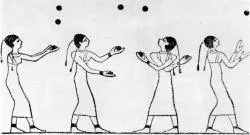

The art of throwing objects in the air and catching them again is much older than you think. We are talking about thousands of years. The earliest evidence comes from the tombs of Egyptian princes, where hieroglyphs depict a group of women tossing balls. Archaeologists have dated the grave to 1994–1781 BC. This is the oldest depiction of juggling ever found.
“This is the oldest description of a juggling ever found.”
You will find pictures of jugglers from Thebes, Greece, Rome, India and all over Europe. They performed complex tricks long before the common era. Written records date back to 400 BC. One special mention in the Talmud mentions Rabbi Shimon ben Gamaliel, who was able to juggle eight torches at once. The legend doesn’t end there. Jugglers also appeared in ancient Irish and Scandinavian literature.
These performers were highly regarded throughout Rome. Society respects them. Then things changed. The juggler is in trouble. The story has changed. People began to see them as immoral liars. Written records began to confuse them with wizards and witches. They are seen as corrupt manipulators. I have lost respect.
Medieval juggler
The revival took place in the Middle Ages. Jugglers enjoyed a revival of literature and art. Artists depicted them throwing torches and knives a surprising amount. But they are more than just pitchers. Jugglers are often also singers and magicians. Being a juggler means a versatile entertainer. Most people make a living by moving from one city to another.
The career situation will improve considerably. The German parliament in Nuremberg employs acrobats for more than just entertainment. He is also a teacher. juggling has shed its stigma. This too deserves respect.
Circus era and modern concepts
At the end of the 18th century, a new transitional period began. Jugglers played an important role in the circus. Many circus clowns incorporate juggling into their performances. These two forms of entertainment are intertwined in the public consciousness. It’s a tight union.
This connection still exists. Modern jugglers often complain that the public sees juggling as a form of circus entertainment. They wanted people to see it as its own skill, not just Joker’s sidekick. But the history is there. It reached the walls of Egypt. It survives in the tension between high art and low comedy.
Who decides the value of skills?

The evolution of #vaudeville: from vaudeville to a global sport
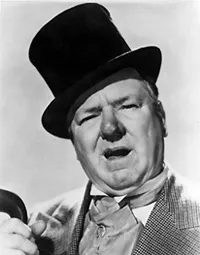
In the late 1800s and early 1900s, juggling was more than just a party trick. This is a vaudeville staple. W.C. Fields began juggling on stage before transitioning his career to film. He was known for a particular cheeky, sarcastic charm. But as vaudeville declined and circuses shrank, the profession changed. Jugglers are not gone. They start to branch out. There are also established solo performances. Some people play on street corners. It’s amazing how many people turn to math.
How the International Juggling Association is changing the game
The sport needed structure. In 1947, magic enthusiasts gathered at the International Brotherhood of Magicians convention. So a group of jugglers realized that the world needed a dedicated organization. They founded the International Juggling Association (IJA). Their first independent festival was held in 1948.
The competition started in 1969. IJA divides the sports into different categories. There were divisions for performance quality. Numbers juggling has its own track. Individual and team performances were also evaluated. This structure turns chaotic skills into measurable disciplines.
Decades later, the pursuit of mainstream visibility continues. In 2000, Jason Garfield founded the World Juggling Federation. The goal was precise: secure television coverage. The strategy worked. Sports networks such as ESPN currently broadcast these events. Spectators around the world follow the athletes juggle of the athletes in real time.
Tongan juggling culture
Juggling styles vary by geographic location. In rural Tonga, this custom is deeply rooted in everyday life. Young girls learn juggling as a game. They play with each other using different techniques. It is not considered a male pursuit. Boys usually don’t learn this skill. In this culture, juggling was considered a feminine activity.
The result is a high level of professionalism. Many young women in Tonga are highly skilled. They often juggle at least five items at the same time. This is a community standard and not a niche hobby.
Other forms of juggling
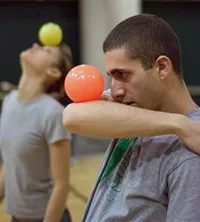

When most people think of a juggler, they think of a ball flying through the air. This is juggling. But the term encompasses much more. There is a world of object manipulation that doesn’t involve throwing things at all. At least not in the traditional sense.
Contact Juggling Illusion
Contact juggling is a relatively new art form. It is necessary to keep one or more balls in constant contact with the body. It’s not about throwing the ball up. Slide it. Roll it. It makes it look like it’s moving on its own.
Michael Moschen popularized this style. Appeared in the movie “Labyrinth”. This task requires strict skill. It’s about control.
The key concept here is isolation. This is the illusion that the ball stays in exactly the same place in space. It doesn’t matter what the juggler does with his hands. The ball just sits there. To the viewer, the object appears to be floating. Good performers can slide the ball over their arms or chest. Movements are smooth. It seems to defy gravity.
Spinning Devil Stick
Another popular training involves using the devil sticks. These are rods. It is wider at the edges and thinner in the middle. The juggler uses two separate sticks to keep the devil’s stick in the air.
It’s not just about keeping it up. It’s about dancing. The juggler tosses the main stick back and forth between the sticks. They can turn it around quickly. It looks like helicopter blades are cutting through the sky. There are also some other techniques. The most important thing is to keep the central balance point stable while the edges whip around.
diabolo speed
Then there is Diabolo. The support is basically a spool. It can be controlled by a rope tied to two sticks. The rope is wound around the axis of the spool.
Skilled players can spin this very quickly. But it’s not just about speed. Complex throwing techniques are also possible. Can be used for grinds. You can create loops in the string itself. Depending on the technique, the diabolo can be moved with a stick instead of a rope.
diabolo is also sometimes called a Chinese yo-yo. Don’t let the nickname fool you. It’s a unique skill set. The physics are different. The visual is sharper.
“Isolation is an illusion. No matter what the contact juggler does, the ball stays in the same space.”
Whether it’s the smooth sliding of a contact juggle or the intense spin of a diabolo, these forms require different attention. They are not just gimmicks. They are physical interactions with objects. The audience watches closely. They are looking for the tell. The break in the illusion.
But when it works? It’s like magic. Simple physics disguised as a trick. Or maybe you just have really good muscle memory. Either way, it will continue to attract people’s attention.
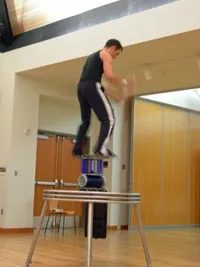


Juggling unclear lines
Getting around is basically just juggling and requires more patience. These spinning disks are balanced with a rod, thrown up and fixed again. Some performers frantically spin more than a dozen plates at once. dazzling.
But disc spins are only a small part of a larger dexterity. Jugglers often throw other balancing techniques into the mix. Think rola bola. This is a wooden board placed on top of the cylinder. Or stand on a free-standing ladder without any other support. It’s all part of the action.
“Historically, people have used the term ‘vaudeville’ very loosely to refer to performances of various magic tricks.”
You may see jugglers pressing their chins against their sticks as they throw other props. Or spin the ball with the stick during the throw. This looks like a unified display. Active.
This is where things get messy. Some jugglers argue that this balancing act shouldn’t even be called juggling. Of course, you need some serious technique. And practice. But what about them? This is not juggling. Balanced.
Yet its definition is always vague. Juggling has long demonstrated a wide variety of skills. These limits will likely continue to expand as performers find new ways to manipulate props. What you think is juggling now may not work 20 years from now.
Want to dig deeper? The following pages have links to learn more about the mechanics behind the magic.
Dig deeper into craftsmanship
If you’re interested in how this works, there are plenty of rabbit holes to explore.
Related blog posts
- Boomerang mechanism
- The principle of breathing fire
- How Cirque du Soleil works
- How the fire element works
- Muscle structure
- How emergency rooms work (this is a bit far-fetched, but it really exists)
More attractive links
- International Jugglers Association : Major League.
- Juggler’s Information Service : Huge resources.
- SARCOS HUMANoid ROBOT : When you want to see machine acrobatics.
- Internet Juggler Database : Because everything requires a database.
Science and history behind the spin
It’s not just about hand-eye coordination. There is real physics and history here.
- The acquisition and automation of complex tasks: A study of three-ball cascade juggling (Bebko, James et al., Journal of Motor Behavior, 2003).
- Timing and Phase Locking in Cascade Juggling (Beek, Peter J., Ecological Psychology, 1989).
- The Science of Juggling (Peter J. Beek and Arthur Rubel, Scientific American, 1995).
- The Best Juggling: Analyzing and Overanalyzing Juggling (Kalvan, Jack, 1996).
- Historical Study of Vaudeville (Rubell, Arthur).
- Mathematical theory of juggling (Voss, Jochen).
- Physics of the ball juggler (Voss, Jochen).
- Phase adjustment and optical information extraction in cascade juggling (Santvoord, A.A.M. and Beek, Peter J., 1994).
In matters related to pop culture:
– Tongan Video Girls (Steve Cohen, Global Review, 1988).
– Juggler (Encyclopedia Britannica, 2007).
Online communities also keep the tradition alive.
– Contact Juggling.org
– DiaboloTricks.com
– JuggleNow.com
– Silverman’s Contact Juggling Page
–Juggler’s World
– World Juggling Association
– DevilStick.de
The tradition is not dead. Things get really weird. And it’s complicated. And it’s fun.