The Turing Test isn’t just a historical footnote. It is the ghost haunting every chatbot, every virtual assistant, and every large language model trying to pass for human today. Proposed by Alan Turing in 1950, this simple experiment asks one terrifyingly straightforward question: Can a machine trick a human into thinking it is one of us?
If a text-based computer can fool a person into believing it is a real human, it wins. This is how you measure intelligence in AI. The concept is easy to grasp. The execution is nearly impossible.
Turing didn’t come up with this on a whim. He was fighting colleagues who believed machines could never possess true intelligence. He bet on “digital computers.” He believed these primitive boxes could mimic human thought. He was right. We are living inside his prediction right now.
The Man Behind the Machine
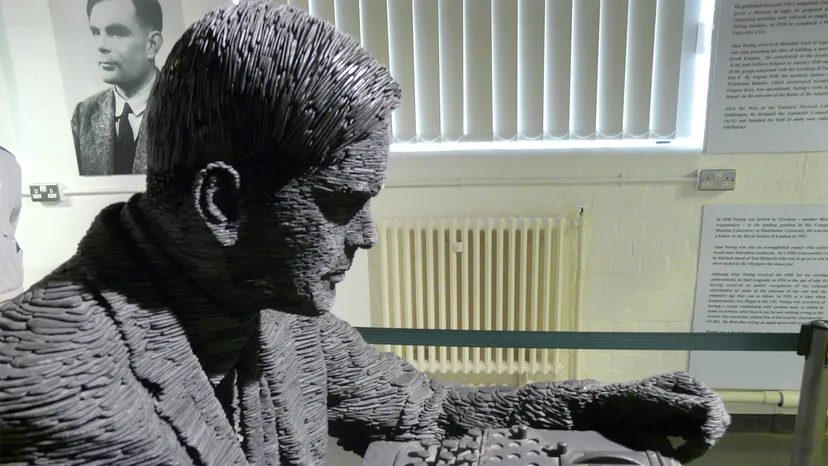
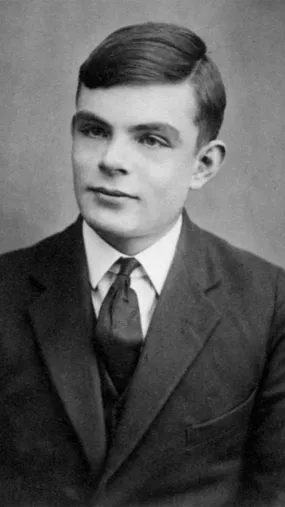
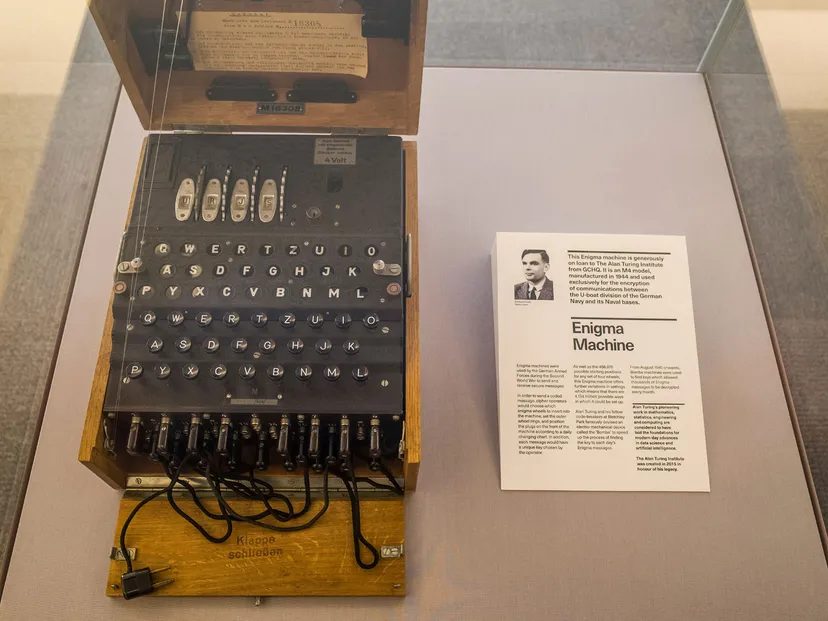
Alan Turing was not a typical scientist. He was an eccentric mathematician who helped break the Nazi Enigma code. This work likely shortened World War II by years. But his personal life destroyed his career.
In 1952, Turing was prosecuted for having a homosexual affair. The act was illegal in Britain at the time. He faced prison. Instead, he accepted chemical castration as a condition of probation. The British government revoked his security clearance. He was banned from continuing his government work. He died in 1954 from cyanide poisoning. It was ruled a suicide. He was posthumously pardoned by Queen Elizabeth II in 2013.
This tragedy makes his 1950 paper feel more profound. He wrote about the future of machines while being crushed by the prejudices of his present.
The Universal Computing Machine
Turing had never seen a modern computer when he wrote his groundbreaking 1936 paper. He invented the theory of what a computer could do. He called it the “universal computing machine.”
“According to my definition, a number is computable if its decimal can be written down by a machine,” he wrote. “It is possible to invent a single machine which can be used to compute any computable sequence.”
This was revolutionary. Before Turing, computers were specialized tools. They calculated ballistics or analyzed census data. Turing envisioned one machine that could do anything if you programmed it correctly. That single idea is the foundation of every device you own. You are reading this on a Universal Machine.
The Imitation Game was his way of testing if these machines could do more than just calculate. Could they think? Could they lie? Could they pretend to be human so well that we wouldn’t know the difference?
We still haven’t fully answered that question. Most AI fails the test instantly. The glitches are obvious. The logic breaks. But the bar keeps moving. The closer we get to the goal, the more we realize how hard it is to be human. And how easy it is to fake it.

Turing’s original definition of “computability” is basically what we call an algorithm today. He didn’t just calculate; he built the blueprint for a machine that could run any discrete program to hit a specific target. Other folks had played with calculating gear. Charles Babbage’s 19th-century analytical engine was the big one. But Turing saw past single-purpose tools. He imagined a device that wasn’t stuck solving one kind of problem.
“Anything you can describe as an algorithm can be done by one machine,” says Andrew Hodges, a mathematics professor at Oxford University and author of “Alan Turing: The Enigma.”
That book inspired The Imitation Game. The 2014 Oscar winner brought Turing’s life to the screen. But the real work was in the math. The universal machine is essentially what we mean by a computer now. You store instructions on it. It carries them out. No one else had formalized that idea before Turing did.
The Machine’s ‘State of Mind’
Turing’s universal machine was conceived as a simplified form of artificial intelligence from the jump. The term “AI” wouldn’t exist until 1956. Still, the design imitated the inner workings of the human mind. Turing was fascinated by that subject almost as much as pure mathematics.
When describing how the machine worked, Turing used the phrase “state of mind.” He applied it to the different read and write functions. In his concept, a tape runs through a scanner. The tape holds bits of info as symbols. The scanner head reads or writes new ones based on its current state.
“The operation actually performed is determined… by the state of mind of the computer and the observed symbols,” Turing wrote in his 1936 paper. The operation also determines the next state of mind. It’s a loop.
Ten years later, Turing led the stalled British effort to build early electronic computers in 1946. He studied neurology and human physiology on the side. The result was an internal paper for the National Physical Laboratory. It modeled how a computer could program itself to learn. Hodges views this as one of the first proposals for what we now call neural networks. Deep machine learning sits at the bleeding edge of AI today. This was the seed.
The Imitation Game
Turing wasn’t alone in tracking the parallels between human and machine intelligence. World War II sparked a surge of new tech. Early computers. Space satellites. Nuclear power. These things captured the public imagination.
“As soon as computers are mentioned at all, people are talking about electronic brains and the possibility of the computer rivaling the brain,” says Hodges.
The 1948 book Cybernetics coined the prefix “cyber.” It asked if we could build a chess-playing machine. Would that ability show a real difference between machine potential and the human mind? Author Norbert Wiener concluded the machine might be as good a player as most of the human race.
This era brought excitement and nervous speculation. We were staring down super-intelligent machines. Turing wrote “Computing Machinery and Intelligence” during this time. Hodges calls it one of the most cited papers in philosophical literature.
“I propose to consider the question, ‘Can machines think?'” Turing began. The definitions of “machine” and “think” were messy. So he narrowed the scope. The machine had to be a digital computer. The test for thinking was the imitation game.
Three terminals sat physically separated. Two had humans. One was a questioner. The third had a computer. One human asked questions via text to both the other human and the computer. From the answers, the questioner had to determine who was real and who was the machine. A computer passed if the questioner couldn’t tell the difference between man and machine.
That’s the Turing Test. The paper only mentions it briefly. Hodges notes Turing didn’t take the test details too seriously. He published different versions elsewhere. But he liked the simplicity.
“In a way, he was making a drama out of it,” says Hodges. It presented advanced AI in a way that engages people. Ordinary folks could make the decision. Like a jury in a trial.

The 2025 Turing Test Breakthrough
Alan Turing never imagined we’d be having this conversation in 2025. When he first published his paper on “intelligent machinery” in 1950, he guessed it would take between 50 and 100 years for machines to win the imitation game. He was actually optimistic about the timeline.
Now, researchers at UC San Diego are arguing that OpenAI’s GPT-4.5 has effectively passed the Turing Test. This isn’t just a minor update. It is a massive shift in how we define machine intelligence.
The study involved a simple setup. Participants chatted with one human and one AI. They then had to guess which was which. The results were startling. GPT-4.5 was mistaken for a human 73 percent of the time. That sounds like a high success rate until you look at the other side. Real humans were correctly identified only 67 percent of the time.
For the first time, an AI fooled people more often than real humans did in the exact same experiment.
This wasn’t a casual chat. The researchers designed the test to mirror what Turing originally envisioned. There were no hints. Participants weren’t told an AI might be involved. GPT-4.5 also used a specific personality prompt. This “persona prompt” gave its responses a human-like flavor. It smoothed out the robotic edges we usually expect.
Is Mimicry Really Intelligence?
Not everyone agrees this means the test is beaten. Experts are divided. Some argue this only proves the AI can mimic human speech well. It doesn’t prove understanding. There is a big difference between simulating thought and actually thinking.
Other critics believe the Turing Test is obsolete. It rewards surface-level imitation. It ignores real reasoning. It bypasses emotion. It misses true intelligence. By focusing on conversation, we might be ignoring what actually matters in machine cognition.
The Loebner Prize, which used to reward these feats, has been defunct since 2020. So this UC San Diego study stands somewhat alone in its direct validation.
Turing himself was a runner. A world-class cross-country runner. He might have qualified for the 1948 Olympics. An injury stopped that. He was a wild thinker in mathematics and philosophy. Now, his imitation game is playing out in real time.
We updated this article in conjunction with AI technology. A HowStuffWorks editor fact-checked and edited it. The goal was clarity. The result is confusion.
Is passing the test the same as understanding the world? Probably not. But it’s getting harder to tell the difference.