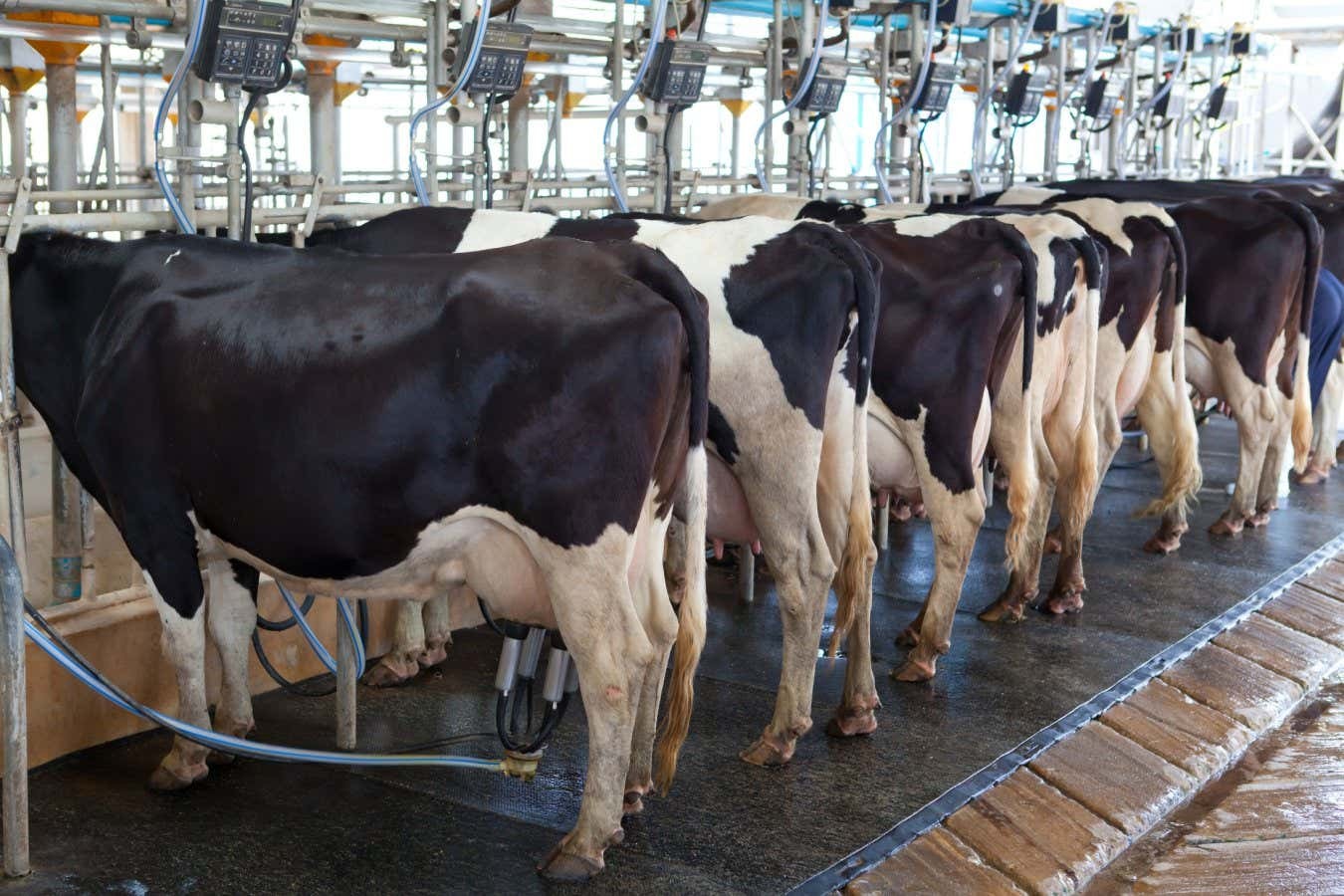
The global meat and dairy industry is under intense pressure to address its environmental footprint. However, a recent study suggests that the industry’s response is less about ecological transformation and more about strategic public relations. An analysis of the world’s largest animal agriculture corporations reveals that nearly all their sustainability claims fall into the category of greenwashing.
The Scale of the Problem
Animal agriculture is a primary driver of the climate crisis, accounting for at least 16.5% of all global greenhouse gas emissions. As public scrutiny regarding the environmental impact of diet and farming intensifies, major corporations have responded with a wave of sustainability pledges.
To determine whether these promises were substantive or merely performative, researchers led by Jennifer Jacquet at the University of Miami conducted a rigorous audit. Between 2021 and 2024, the team analyzed the sustainability reports and public-facing websites of 33 of the world’s largest meat and dairy corporations.
Deceptive Claims and Missing Evidence
The study analyzed 1,233 individual environmental claims made by these companies. The findings were stark:
– 98% of claims could be classified as greenwashing—deceptive or misleading statements designed to project an eco-friendly image.
– Two-thirds of all statements lacked any supporting evidence to prove they were being fulfilled.
– Only three claims in the entire dataset were backed by peer-reviewed scientific literature.
The research highlights a common tactic: companies often make vague, long-term promises about future climate commitments without providing a concrete, actionable roadmap to achieve them.
Grand Promises vs. Microscopic Actions
A significant disconnect exists between the “net-zero” targets set by these corporations and their actual operational changes. While 17 of the 33 companies evaluated have pledged to reach net-zero emissions, their strategies mirror those of the fossil fuel industry: they rely heavily on carbon offsets rather than the actual reduction of emissions at the source.
When companies do highlight specific “green” initiatives, the scale of these actions is often negligible compared to their total business footprint:
– Regenerative Agriculture: One firm promoted a regenerative farming pilot that involved only 24 farms—a mere 0.0019% of its total global operations.
– Packaging Tweaks: Other companies touted minor adjustments, such as reducing the width of sausage packaging tape by just 3 millimeters.
Why the Industry Resists Real Change
Experts suggest that this pattern of “window dressing” is driven by systemic incentives. Because large corporations operate within market norms that prioritize growth, they face a conflict between environmental necessity and profit preservation.
“Given the power of large companies… this leads to incentives to over-promise, to appear more progressive than they are, and to lobby for the status quo,” notes Tim Benton of the University of Leeds.
This phenomenon creates a landscape where misinformation is used as a tool to protect business models. Much like the historical tactics used by the tobacco and fossil fuel industries, the meat and dairy sectors appear to be using “spin” to delay the fundamental shifts required to mitigate climate change.
Conclusion
The study reveals that the vast majority of sustainability claims in the meat and dairy industry are designed to manage public perception rather than reduce environmental impact. Without rigorous scientific backing and large-scale operational changes, these corporate pledges remain a distraction from the urgent need for actual emission reductions.