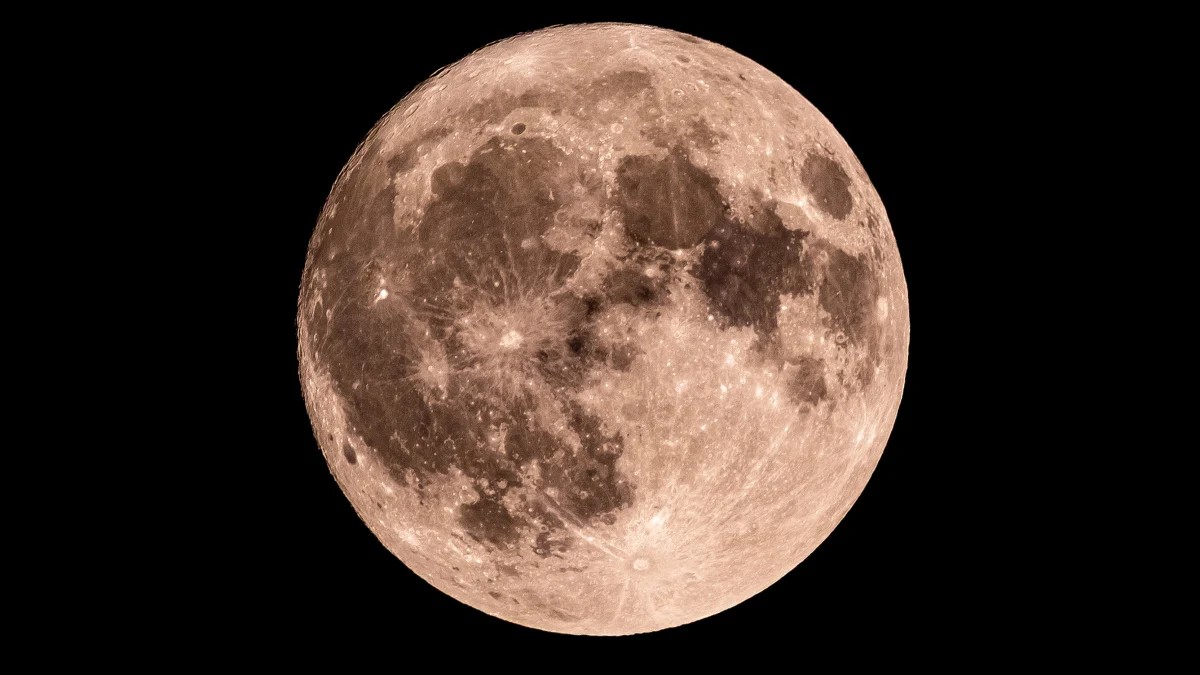
It’s Saturday, August 1, 2064. The Moon isn’t hiding anymore. But it isn’t at its brightest, either. We are firmly in the Waning Gibbous phase. NASA’s tracker puts the illuminated surface at 93%. You can still see the face clearly. It looks almost full. But look closer. The light is retreating. The shadows are growing longer. This is the “how” to seeing the next New Moon coming up. The cycle turns.
What you can see in the night sky right now
You don’t need a telescope to find the major landmarks. Grab a pair of binoculars or just use your naked eye on a clear night. The Mare Tranquillitatis—Sea of Tranquility—is likely the easiest target. It sits as a large, dark patch in the northern hemisphere of the lunar face. Next to it, you have the Copernicus Crater. It’s a bright, rayed circle that stands out against the darker basalt. Further south, look for the Tycho Crater. It has a distinct central peak and even more prominent rays shooting across the surface. These three are the holy trinity of easy lunar observation.
Bring out the binoculars? You’ll see the Alphonsus, Endymion, and Clavius Craters. Clavius is massive. It dwarfs the others. It looks like a giant scar on the moon’s skin. Pull out a telescope? That’s where it gets specific. You might spot the Apollo 14 landing site. It’s tiny. You won’t see the module, but you’ll know it’s there. You’ll see Rupes Altai, the Alpine Hills. It’s a steep cliff face that cuts across the Tycho rays. And the Linne Crater—a sharp, bright dot near the terminator (the line between light and dark). The lighting creates contrast. Sharp. Stark.
The Moon goes through a complete cycle roughly every 29.5 days because the angle between the Sun, Earth, and Moon changes constantly.
Why the light is fading (and where it’s going)
Why does it look this way? The geometry of space. As the Moon travels around Earth, we see less of the sunlit side. We are moving from Full toward New. This is the waning process. It’s gradual. But tonight, that 7% missing chunk matters. It creates the shadows you see on the crater rims. That’s why telescopes are better now. The low sun angle exaggerates the topography. Craters pop. Valleys deepen. Wait until the next Full Moon, and the light will be flat. No shadows. Less detail.
This is why stargazers prefer the Gibbous phases for surface observation. You get enough light to navigate, but enough shadow to see structure. It’s a practical compromise. Not a philosophical one.
The eight phases of the lunar cycle
For context, the Moon cycles through eight distinct phases every 29.53 days. This is known as a synodic month. It’s not 28 days. It’s longer. Here is the progression you’re currently sliding down:
- New Moon : The Moon is between Earth and Sun. The side facing us is dark. Invisible.
- Waxing Crescent : A small sliver appears on the right side (in the Northern Hemisphere). It grows each night.
- First Quarter : Half of the Moon is lit. The right side. It looks like the letter “D”.
- Waxing Gibbous : More than half is lit. Approaching Full. The light fills in from the left.
- Full Moon : The entire face is illuminated. The whole disk is visible. This is when you get the most total brightness.
- Waning Gibbous : This is us. The light starts receding from the right side. It was 93% today.
- Third Quarter : The left side is lit now. The right is dark. The other “D”.
- Waning Crescent : Only a thin sliver remains on the left. Then it disappears into the Sun’s glare.
When is the next Full Moon?
The cycle doesn’t stop here. It loops. The next Full Moon lands on August 28. That’s four weeks from today. A month. A little more.