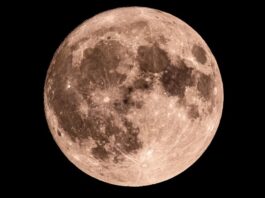
Sometimes to go to the moon, first you have to go underwater.
This sounds counterintuitive. You want rocks and vacuum. You get bubbles and chlorine. Yet, for the Artemis program, the two are inextricably linked.
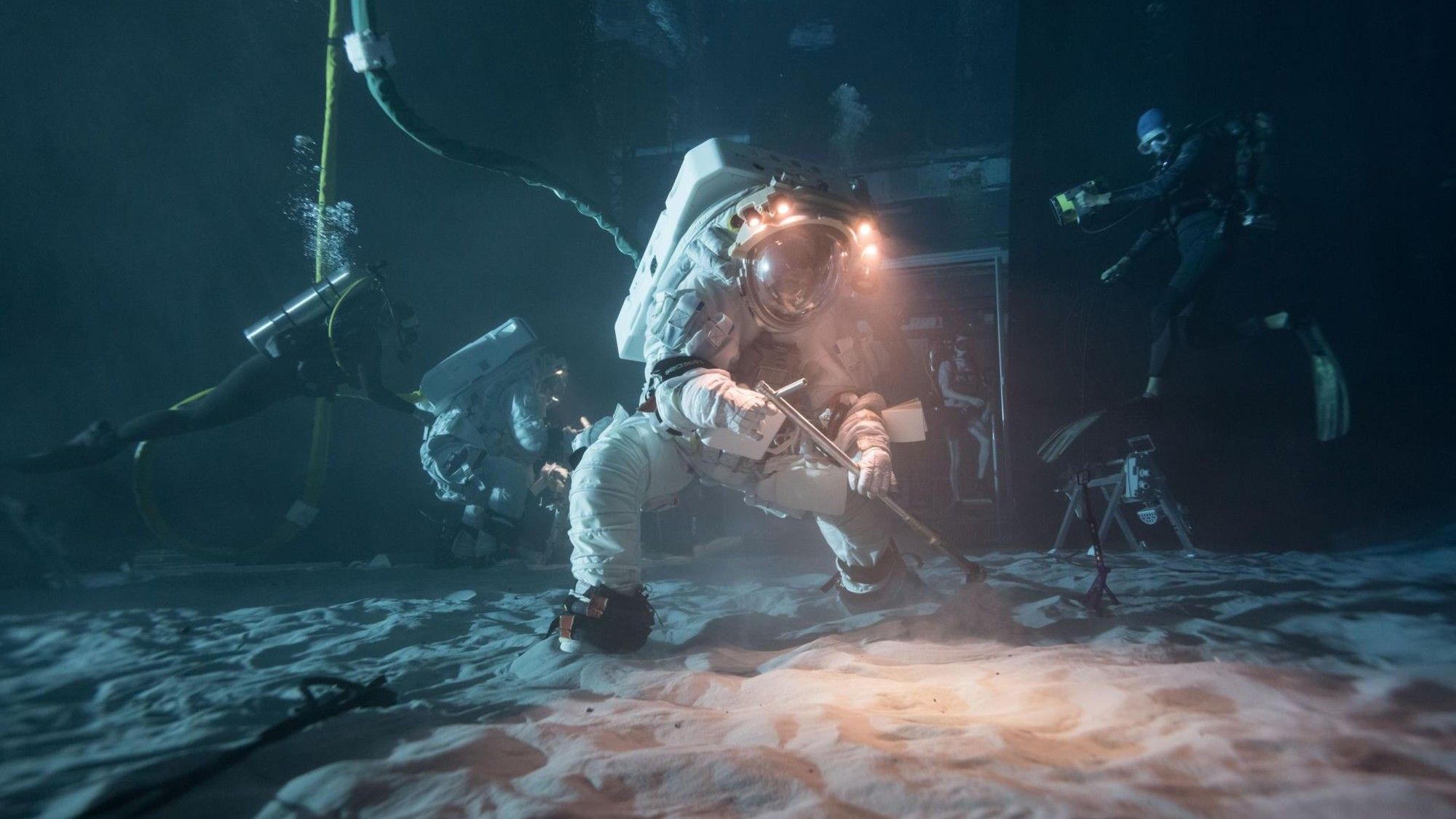
NASA scientists recently suited up. They plunged into the Neutral Buoyancy Laboratory in Houston. Their goal? To simulate the harsh conditions waiting for them at the lunar south pole. Specifically, the permanent shadows where light is scarce and the work is hard.
These aren’t just test suits. They are the Artemis moonsuits. And they are undergoing rigorous vetting before anyone thinks about launch.
Simulating low-angle lunar light
The images from this drill show two NASA exploration geologists. They are also Artemis science officers. They are carrying geology tools designed for extraterrestrial surfaces. But the real test isn’t the equipment. It is the lighting.
They deployed a mock lunar payload. The lighting conditions were kept at a low angle. This mimics the sun’s position near the lunar horizon. Why does that matter? Because the landing zones are in permanent shadow.
Future explorers will operate in near-total darkness. They cannot rely on bright, overhead noon sun. They need to know how to navigate, sample, and survive when visibility is minimal. If you can’t see your hand in front of your face, you need gear that works in the dark. You need training that adapts to the gloom.
The physics of a pool in Texas
The location is NASA’s Johnson Space Center. The facility is a 40-foot deep pool. Technicians manipulate buoyancy here. They can reduce it to simulate different gravitational pulls. Mars? Moon? They dial it in.
For this specific run, they configured the tank to mimic lunar gravity. It’s about 1/6th of Earth’s gravity. Walking is awkward. Jumping feels slow. Heavy equipment feels manageable, but still cumbersome.
Crucially, this was the first time two geologists were suited up simultaneously in the NBL. Previous tests might have isolated astronauts or focused on systems checks. This was field work. Real-time interaction between team members under simulated extraterrestrial pressure.
Why we haven’t gone back (and why we’re going)
Humanity last set foot on the moon in 1972. That was over five decades ago. The Apollo era is a distant memory, but the ambition remains. Artemis is not just a repeat. It is an evolution.
The challenges are technical and immense. Selecting a moon lander is still a moving target. Developing life-support systems for long-duration stays requires new solutions. But before you solve the rocket equation, you have to train the people riding the rocket.
You cannot teach lunar geology in a classroom. You need the weight. You need the resistance. You need to feel how a rock slides under a gloved hand when gravity is weak and light is weak.
Training for the shadow zones
The Artemis IV mission aims to place humans at the lunar south pole. This region offers scientific value: water ice in craters. But it also offers a logistical nightmare. The terrain is rugged. The light is tricky.
By practicing with low-angle lighting now, NASA is preparing for those long, dim days on the surface. If an astronaut drops a tool, it doesn’t fall straight down. It drifts. It bounces. They have to learn to recover it without losing momentum or breaking the seal of their suit.
These photos capture that preparation. Two scientists. A darkened pool. A simulation of a world away. It looks like training. It is training. And it is essential for when the rocket finally fires.