The operating room is quiet. The monitors hum. Then, the doors swing open.
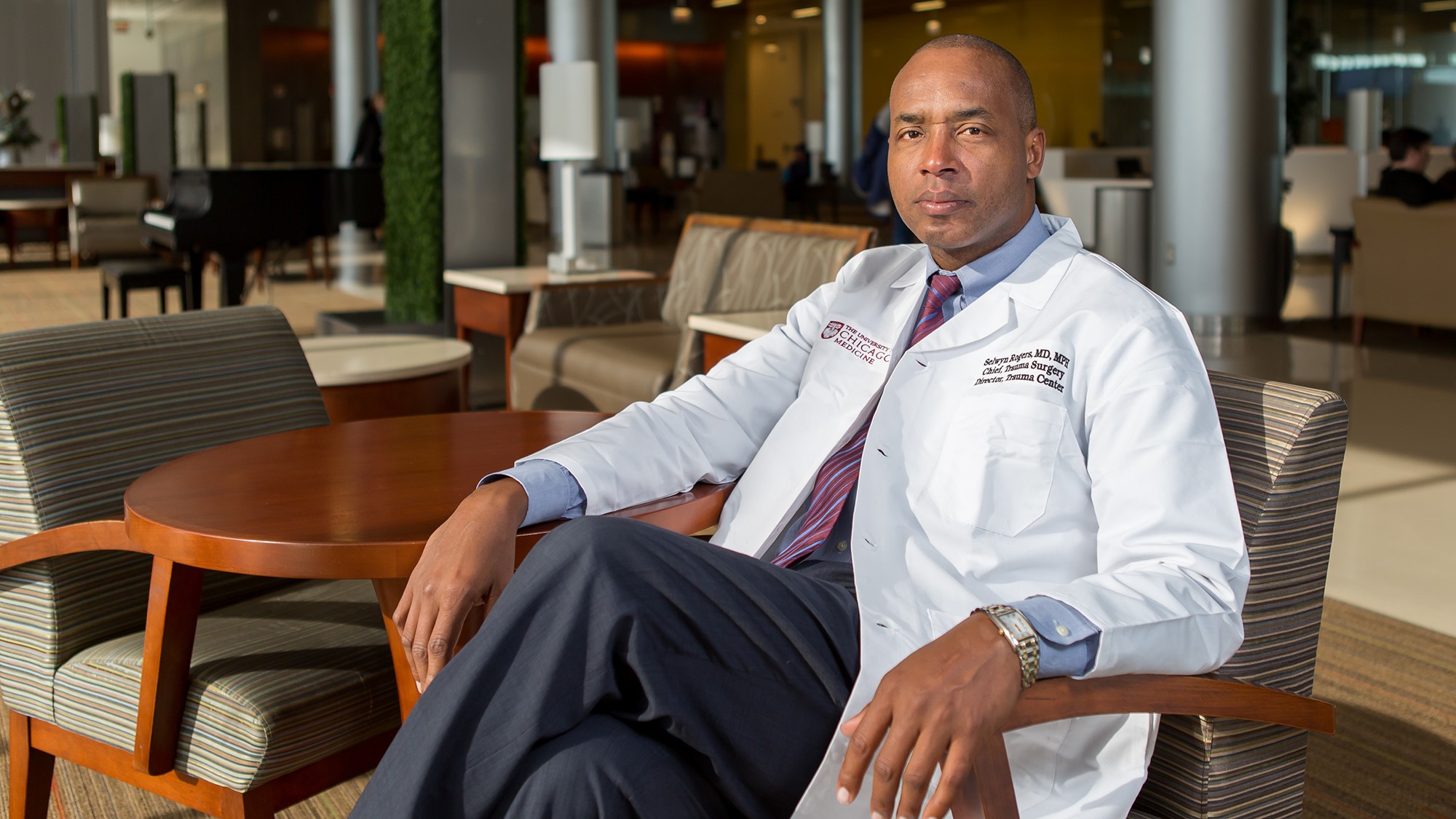
Gun violence isn’t just a statistic. It’s flesh. It’s bone. It’s a mother’s scream echoing through the halls of the University of Chicago Medicine Trauma Center, which Dr. Selwyn Rogers Jr. helped found in 2018.
For nearly three decades, Chicago’s South Side lacked an adult trauma center. Since 1991, people shot there had to endure hour-long ambulance rides across the city just to get care. Lives were lost in the back of those ambulances. Rogers saw it. He fought it. Now, he’s telling the world how we fix it.
In his new book, Healing the Gun Violence Epidemic: Ending Violence, Rebuilding Communities, and a Doctor’s Vision for Restoring Hope, Rogers moves past the blame game. He looks at the root causes. He offers a path forward that isn’t political. It’s human.
Why Hope Survives the Bleeding
Politics stall. Legislation grids. But people? People endure.
Rogers admits he is “pathologically optimistic.” Why? Because if he didn’t believe in recovery, he couldn’t stitch people back together.
Consider the mother who lost her son to a bullet. She looks at Rogers in despair. But then she says, “I have to keep going for my kids.” That’s not despair. That’s fuel.
Or the young man who used to carry a gun. Now? He spends his days preventing others from getting hurt.
Even the wide-eyed fear in a five-year-old boy’s face asking, “Are you a doctor?” becomes a moment of connection. These small, brutal intersections are what keep the lights on in a dark system.
“We just need to look for them,” Rogers says. They’re everywhere.
The Gap in the Grid
To understand why gun violence persists, you have to understand why healthcare fails us.
Rogers trained in Boston during the crack epidemic of the 1990s. He noticed a pattern. The victims of penetrating trauma—gunshots, stabbings—looked like him. Black. Hispanic. Male. It hit him hard. He wanted to fix it.
He went to Nashville. Vanderbilt University. Meharry Medical College. The county hospital.
He saw two patients. Same diagnosis. Same injury. One walked out. The other didn’t. Why? Distance. Disparities. The two-mile gap between an academic medical center and a public county hospital can mean the difference between life and death.
“We don’t treat trauma holistically,” Rogers says. “If you have a heart attack, we treat the blockage. We treat the cholesterol. We treat the smoking. We fix the whole you.”
But for trauma? We patch you up. We send you home. We assume the risk factors vanish because they left the building. They don’t. The neighborhood is still dangerous. The bank account is still empty. The trauma is still fresh.
Time is the Enemy
What does a trauma center actually do? It’s not just a fancy ER.
An emergency department is a place you go when you’re sick, broke, or have nowhere else to be. A trauma center is a system.
It’s a coordinated swarm. Surgeons. Radiologists. Anesthesiologists. Social workers. All moving at once. Because time isn’t just money. Time is an arm. Or a life.
Take the brachial artery. The main vein in your arm. Cut it, and you bleed out in minutes. You don’t have an hour. You don’t have twenty minutes. You need a trauma center now.
When the South Side lacked one, shots fired four blocks from the University of Chicago could kill you anyway.
Meet Damien Turner. Eighteen. An activist. Fighting for rent control. Shot in 2010.
He was taken to Northwestern Hospital, forty-five minutes away. He arrived dead.
His mother told reporters, “If the South Side had an adult trauma centers, my son would still be alive.”
Debate the statistics if you want. But a gunshot wound is a simple equation: Blood out. Body fails. Time stops.
Damien’s youth group, Fearless Leading by the Youth, adopted a slogan. It’s simple. It’s urgent.
Trauma center now.
They got their wish in 2018. But the war isn’t over.
The Myth of the “Criminal” Problem
Chicago gets a bad rap. It’s the third-largest city. It’s visible. It’s Democratic. And because of that, it’s painted as a case of urban blight.
Rogers disagrees. It’s not a cultural failure. It’s a public health crisis.
We treat gun violence like a criminal issue. We arrest the symptoms. But we ignore the disease.
A public health lens asks different questions. It looks for risk factors. It looks for protective factors. It stops asking “Who did it?” and starts asking “Why did it happen?”
In Boston, Rogers helped start a hospital-based violence recovery program. It’s called secondary prevention.
Think of it like this: You’ve had an opiate overdose. Narcan saves you. But that’s not the cure. That’s just stopping the death.
Secondary prevention is the follow-up. It’s ensuring the person doesn’t die again.
Credible Messengers and Safety Nets
Who does this work?
It’s not just doctors. It’s people with lived experience.
Rogers calls them “credible messengers.” Some have been shot. Some have been to prison. They come from the neighborhood. They speak the language. They have the trust that a white coat can’t buy.
These teams act as connective tissue. They bridge the gap between the hospital bed and the street corner.
They know about the Victims of Crime Act fund. They know where the SNAP benefits are. They know which organizations offer rent assistance.
If you’ve been shot, you’re on the edge. Paycheck to paycheck. Living hand to mouth. Now you’re not working. The rent is due.
The hospital doesn’t pay that. But the violence recovery team does the work of finding out who will.
Groups like Cure Violence and the Institute for Nonviolence Chicago use these same messengers to interrupt cycles of revenge. They talk to the guys on the block. They talk the shooting down before the bullets fly.
“It’s literally a conversation,” Rogers says.
Breaking the Cycle
We are treating this wrong. We’ve spent years locking up the injured and the injurers. But we haven’t healed the wound that made them need a gun in the first place.
Primary prevention is harder. It happens outside the hospital walls. It happens in the economy. In the schools. In the lack of hope.
But secondary prevention is here. It’s proven. It works.
Every hospital should invest in it. Not because it’s nice. Because it saves lives.
Rogers sees it every day. The kid who comes back for a third time. The one who finally gets help. The one who walks out of the hospital and doesn’t walk back in with a wound.
That’s the vision.
It’s not perfect. It’s messy. It’s slow. But it’s real.
And if we stop looking at gun violence as a war to be won and start seeing it as a sickness to be treated, we might just survive it.