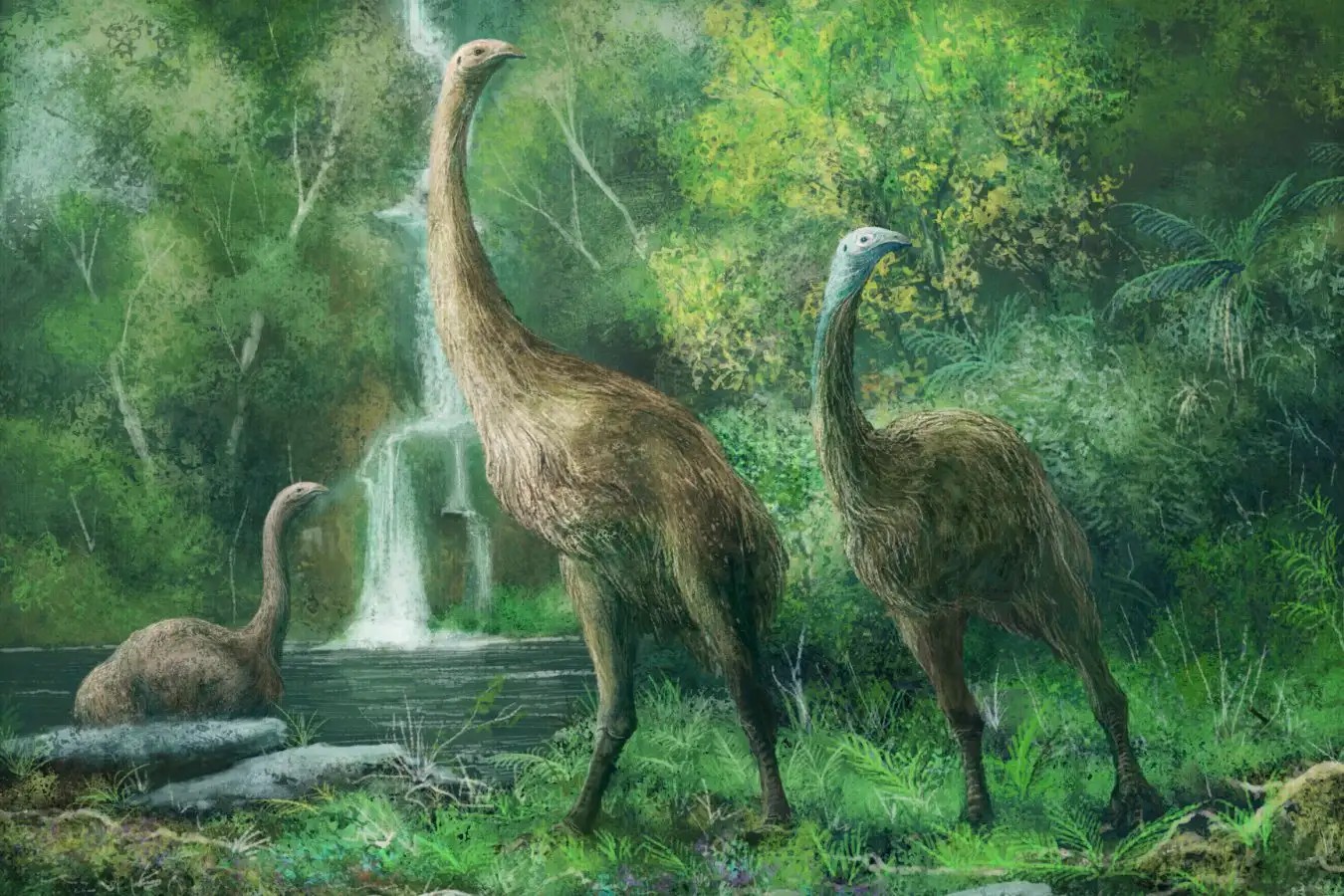
The moa were terrifyingly big. Flightless birds standing over three metres tall. They weighed more than two hundred kilos. New Zealand was their domain until humans wiped them out. Colossal Biosciences wants to bring them back. Or rather. They want to sell the idea they can.
The Shell Problem
You can’t just hatch a giant bird in a chicken shell. Their eggs would explode. Or squash. Colossal says they have an answer. An artificial shell. A lattice supporting transparent silicone. They claim this mesh lets oxygen in just like real eggshells. It’s supposed to hold a moa-sized egg together without cracking the baby bird inside.
Is it the first artificial bird egg?
Colossal calls it that in their press release. Artificial egg. It’s technically just a shell. The interior is empty marketing space. We’ve hatched chickens in plastic cups. We’ve used cling film. The survival rates are trash though. Without that hard calcified barrier, chicks often suffocate. Or dehydrate. So yes. Ex-ovo breeding has been a nightmare for years.
Does silicone solve it?
They say their membrane mimics the gas exchange of a chicken shell perfectly. No extra oxygen pumps needed. Sounds clean. Efficient. But where are the numbers?
Ben Novak from Revive & Restore asked for the data. He wants to know the efficiency rates. How many chicks hatch? How many die in the dark silicone? No experimental results have been released yet. Just claims.
“I would love to see what the number are on efficiency,” Novak said.
Size Matters
Even if this silicone works for chickens, a moa is different. Physics doesn’t care about your brand. Large eggs have a worse surface-area-to-volume ratio. Less skin. More stuff. The permeability would need tweaking. That’s manageable. Engineering.
But volume is the real killer. A moa egg is huge. Up to twenty-four centimetres long. It holds massive amounts of white and yolk compared to modern birds. Adding white is easy enough. You can hatch chickens in turkey egg whites. The albumen doesn’t matter much to the chick. It’s just fluid padding.
The yolk?
That’s the bottleneck. Every egg yolk is a single cell. Ostrich yolks are already the largest cells on the planet. Moa yolks would be bigger. You can’t just pour more yolk in. The cell membrane would burst. You’d need to expand the membrane itself to hold the extra genetic cargo. Possible? Maybe. With enough money and time? Sure. With current tech? Dubious.
The Genome Gap
Let’s say you crack the egg size issue. You solve the oxygen. You inject the yolk. Do you get a moa?
Absolutely not.
DNA decays. It fragments over time. The nine species of moa vanished about six hundred years ago. The genetic material is shredded confetti now. You cannot reconstruct a complete working genome. It doesn’t exist anymore. Not even the human genome was fully sequenced until last year. Moa DNA is dust.
The Wolf Deception
You might remember the dire wolf hype. Colossal claimed to resurrect the Ice Age predator. They didn’t. They edited grey wolves. Five genes changed. A cosmetic tweak. The company insists these modified wolves are “dire wolves.” The scientific community disagrees. Loudly.
Vincent Lynch at the University at Buffalo calls the claim unjustified. It’s not resurrection. It’s editing. A hybrid. At best.
So is de-extinction real?
Not the way Hollywood sells it. You cannot clone back what is genetically lost. What you can do is make a hybrid. Take a living relative. Tweak a few traits. Make it look like the extinct cousin. Novak aims to turn a band-tailed pigeon into a passenger-pigeon-like thing. He calls it a hybrid. Honest. Colossal prefers not to be honest.
Why Bothers?
Colossal hasn’t announced a moa partner yet. But look at their pattern. Emus are related to moas. Tweak the emu. Make it bigger. Fuzzier. Call it a moa. It’s ecotourism bait.
Nic Rawlence from the University of Otago thinks it’s premature. He thinks it’s a waste of time. There is no ecological need. Just a business plan. Plus, Māori communities in New Zealand are pushing back. The public doesn’t want genetically engineered monstrosities parading as ancestors.
The shell itself?
It’s not the key to the Stone Age. But the technology is impressive. Rawlence calls it groundbreaking in its own right. Not for de-extinction. For conservation. You could use it for critically endangered birds that need help breeding. Researchers could watch genes develop through the clear silicone. Poultry farmers could use it.
Colossal isn’t bringing back the dead. They’re building better incubators. The moa stays gone.