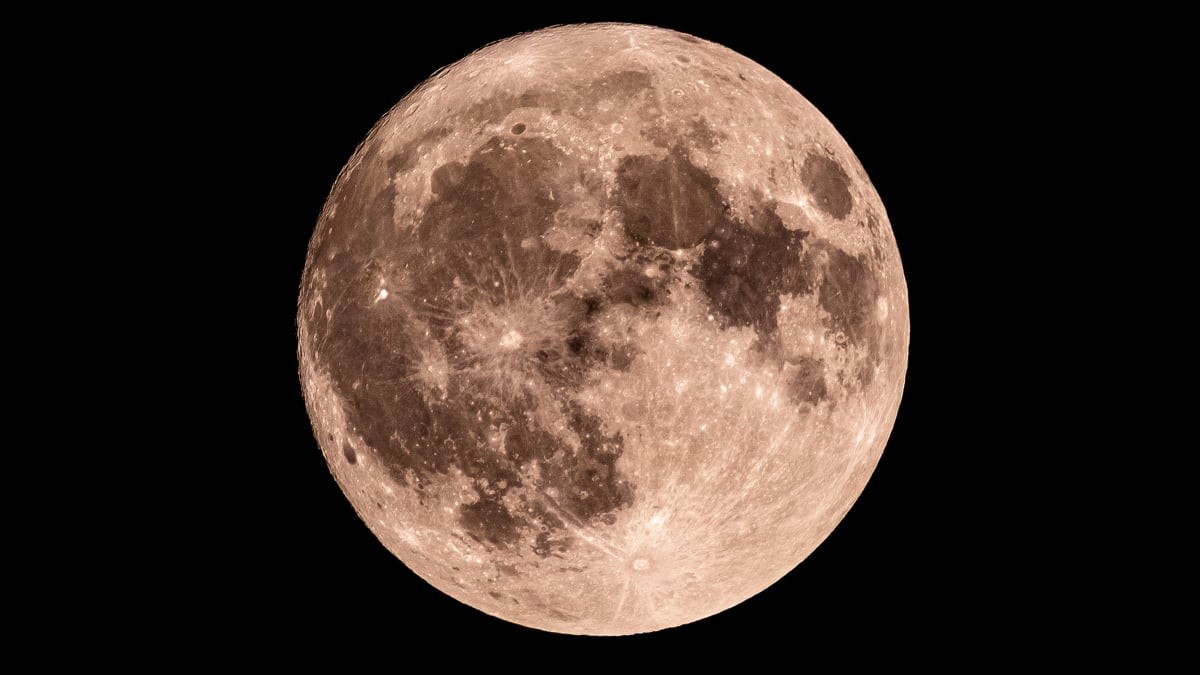
It is bright out tonight. Not just stars, but that big pale face staring back. May 28 falls right in the thick of a Waxing Gibbous phase. According to NASA’s daily guide, we are looking at roughly 91 percent illumination.
That is a lot of surface area to take in. You don’t need gear just to start looking, provided the sky isn’t choked with clouds or smog. Look up with your naked eye and you will find the Mare Imbrium and Mare Vaporum. There is also the Kepler Crater waiting for you.
Have a pair of binoculars handy? Good. They’ll open up the Posidonius, Alphonsus, and Clavius craters. Telescope? Then you are in the game of finding human footprints. You can spot the landing sites of Apollo 11, 14, and 18. Wait. 17. The source says 17. Check your lenses.
When does it fill up completely?
Two full moons. One month. Rare, but here it comes.
The next one lands on May 31, 2026.
How do we know?
The math is roughly 29.5 days for one full orbit around Earth. The Moon shows eight distinct phases in that cycle. It’s not changing its own light. The sun is hitting it. Just depending on the angle. The same side always faces us, but the sunlit part shifts as the moon travels its path. This creates the shapes.
Here is the breakdown of the lunar cycle:
- New Moon : Dark. The moon sits between us and the sun. You cannot see it. It is effectively invisible.
- Waxing Crescent : A thin slice of light appears. On the right side if you are in the Northern Hemisphere.
- First Quarter : Half lit. Right side. Looks like a standard half-moon.
- Waxing Gibbous : More than half. Almost there, but not quite. This is where we are.
- Full Moon : The whole face. Bright. Obvious.
- Waning Gibbous : Light starts fading. Losing ground on the right side.
- Third Quarter : The other half-moon. Now the left side holds the light.
- Waning Crescent : A thin sliver on the left. Before it goes dark again.
We stare at the same side every night. It feels intimate. Maybe too familiar. We forget the back is never turning away to hide its secrets, only because the rhythm keeps us guessing about the front. What else is it hiding?
We will find out when it turns. Until then, we just watch the gibbous curve.