Cancer is sneaky.
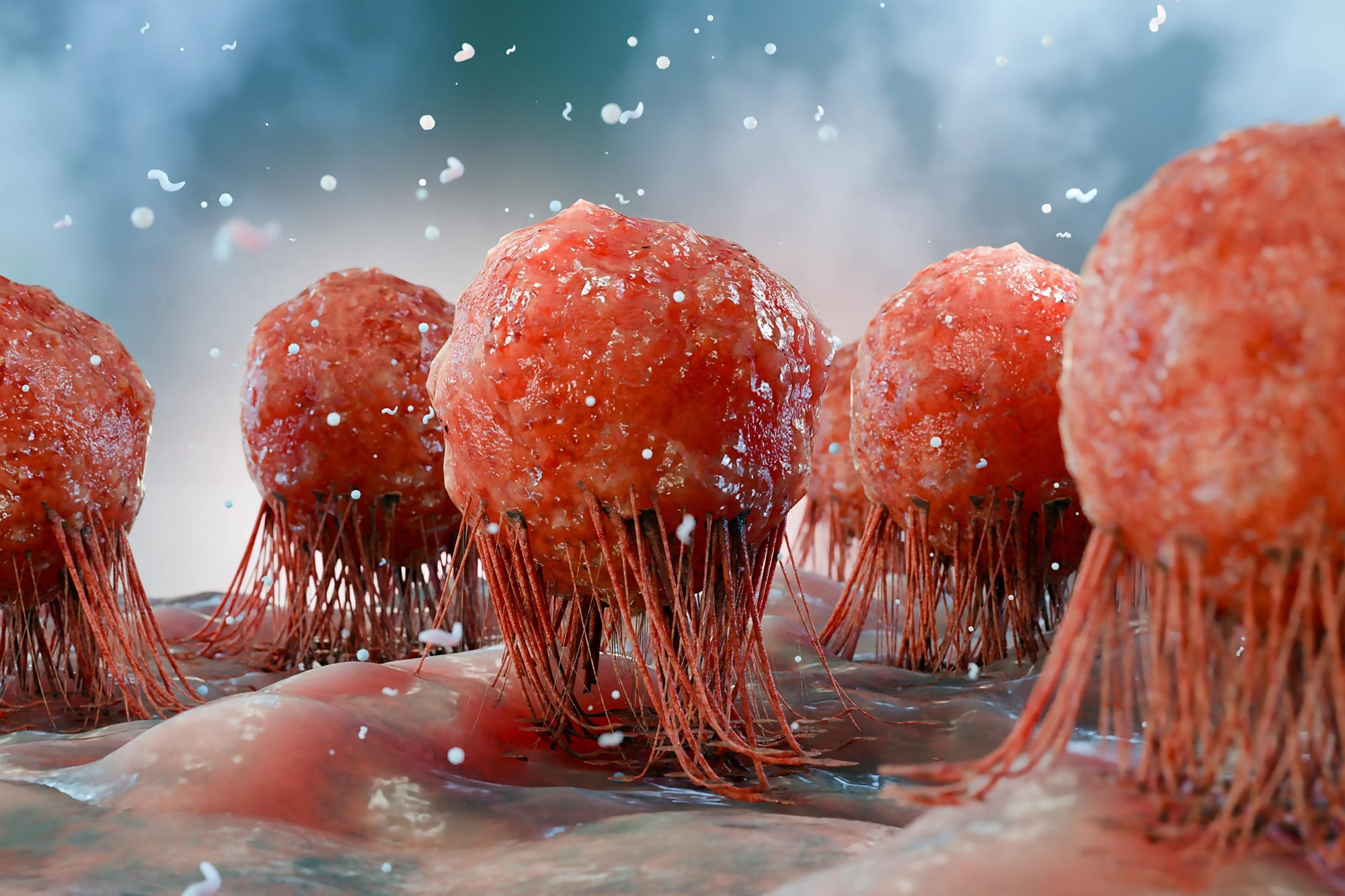
It knows exactly how to vanish from immune sightlines. The usual playbook involves shutting down molecular beacons, specifically MHC class I markers, making the cells invisible to the primary hunters—CD8+ T cells. Standard doctrine says these helpers stay in the background while killers do the dirty work.
Researchers from Baylor College of Medicine and the University of Michigan just flipped that script.
Dr. Pavan Reddy led the team, along with grad students Emma Lauder, Meng-Chih Wu and Mahnoor Gondal. They found that when tumors ditch those MHC class I shields to dodge CD8+ T cells, they accidentally flag themselves for a different, more brutal audience: CD4+ helper T cells.
The mechanism is unexpected. The loss of MHC class I expression doesn’t just leave the cell bare; it makes it susceptible to ferroptosis. A specific kind of cell death. Driven by iron accumulation and oxidative stress. It’s a form of destruction the scientific community had largely ignored in this context.
Rewriting the rules
For decades, immunology rested on a tidy division of labor. MHC class I talks to CD8+ killers. MHC class II talks to CD4+ helpers. Two separate circuits.
The new study, published in Nature Immunology, shows this binary isn’t quite right. The class I pathway matters to CD4+ cells too. When that pathway is absent, CD4+ T cells step up their game, attacking the “hidden” targets directly.
It changes everything about how we view immune evasion. The tumor tries to hide, but in doing so, it triggers a vulnerability it didn’t account for.
This wasn’t just a theoretical exercise in mouse models. The team analyzed large datasets of human patients undergoing checkpoint blocker therapy. They also looked at graft versus host disease—a nasty complication of bone marrow transplants where the new immune system attacks the body. In both scenarios, lowering MHC class I increased susceptibility to CD4+-mediated killing.
“This may allow for the development of novel strains of strategies that target MHC class I… to mitigate unwanted immune responses,” Reddy said.
Why assume helper cells are just assistants? They can execute lethal hits.
Clinical implications
This shifts the therapeutic landscape. Current immunotherapies focus heavily on boosting CD8+ responses. But if tumors are expertly hiding from CD8+, maybe we need to empower CD4+.
Strategies that leverage these “helper” cells could hit tumors that previously escaped treatment. It also opens questions for transplantation. If MHC class I protects tissues from CD4+ attack, manipulating that balance might prevent organ rejection or GvHD.
The work is preliminary. Validation is needed. But the premise is sound enough to warrant attention.
Who decides what kills a cancer cell? Usually the one with the right marker.
The paper is out now. DOI: 10.1037/s41590_2026_02480_z. Funded by various NIH and Texas cancer institute grants. The authors suggest we might finally be able to turn a tumor’s hiding move into its downfall. Or maybe we just have one more way to fight it.