The image looks familiar. Too familiar. It’s the blueprint for every celebrity meltdown we’ve consumed for decades. A black and white shot taken in the dead of night in Rome. Anthony Steele, clearly out of his mind and stumbling toward the camera, fists clenched. Behind him, his wife, the stunning Swedish actress Anita Ekberg, steps out of the car, head down, bracing for impact.
It seems like a generic A-list disaster waiting to happen. But this isn’t just any old tabloid snapshot. It is one of the first and most famous examples of paparazzi-style photography ever taken. And the man behind the lens, Tazio Secchiaroli, didn’t just take a picture. He rented out the sacred veil between stars and the public eye.
How Paparazzi Photography Changed Celebrity Culture
Rome in the mid-20th century was the global capital for celebrity sightings. Hollywood had packed up its expensive sets and moved to Italy for cheaper locations. The result was a influx of A-listers who flocked to cafes, restaurants, and bars along Via Veneto.
Ava Gardner. Jayne Mansfield. Anita Ekberg.
They were the targets. The photographers were itching to catch them not as polished icons, but as human beings. Flawed. Messy. Real.
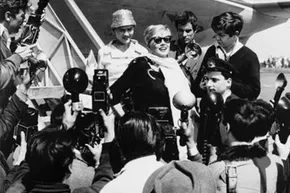
Secchiaroli’s photo of Steele and Ekberg was career-making. It captured the exact moment the dynamic shifted. Before this, photographers like Bob Willoughby were on-set professionals in the 1940s. They snapped stars during breaks. They created art. They maintained distance.
Paparazzi don’t care about distance. They exploit it.
Why the Term ‘Paparazzo’ Has a Negative Reputation
The term itself comes from Federico Fellini’s 1960 masterpiece, La Dolce Vita. In the film, Ekberg starred as a starlet hunted by a character named Paparazzo. He was the photographer’s sidekick. A wolf pack with a camera.
Fellini’s depiction was derisive. And it stuck.
Unlike traditional on-set photographers, paparazzi don’t want you to see the star at their best. They want the grainy image of Britney Spears staring into a salon mirror with half her head shaved. That’s worth money. The perfectly coiffed red carpet pose? Worthless.
The goal is to remove any barrier between the famous target and the viewer. Emotional breakdowns. Bad hair days. Intoxicated stumbles.
Where the Modern Tabloid Machine Came From
The ubiquity of these images is a relatively recent phenomenon. Yet, the engine powering it remains unchanged. The group of photographers and shot callers feeding contemporary tabloid culture is still exclusive. Still aggressive. Still money-hungry.
They don’t make art. They make noise.
So when you see a grainy photo of a celebrity looking their worst, remember Steele in Rome. Remember Secchiaroli. Remember that the hunger for these images didn’t start with Instagram or TMZ. It started with a flash bulb in the dark and a choice to strip away the glamour.
The veil is gone now. We just keep looking.