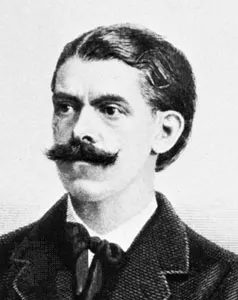
Georg August Schweinfurth was not your typical armchair botanist. Born in Riga in 1836, he spent his life crossing borders and exploring new frontiers in the dark corners of the African continent. Although he died in Berlin in 1925, his legacy is etched on the map of two major river systems. He didn’t just study plants. He mapped the unknown.
His journey began with a simple obsession with African plants.
In 1863 he crossed the Red Sea. He landed at the port of Suakin in Sudan and then made the long land journey to Khartoum. This is not a relaxing vacation. This is a scientific task. After returning to Berlin in 1866, he did not rest. He received a grant to explore the Baḥr al Ghazāl region. This region was part of the upper Nile basin and was largely unknown to European science.
In January 1869 he returned to Khartoum and heading south.
Schweinfurthh’s expedition to Baḥr al Ghazāl was difficult. He followed the White Nile upstream and then turned southwest into the interior of Sudan. He moved to a group of ivory traders. Traveling is dangerous. The culture he encountered was completely different from what Europeans understood at the time.
He visited the Bongo and Mangbetu tribes. He also recorded the group Naim-Naim, often described as cannibals. Their practice of filing the teeth to sharp points left a lasting impression on his records. More importantly, Schweinfurth provided the first authoritative description of the Congo pygmies in Europe. These are not random observations. These are detailed and authentic anthropological notes.
Then came the geographic breakthrough.
In March 1870 he crossed the divide between the Nile and the Congo. He arrived at the Uele River. It flows west into the Congo water system. Schweinfurth originally thought it was a tributary of the Niger River. Maybe it’s a serious mistake. But it doesn’t matter.
The discovery of the Uele River finally allowed researchers to calculate the true extent of the Nile system. Reveals the hydrology of the continent. Turn the vague concept of “Heart of Darkness” into a mapped reality.
Schweinfurthh’s discovery of Uele influenced the final estimate of the extent of the Nile system.
He published The Heart of Africa in 1873. This book became an important text for understanding this region. This is more than just a travelogue. This is a scientific record.
He did not leave Africa after 1873 and moved to Cairo. He lived there from 1875 to 1888, shifting his focus. He studied Egyptian botany. He studied geology. He studied paleontology. He studied deeply the archeology of Egypt and the Middle East.
He died in Berlin. But the river he found still flows. The plants he cataloged still exist today. The maps he drew are still in use.