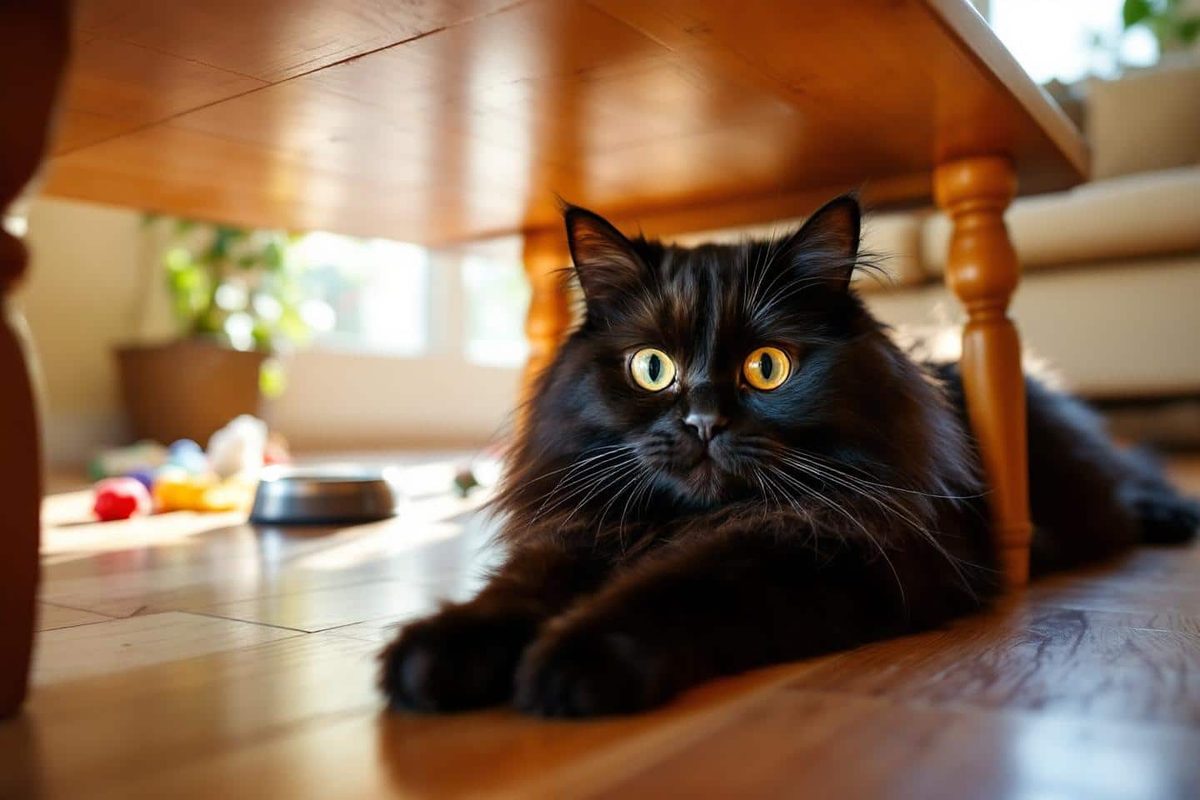
A cat vanishing under the sofa or behind a wardrobe is common. Even the most social feline needs a break. But when this behavior becomes sudden and persistent? It triggers curiosity. Then anxiety. Is it just a need for quiet? Or is it a hidden alarm signal? If your mustache-faced companion turns into a ghost while he was eating at the table yesterday. You must pay attention to this silent language. This unusual retreat is not a feline fancy. It often expresses discomfort. Health issues. Or underlying stress.
Learn to interpret these signals. Detect what your cat is trying, sometimes clumsily, to communicate.
You are worried. Here is why your cat plays ghost and what it hides
A sudden change in attitude in a cat is never trivial. Contrary to popular belief. The animal is not just seeking “freshness” or a dark corner for a nap. Hiding often represents the language of discomfort in domestic felines.
It is not hiding for nothing: Deciphering the messages of the discreet cat
The cat does not adopt a new refuge without reason. When it hides under furniture. It is rarely out of whim. In reality. Withdrawing from sight is its way of avoiding what bothers or angers it. This can reveal physical pain. Emotional upheaval. Or simply an occasional need for tranquility. Distinguishing between a simple slump and a true alert signal requires meticulous observation.
Suddenly less sociable? The small signals that say everything
Before panicking. It is crucial to spot the other signs accompanying this withdrawal:
- Refusal to eat or decrease in kibble ration
- Avoidance of interactions and flight at the slightest movement
- Dull coat. Decreased grooming or. Conversely. Excessive licking
- Meows. Growls. Or hisses when approached
Taken separately. These behaviors often go unnoticed. But their accumulation should raise vigilance.
Between pain and stress. How to guess what your feline truly experiences
Hiding can indicate two broad categories of difficulties: physical pain (such as joint. Digestive. Or oral disorders…) or stress induced by an environmental change. A suffering cat limits its movements. Seeks to isolate itself. And modifies its routines. Especially grooming and feeding. On the other hand. Acute stress (arrival of a new animal. Moving house. Renovations at home…) can be enough to destabilize it completely.
Environmental change factors that can upset your cat
Cats tolerate the unexpected poorly. Even the appearance of a new object. An unknown smell. Or the displacement of a piece of furniture can cause trouble. Strongly attached to their territory. They handle sudden modifications poorly:
- Arrival of a baby. Another animal. Or new roommates
- Work or redecoration of the home
- Prolonged absence of their owners
- Unusual noises or frequent passage of visitors
The combination of these elements creates a context favorable to a cat that prefers to hide than to face the unknown.
Stop misconceptions: When to worry and act to protect their health
Some cat quirks are known. But do not neglect episodes of prolonged retreat under the dresser. The risk is to minimize a behavior that. Sometimes. Signals a true emergency.
Situations where hiding can signal a real physical problem
A refuge adopted suddenly and persistently is rarely benign. If. Additionally. Your cat stops eating. Vomits. Suffers from diarrhea. Or has difficulty moving. It becomes imperative to act quickly. A cat that does not eat endangers its health in just a few days. Especially due to the risk of hepatic lipidosis. A serious and rapid liver condition. Dental. Urinary. Or hormonal pains often go unnoticed behind a withdrawal attitude. Therefore. Do not take lightly an “invisible” cat presenting other unusual symptoms.
Low morale or true illness? The indices that should push you to consult
Even for an experienced veterinarian. It is sometimes difficult to distinguish a transient disorder from a pathology. You should consult quickly in the following cases:
- The withdrawal lasts more than 24 to 48 hours
- Appetite. Thirst. Or behavioral disorders are associated
- General state is altered (weight loss. Neglected coat. Respiratory distress…)
Taking the initiative allows intervention before discrete signs become a veterinary emergency.
Errors to avoid when wanting to reassure an anxious cat
The temptation to drag Felix out from under the bed by force or to force him to come out is great. But it is a classic mistake. A stressed or suffering cat needs to be able to manage the situation. Chasing him. Raising your voice. Shaking his hiding spot. Or abruptly disturbing his habits would only increase his anxiety. It is better to show patience. Prioritize some gentle and reassuring gestures. And above all. Respect his need for temporary isolation.
Trust isn’t given. It’s rebuilt.
A cat hiding under the sofa isn’t being difficult. It’s terrified. The path back to calmness requires a delicate balance of safety and predictability. You cannot force a retreat. You must wait for the cat to emerge on its own terms.
Creating safe zones and restoring routine
You don’t need to turn your living room into a bunker. But you do need to offer specific, secure hiding spots.
A comfortable bed. A high perch. A cardboard box under the desk. These aren’t luxuries. They are lifelines.
Re-establishing a predictable routine helps your cat feel in control of its territory. Feeding times shouldn’t be random. Play sessions should be consistent. Cuddle moments should be optional, never forced.
Interactive toys can spark curiosity. A pinch of catnip in their favorite spot might provide just enough stimulation to break the paralysis of fear.
“A predictable routine helps your cat feel in control of its territory.”
Tracking behavior to spot changes
Watching quietly is key. You aren’t stalking. You are monitoring.
A simple log helps. Without it, you might miss subtle shifts. You might think the problem is getting better when it’s actually worsening.
Track these three things:
– Behavior: What are they doing? (Hiding, refusing contact, eating less?)
– Duration: How long has this been happening?
– Frequency: Is it happening all the time or just occasionally?
– Evolution: Is it getting worse, staying the same, or improving?
For example, if your cat has been hiding under furniture for two days and it’s happening multiple times a day, that’s a red flag. If appetite loss is partial and ongoing, you need to watch closely.
Constant vigilance prevents you from missing a serious health issue or a deepening anxiety disorder.
Prevention beats cure
Prevention is simpler than cure.
Provide a stable environment. Keep the stimuli manageable. Offer hiding spots AND play spaces.
Monitor their food intake. Establish a calming routine.
A happy cat is more resilient. It won’t hide at the first sign of trouble. It won’t bolt at the sound of a vacuum cleaner.
But you won’t know if you don’t pay attention. The window to help closes quickly when fear takes hold.