


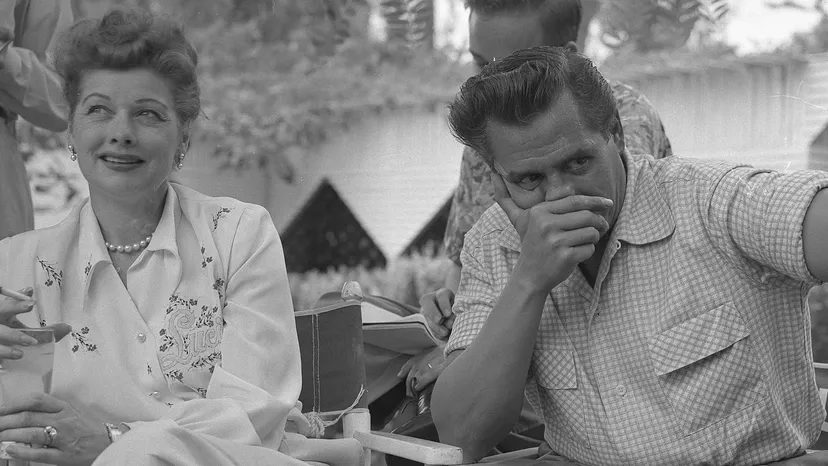

We all know the drill. I Love Lucy. Red hair. Gag reels. Lucy Ricardo chasing Ricky. It’s the show that defined the 1950s. But if you think Desi Arnaz was just the straight man to Lucille Ball’s chaos, you are missing the whole point. Arnaz didn’t just act in the show. He reinvented how television was made.
He was a pioneer. A musician. A business mogul. And the man who brought the conga line to America.
Arnaz was born in Santiago, Cuba, in 1917. His family background reads like a history textbook. His great-great-grandfather bought up massive tracts of Los Angeles land—including what became Beverly Hills. His dad was mayor of Santiago. His mom? Daughter of a Bacardi Rum founder. His grandfather fought alongside Theodore Roosevelt at the Battle of San Juan Hill.
It was a privileged start. But it didn’t last.
In 1934, political unrest in Cuba landed Arnaz’s father in jail. The family fled to Miami. They lost their status. They rebuilt from scratch.
This shift changed everything. The musically inclined teenager started playing guitar in a small rhumba band. That is where Xavier Cugat spotted him. Cugat swept Arnaz into his orchestra. Arnaz became famous enough to strike out on his own. He introduced the conga line to Miami crowds. It became a party staple.
Popularity grew. The band moved to New York. They starred in the Broadway musical Too Many Girls. Then came the film adaptation in 1939.
On that set, Arnaz met Lucille Ball.
They fell in love. Six months later, they eloped.
They separated briefly in 1944. They reconciled. They started planning their future. Not just as spouses. As partners in crime.
The Pitch That Changed Television
By 1950, Arnaz and Ball had developed a sitcom. They pitched it to CBS.
The executives had a problem. They didn’t like Arnaz’s Cuban accent. They weren’t sure he could carry a lead.
So the couple used their own money. They produced a pilot themselves. They convinced the bigwigs that Arnaz was perfect for the role of Ricky Ricardo. And that the show would be a massive hit.
It was.
I Love Lucy became America’s most popular TV show. It held that title for four of its six prime-time seasons between 1951 and 1957. Viewers loved the non-traditional partnership. It was groundbreaking. It showed multi-ethnic relationships. It portrayed progressive Latino-American masculinity. It shifted gender dynamics on screen.
But the real innovation wasn’t on the screen. It was in the studio.
Arnaz wasn’t just acting. He was managing every aspect of production. He coordinated taping in front of a live audience. This was a first for sitcoms. He figured out how to operate three cameras simultaneously in real time.
Filmmaker Penny Marshall put it best.
“Bless Desi Arnaz for creating [the] three camera. You could find out what’s funny or not with an audience. They’re faster than anything.”
The Business of Reruns
If you watch reruns today, you are watching Arnaz’s business acumen.
He and Ball formed Desilu Productions. It was the first independent television production company. They convinced CBS to give them full ownership of the episodes. This was rare. Most networks kept control.
When Arnaz later sold Desilu back to CBS, he made millions. The show continues to live on because of that savvy deal.
They divorced in 1960. They remained close friends until Arnaz’s death. They had two children.
According to the book Desilu: The Story of Lucille Ball and Desi Arnaz, Arnaz said his last words to Ball were simple. She was starting a new project.
“I love you too, honey. Good luck with your show.”
Arnaz died of cancer in 1986. He was 69.
But Desilu didn’t die with him. The company produced The Untouchables. Mission Impossible. Mannix. And yes, Star Trek.
Arnaz’s legend endures. Not just because of a funny actress. Because he built the infrastructure of modern TV.