China didn’t just want to explore Mars in 2022. They wanted to show off.
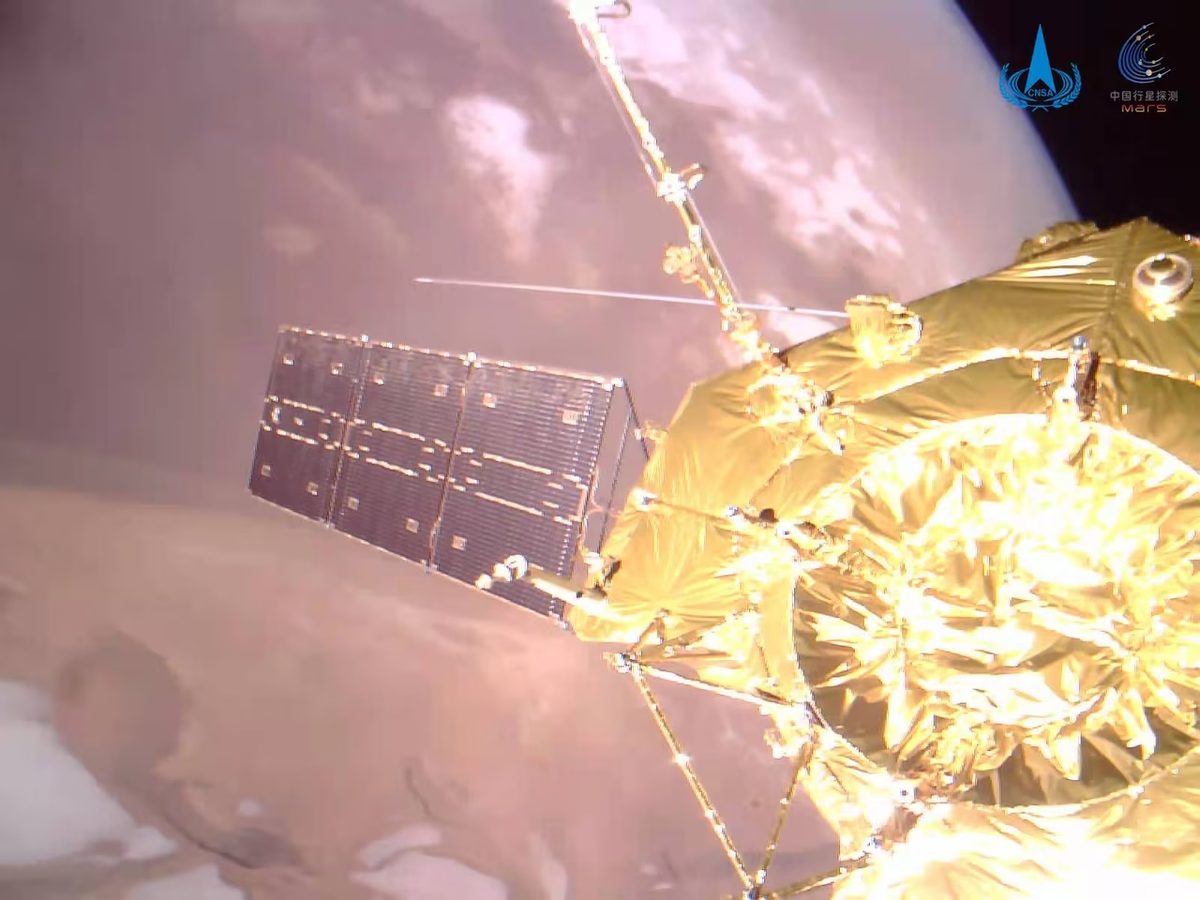
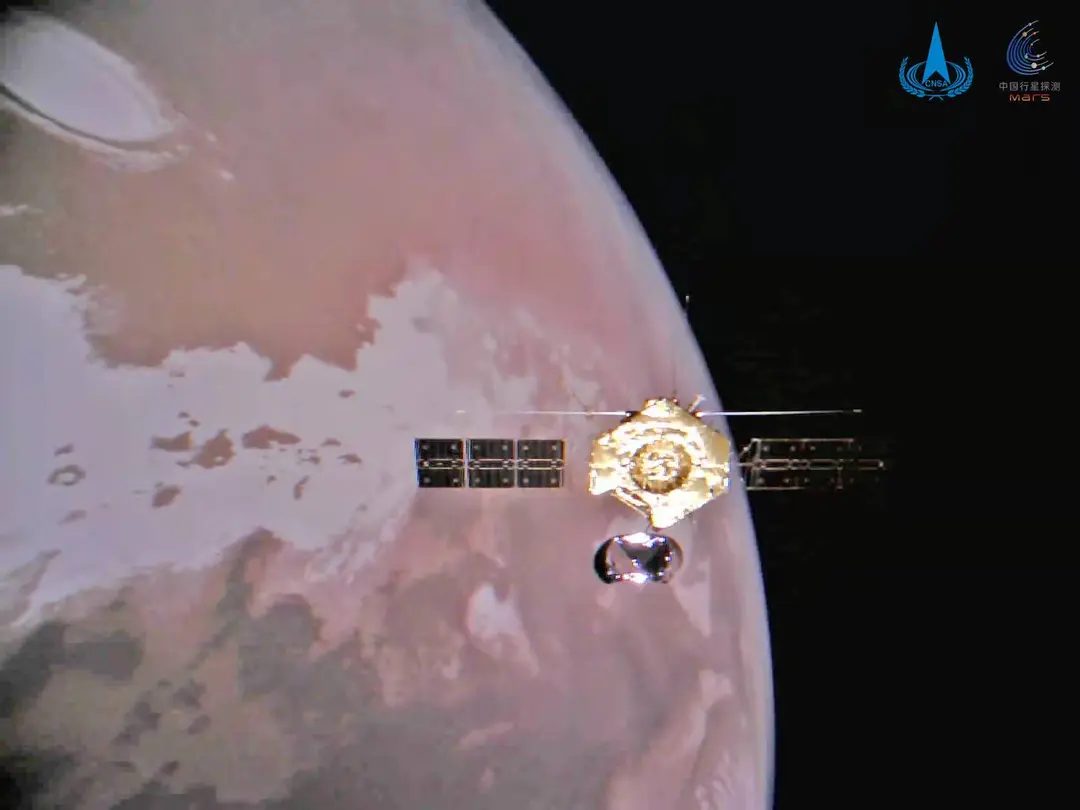
The China National Space Administration (CNSA) dropped some serious visuals of their Tianwen-1 mission. These aren’t your standard grainy surface shots. They are crisp, orbital “selfies” of the spacecraft against the backdrop of the Red Planet.
It’s a bold move. Usually, satellites just stare down at the ground. They map craters. They analyze soil. They don’t turn around to take a picture of themselves. But CNSA engineers decided to break that mold. They wanted to impress. And they pulled it off.
The Mechanics Behind the Shot
How do you take a selfie of a spaceship millions of miles away? You can’t just extend a selfie stick. The distance is too vast. The resolution required would be astronomical.
Instead, the team used a clever workaround. They ejected a tiny microsatellite from the main orbiter. This isn’t some complex new hardware. It’s a small, dedicated camera package.
Once released into space, the microsatellite immediately started snapping photos. Rapidly. In bursts. It captured the Tianwen-1 spacecraft framed against the red haze of Mars.
Then came the transmission. The microsatellite didn’t send the data back to Earth. That would take too long. Instead, it beamed the images directly to the mother ship via Wi-Fi. The main orbiter acted as a relay. It received the high-res images and stored them for later distribution.
The strategy was simple: use a disposable camera in space to capture a moment that would otherwise be impossible to frame.
Zhurong’s Silent Progress
This visual stunt wasn’t just for social media. It coincided with a quiet milestone on the surface.
The Zhurong rover. China’s first robotic explorer to drive on Mars. Since landing, Zhurong has traveled 1,400 meters. That might sound small compared to the 20,000 miles NASA’s rovers have covered. But for a new player in the space race, it’s significant.
Zhurong isn’t just sitting there. It’s moving. It’s testing the terrain. It’s gathering data.
The selfie images provide context. They show the orbital infrastructure supporting the ground mission. They remind us that space exploration is a team effort between the ship in orbit and the robot on the ground.
Why This Matters
We often talk about space missions as abstract achievements. We talk about “landing” or “orbiting.” We rarely talk about the engineering creativity required to document those moments.
China’s approach highlights a shift. It’s no longer just about being there. It’s about how you present being there.
The use of a microsatellite for photography is a low-cost, high-impact solution. It repurposes existing technology. It minimizes risk to the main orbiter. And it delivers stunning visual results.
For the general public, these images humanize the mission. We see the machine. We see the planet. We see the scale of the operation.
For engineers, it’s a proof of concept. It shows that wireless data transmission in deep space can handle high-bandwidth image files. It validates the design of the microsatellite system
The Selfie That Stunned the World
The reaction to Zhurong’s selfie back in June 2021 was a mix of pure shock and deep admiration. It wasn’t just another dry landscape shot from a robotic arm. The Mars rover had actually placed a small camera housing directly on the Martian soil.
This wasn’t a standard selfie taken with an extended articulated arm. It was a deliberate, almost playful act of technology. The rover deposited the camera. It waited. Then, it moved away.
The images that came back were striking. They captured the rover’s own wheels and the desolate beauty of the Red Planet from an unprecedented angle.
“It wasn’t taken from an extended arm. It was a small housing placed directly on the ground.”
This method changed everything for planetary photography. Most rover selfies rely on fisheye lenses mounted on booms. You get a wide, distorted view of the horizon and the rover itself. This approach was different. It was intimate. It felt personal.
The engineering behind this simple act was complex. The camera needed to be small enough to deploy but rugged enough to survive the harsh Martian environment. It had to withstand dust storms and extreme temperature swings.
The result was a new standard for how we see these robotic explorers. We stopped seeing just machines. We started seeing them as artists.
Curiosity. Ingenuity. A desire to connect. These human traits were embedded in the code. The selfie proved that even on another planet, we still crave that sense of presence.
The images went viral for a reason. They reminded us that space exploration isn’t just about data points and telemetry. It’s about perspective. It’s about seeing yourself reflected in the void.
Zhurong didn’t just explore Mars. It posed for its own portrait. And the world watched, amazed.
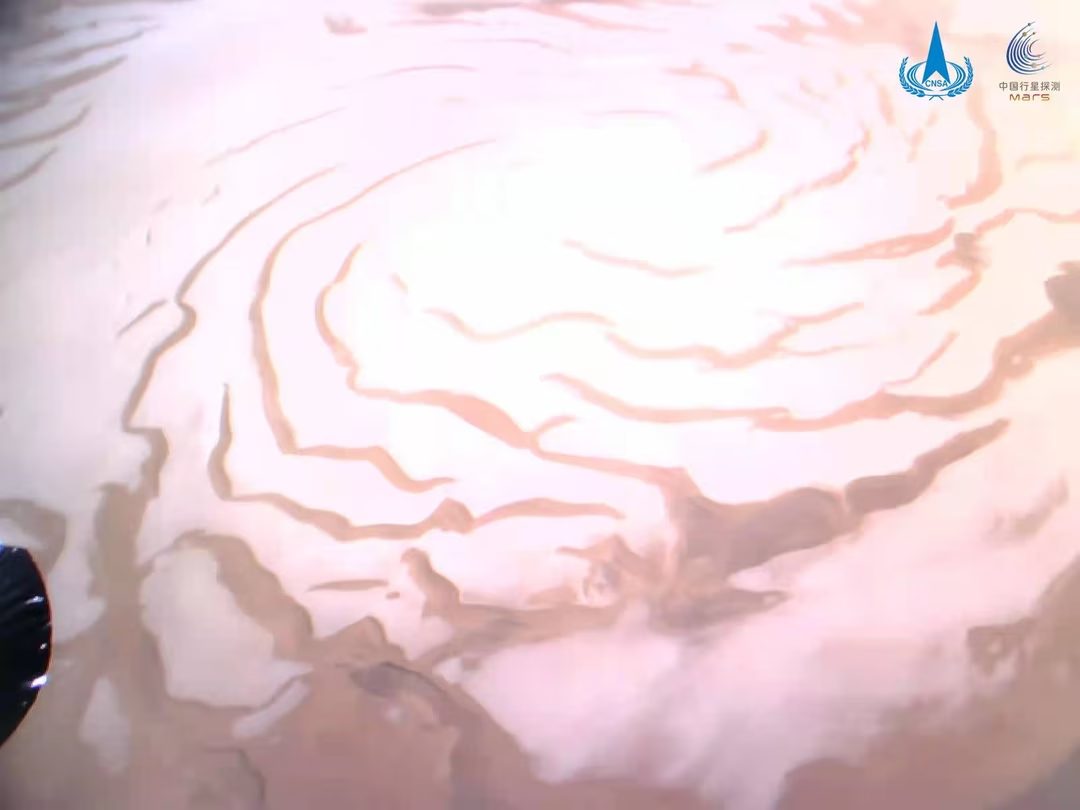
Tianwen-1 is still in good shape. The latest imagery from the spacecraft doesn’t just show the probe itself. It captures Mars, specifically the northern polar region it was flying over at that moment. The northern ice cap is clearly visible. It forms a distinct spiral pattern. Near the cap, you can spot the Korolev crater. It is filled with ice. The resolution is sharp enough to identify these features without ambiguity.
ExoMars 2022 launch preparations
Mars isn’t just getting remote observation. It’s preparing for a visitor. In about a year, the planet will receive a rover from the ExoMars 2022 mission. The timeline is tight. The launch is scheduled for September next year. This isn’t a theoretical date. It is a concrete milestone for the European-Russian collaboration.
Why the Korolev crater matters
The presence of the Korolev crater in these images isn’t just scenic. It’s scientifically significant. Craters like this act as cold traps. They preserve ice that might otherwise sublimate into the thin Martian atmosphere. Studying this ice helps scientists understand Mars’ climate history. It also points to potential resources for future human exploration.
The significance of Tianwen-1’s condition
Keeping Tianwen-1 in good condition is a win. It means the Chinese space agency has navigated the complex landing and orbit insertion phases successfully. This success adds weight to the growing list of nations capable of deep space operations. It also provides more data before the mission ends. More data means better models of the Martian environment.
Looking ahead to ExoMars
The ExoMars 2022 rover will bring a different kind of scrutiny to the Red Planet. While Tianwen-1 orbits, the rover will drill. It will search for signs of past life. The contrast between orbital reconnaissance and surface exploration is stark. One surveys the big picture. The other digs into the soil. Both are necessary.
What this means for future missions
The overlap in missions is interesting. Tianwen-1 is still active. ExoMars 2022 is gearing up. This means multiple nations are investing in Mars right now. It’s not a one-off event. It’s a sustained effort. The data from Tianwen-1 will likely inform the ExoMars landing site selection or operational strategies. Or it might just provide context for the broader Martian landscape.
The race for scientific discovery
There’s no real competition here. It’s more like parallel paths converging on the same goal. Understanding Mars. The ice caps. The craters. The subsurface. Each mission adds a layer. Tianwen-1 adds the orbital perspective. ExoMars adds the surface analysis. Together, they build a more complete picture.
September is coming. The launch window is narrow. Missing it means waiting another year. So preparations are intense. The rover is being tested. The launch vehicle is being checked. Everything has to work. One glitch can delay the mission indefinitely.
The images from Tianwen-1 are a reminder of what we’re working toward. Mars is close. Not just in distance. But in our ability to reach it. The ice in Korolev crater is waiting. The rover

Why you should care about where your news comes from
You are scrolling. The feed moves. Somewhere in that stream, a headline about a new particle physics breakthrough or a subtle update to the global climate model flashes by. You might not stop. You might not read it. But you are missing the point of how these stories actually reach you.
Most people rely on algorithmic feeds. They are designed to keep you engaged, not informed. That is not the same thing. Engagement is often just outrage or novelty. Information requires context. And context is rarely served up on a silver platter by a black-box recommendation engine.
The shift to direct channels
There is a quiet shift happening among serious science communicators. They are moving away from the volatile attention economy of social media algorithms and toward channels where ownership remains with the publisher.
Take Futura, for example. They are not just shouting into the void of a public feed. They are establishing direct lines of communication. By encouraging followers to join their WhatsApp groups or subscribe to Google News alerts, they bypass the middleman. The middleman is usually an app that wants to sell your eyes to advertisers.
This is not about exclusivity. It is about reliability. When you opt into a direct notification service, you are choosing a push model over a pull model. You are deciding that this specific source has earned the right to interrupt your day with something that might actually expand your understanding of the world.
Why WhatsApp and Google News matter
It seems like a small thing. A chat group here. A news subscription there. But the mechanism changes the content.
1. The filter is removed
When you follow a page on Instagram or Facebook, you are subject to the platform’s censorship and prioritization. If a story about biotech regulation threatens ad revenue, it might get buried. If you subscribe directly via WhatsApp, the editorial decision is the only filter. The editor decides what is important. The platform decides nothing.
2. Speed without distortion
Science moves fast. A new study on mRNA delivery systems or a sudden shift in solar activity patterns can break news in minutes. Algorithms take time to analyze engagement. Direct channels do not wait. You get the raw update. You can then decide whether to dig deeper.
3. Context over clip
Social media thrives on 30-second clips. Science rarely fits in 30 seconds. It fits in a long-form article. It fits in a detailed breakdown. By directing traffic to a website or a detailed message, these publishers force you to engage with the nuance. They refuse to let the complexity be flattened into a meme.
The human cost of convenience
We have become lazy readers. We want the headline. We want the takeaway. We want the summary.
But the summary is often where the truth dies.
Consider the recent debates surrounding AI regulation. On a feed, you get a quote from a CEO and a counter-quote from a critic. You get a binary choice. You pick a side. You feel smart. You move on.
In a direct newsletter or a curated chat group, you get the full picture. You get the history. You get the technical limitations. You get the boring stuff that actually matters. It is less entertaining. It is less addictive. It is infinitely more useful.
What this means for you
You do not have to abandon the