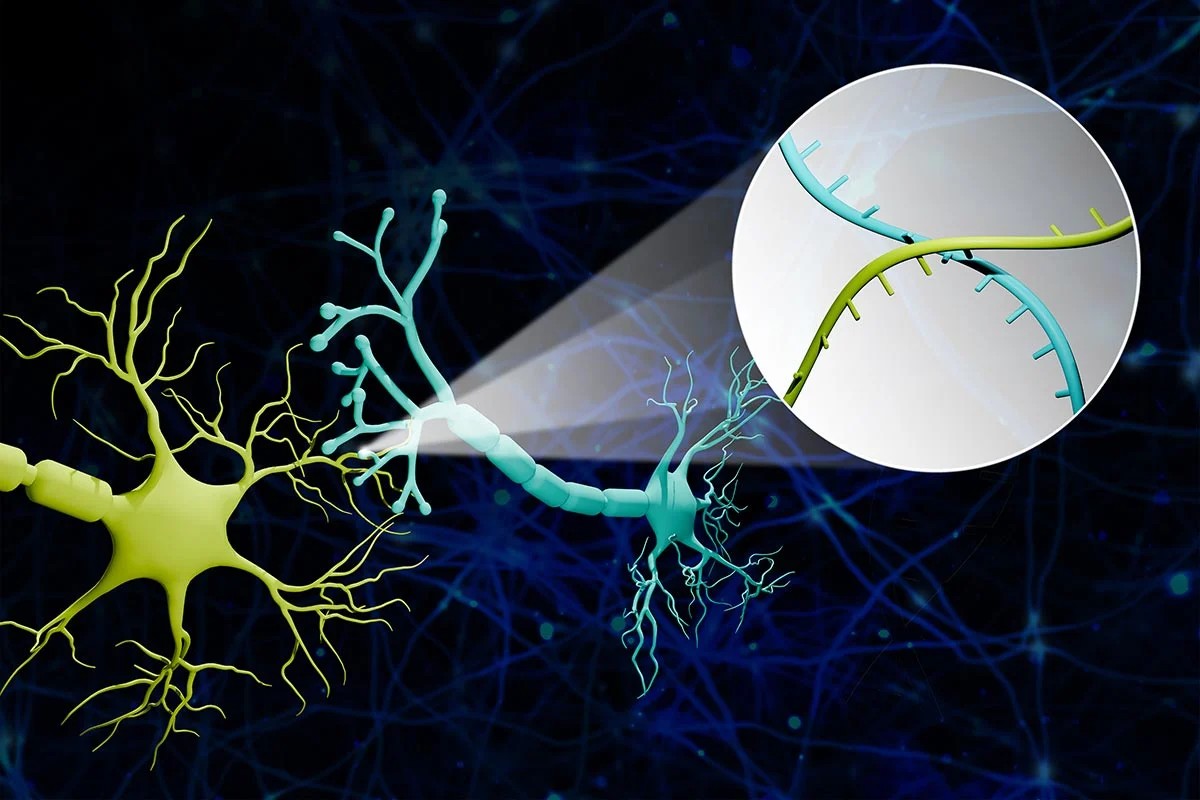
For decades, mapping the brain has been akin to trying to understand a supercomputer without seeing its circuit board. Scientists could identify individual components—neurons—but struggled to trace exactly how they were wired together in real-time. Now, a breakthrough technique called Connectome-seq is changing that by turning complex neural wiring into readable data.
Researchers at the University of Illinois Urbana-Champaign have developed a method to assign unique molecular “barcodes” to individual neurons. This allows them to map thousands of connections simultaneously with single-synapse resolution, offering a speed and level of detail previously impossible to achieve. The findings, published in Nature Methods, suggest a new pathway for understanding neurodegenerative diseases like Alzheimer’s by identifying exactly where and how neural circuits fail.
The Challenge of Traditional Brain Mapping
Building a comprehensive map of the brain, or “connectome,” has historically been a slow, labor-intensive process. Traditional methods required researchers to:
- Slice brain tissue into ultra-thin sections.
- Image each slice under high-powered microscopes.
- Manually reconstruct the pathways by tracing axons and dendrites across hundreds of images.
While newer sequencing tools have emerged, they often fall short in specificity. As study leader Boxuan Zhao, a professor of cell and developmental biology, explains, existing technologies can show where a neuron extends, but they rarely identify the exact partner neuron it connects with at the synapse. Without knowing the specific partners, understanding the functional logic of brain circuits remains elusive.
How Connectome-seq Works: The Balloon Analogy
To overcome these limitations, Zhao’s team translated a structural biology problem into a sequencing problem. They developed Connectome-seq, a system that uses RNA barcodes to uniquely label neurons.
The process works as follows:
1. Labeling: Each neuron is assigned a unique RNA barcode.
2. Transport: Specialized proteins carry these barcodes from the neuron’s cell body down to its synapses—the junction points where neurons communicate.
3. Isolation and Sequencing: Researchers isolate the synaptic junctions and use high-throughput sequencing to read the barcodes present at each site.
Zhao uses a vivid analogy to explain the mechanism:
“Imagine a big bunch of balloons. The main body of each balloon has its unique barcode stickers all over it, and some move down to the end of the string. If two balloons are tied together at the end, the two barcodes meet at the knot. Then we snip out the knots and sequence the barcodes in each one. If the same knot has stickers from balloon A and balloon B, we know these two balloons are tied together.”
By reading which barcode pairs appear together, scientists can definitively determine which neurons are directly connected, allowing for large-scale reconstruction of neural networks.
Discovering Hidden Connections in the Mouse Brain
To test the technology, the researchers applied Connectome-seq to the pontocerebellar circuit in mouse brains, a pathway that links two distinct brain regions. The results were significant:
- The team mapped more than 1,000 neurons within this circuit.
- They uncovered previously unknown connectivity patterns, including direct links between cell types that were not known to connect in adult brains.
This discovery highlights the technique’s ability to reveal subtle or hidden aspects of brain architecture that traditional methods might miss. Zhao notes that with ongoing improvements, the team aims to eventually map the entire mouse brain, providing a comprehensive reference for neural connectivity.
Implications for Neurodegenerative Diseases
The true power of Connectome-seq lies in its potential to accelerate research into neurological disorders. Because the method is fast and cost-effective, it enables comparative studies that were previously impractical.
Scientists can now compare neural connections in healthy brains against those at various stages of disease progression. This could help identify:
* Early Circuit Changes: Detecting where connections weaken or break before clinical symptoms appear.
* Vulnerable Regions: Pinpointing the specific “weak links” that may trigger catastrophic cascades in diseases like Alzheimer’s.
“If we can catch where exactly the weak link is that kick-starts the whole catastrophic cascade in Alzheimer’s disease, can we specifically strengthen those connections to where the disease slows or does not progress?” Zhao asks. This question shifts the focus from merely observing decay to potentially engineering circuit-guided therapeutic interventions.
Conclusion
Connectome-seq represents a significant leap forward in neuroscience, transforming the abstract complexity of brain wiring into quantifiable, high-throughput data. By enabling the simultaneous mapping of thousands of neural connections with precise resolution, this technology not only reveals new biological insights but also opens the door to targeted therapies for neurodegenerative diseases. As the method continues to evolve, it promises to provide a clearer, more detailed blueprint of the brain’s inner workings than ever before.