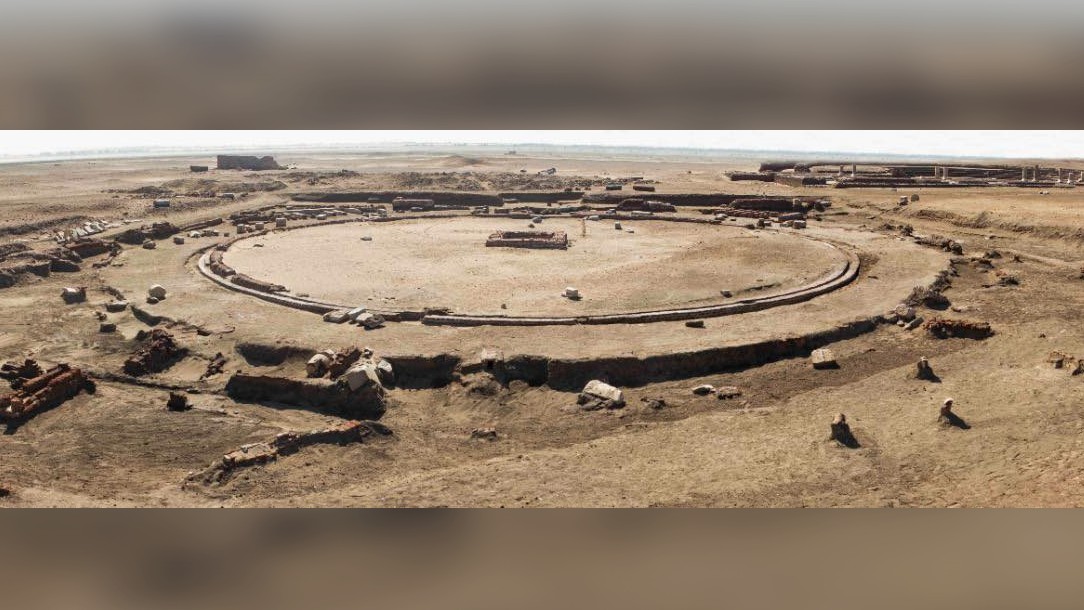
Archaeologists have unveiled a rare, 2,200-year-old circular temple dedicated to the local deity Pelusius at the ancient site of Tell el-Farama. Located in the North Sinai governorate, this discovery offers a unique window into the religious and hydraulic sophistication of ancient Egypt during a period of intense cultural blending.
From Senate House to Sacred Sanctuary
The discovery has undergone a significant reinterpretation through careful excavation. Initial findings in 2019 suggested the red-brick structure might have served as a city senate house. However, recent full-scale excavations by the Egyptian Ministry of Tourism and Antiquities have revealed a much more spiritual purpose.
The complex is centered around a massive circular basin, measuring approximately 35 meters (115 feet) in diameter. At its heart sits a square pedestal, which likely once supported a colossal statue of the god Pelusius.
The Connection to the Nile
What sets this temple apart is its intricate relationship with water. The site features a sophisticated network of reservoirs and channels designed to manage water flow.
Key findings regarding the temple’s function include:
– Direct Nile Connection: The basin was once linked to a branch of the Nile River.
– Ritualistic Evidence: Archaeologists recovered water and Nile silt from within the basin, reinforcing the theory that the site was used for sacred water rituals.
– Symbolic Meaning: The deity’s name, Pelusius, is derived from the Greek word for “mud” or “silt,” making the presence of river sediment a profound symbolic link between the god and the life-giving waters of the Nile.
A Cosmopolitan Crossroads
The temple’s timeline—spanning from the 2nd century B.C. to the 6th century A.D. —coincides with a period when Egypt was a melting pot of influences. The architecture itself reflects this, blending traditional Egyptian styles with Greek and Roman elements.
This architectural fusion highlights the importance of Pelusium as a strategic hub. Situated at the eastern edge of the Nile Delta, the city served various roles throughout history:
1. Pharaonic Era: A vital military fortress.
2. Roman Empire: A busy customs station and port.
3. Cultural Era: A cosmopolitan center where Mediterranean and Egyptian traditions met.
“This discovery is highly significant because it shows that Pelusium was once a prominent city in an increasingly cosmopolitan ancient world,” noted Hisham El-Leithy, acting secretary-general of Egypt’s Supreme Council of Antiquities.
Conclusion
The discovery of the Temple of Pelusius redefines our understanding of the ancient city of Pelusium, proving it was not just a military or trade outpost, but a sophisticated religious center where water played a central role in divine worship.