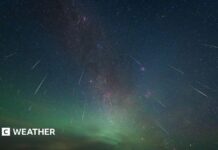
The sky isn’t just showing us light shows.
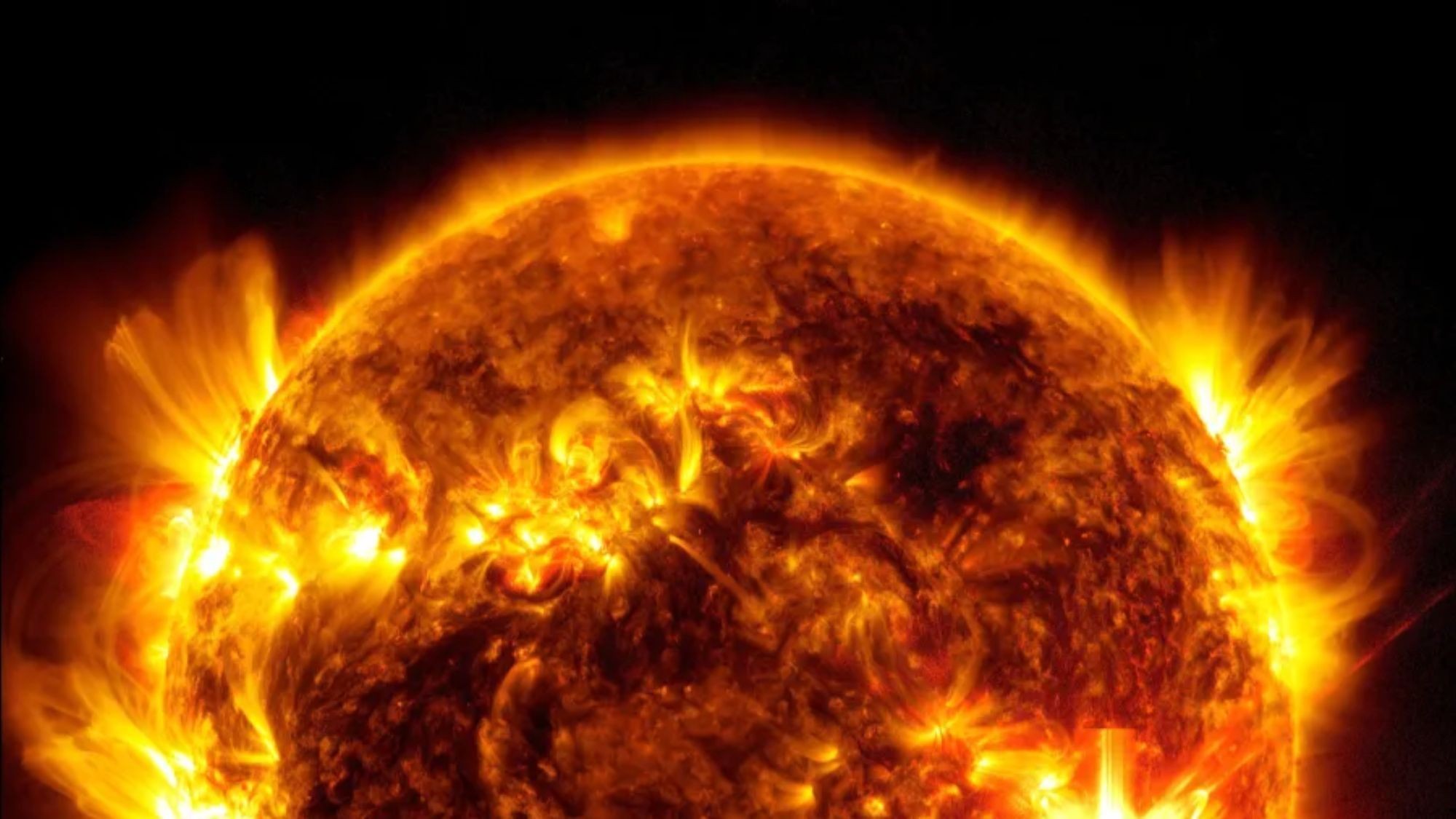
It’s warning us. Or maybe we just aren’t listening loud enough. A new study argues we’ve been underestimating the punch of the sun’s biggest tantrums. Big time.
Scientists found that what looks like a hard stop in how Earth reacts to solar wind might just be a measurement trick. An artifact. Not a physical wall.
If the math checks out? A once-in-a-thousand-year geomagnetic storm doesn’t just cause glitches. It could wreck more modern tech than our models currently predict.
Maria Walach, a researcher from Lancaster University who co-authored the work, puts it bluntly. Earth’s magnetic field usually does a great job shielding us. The result? Glitches. Or pretty northern lights.
“Our planet’s magnetic field does a great job protecting us… but there are extreme cases.”
Here’s the thing about those extreme cases. They’re violent.
When the sun throws coronal mass ejections or solar flares at us, clouds of charged particles fly our way. Sure, we get auroras. Spectacular ones. But those particles also fry satellites. Mess up GPS. Tangle radio waves. Brown out power grids.
We have receipts for the damage.
In 1859, the Carrington Event hit. Telegraph systems worldwide shorted out. Fires started from operators holding sparks in their hands. Auroras dropped low enough to be seen in the tropics. Imagine that today with fiber optics and microchips instead of copper wires.
1989? A storm in Quebec collapsed the grid. Six million people lost power.
2003? The Halloween storms scrambled GPS and satellites again.
The study isn’t screaming that Armageddon is next Tuesday. The sun isn’t aiming directly for extinction right this second.
It is saying we need to rethink the worst-case scenario.
Why did we miss this? Location.
Most solar wind data comes from the Lagrange Point 1 (L1). It sits 1 million miles upstream of Earth. Spacecraft parked there measure the wind before it hits us.
Here’s the problem. The strongest solar wind weakens as it travels. When researchers compared those weakened L1 numbers with what actually hit Earth’s atmosphere, it looked like Earth’s response plateaued. Like the upper atmosphere just said “enough.”
It didn’t say enough. We were looking at the wrong spot.
So the team changed the lens.
They analyzed over a million measurements from NASA spacecraft orbiting closer to Earth. Much closer. Right where the magnetic field meets the storm.
The results changed the story completely.
Electrical currents in the upper atmosphere didn’t cap out. They kept rising. With no sign of stopping. Stronger solar wind meant stronger currents. Which means stronger disturbances.
Which means bigger impacts on the infrastructure we can’t live without.
Why didn’t we catch this sooner? Because the monsters rarely show up.
“We have limited data to work with,” Walach said.
We only see the small fish. We guess at the shark. And it’s 2025. We’re deeper into the digital ether than ever. More dependent on fragile silicon than any generation in history.
The timing isn’t ideal, either. The sun is near its peak in an 11-year cycle. We’re in the thick of solar maximum. Sunspots. Flares. CMEs. All getting louder.
Back in May 2024? We had a taste. A strong storm lit up the US and Europe. Radio comms stuttered. GPS-guided tractors and planes had issues. Satellites shuffled orbits to protect themselves.
It was scary enough.
But that storm was a breeze compared to Carrington. And the new research suggests Carrington might still be the conservative estimate.
There’s no neat bow on this.
The models are shifting. The risk is higher than the headlines from yesterday say. And the next really big one?
It’s out there. Waiting to pass L1.