Quiz shows didn’t just appear out of nowhere. They evolved from radio into the living rooms of America, becoming a cultural staple almost overnight. Television game shows are inextricably linked to the nation’s pop culture history. Hundreds have come and gone since Truth or Consequences first hit the airwaves in 1950. But some shows found a magic formula. They ran for years. They stayed relevant. Here are the titans that survived the test of time.
How The Price Is Right became a daytime ratings juggernaut
“Come on down!” It’s a phrase that still triggers a visceral reaction in anyone who grew up watching daytime TV. Why does this relic from the 1970s still grab massive ratings more than 35 years after it debuted?
It’s simple. There’s something for everyone. Bob Barker became a TV legend during his 35-year stint as host, bringing an agreeable energy that kept viewers coming back. Contestants are plucked straight from the audience. They play 80 different games. We’re talking about Plinko. Hi-Lo. Big prizes like motor homes, cars, trips, and furniture.
The show, which debuted in 1972, is actually a revival. An earlier version aired from 1956 to 1965. But the 1972 iteration perfected the format. It turned a simple quiz into a spectacle of consumer desire and community fun.
Why Wheel of Fortune is dubbed “America’s Game”
Since 1975, the wheel has been spinning. Contestants risk bankruptcy to guess letters. They complete the puzzle on the board. It’s straightforward. It’s addictive.
Contestants can buy vowels. They vie to be the first to solve the puzzle. The bonus round allows winners to add cars, trips, and up to $100,000 in cash to their winnings. That’s the hook.
Before Pat Sajak and Vanna White took the reins in the early 1980s, Chuck Woolery and Susan Stafford hosted the show. But it was Sajak and White who cemented its legacy. Dubbed “America’s Game,” Wheel of Fortune frequently goes on tour across the country. It features celebrity and charity versions too. It’s everywhere. It’s always on.
Jeopardy! and the longest winning streak in quiz show history
Answer: This game show was ranked first in the Nielsen ratings for quiz shows for more than 1,000 weeks. Question: What is Jeopardy!?
With 27 Daytime Emmy Awards and 37 million viewers weekly, Jeopardy! has dug its heels into television history. Current host Alex Trebek gives the answers to three contestants. They buzz in to provide the questions. It’s a reversal of the standard format. It requires a different kind of knowledge.
In 2004, something historic happened. Contestant Ken Jennings racked up an unprecedented 74-game winning streak. He earned more than $2.5 million on the show before he finally stumbled. He is the winningest contestant in game show history.
The current show has been on the air since 1984. It’s a revival of the original, which ran from 1964 to 1975. But the modern version is the one most people know. It’s smarter. It’s sharper.
The scandal-ridden origins of Truth or Consequences
This show originally aired as a radio quiz show starting in 1940. It crossed over to television in 1950. The format was simple but brutal. Contestants had to answer obscure, often trick questions. If they couldn’t answer, they suffered the “consequences.”
These weren’t just penalties. They were embarrassing or silly stunts. Bob Barker hosted the show from 1956 to 1975. He was good at it. But the show never quite recovered after his departure. It ran off and on for about 20 seasons from 1950 to 1978. It had a short-lived revival in the late ’80s. It was a pioneer. But it also showed how fragile a host-dependent show could be.
What’s My Line? and the mystery guest
In What’s My Line?, four celebrity panelists tried to guess the occupation of a fifth, secret contestant. They could only ask “yes” or “no” questions. It was a game of deduction.
During the third round, things got weirder. Panelists were blindfolded. They were challenged to guess the identity of a “Mystery Guest.” The original run paid players for appearances. Prize money never exceeded $50. But the celebrities drew the crowds.
The show ran from 1950 to 1967. Several revivals have been launched since. Celebrity guests have included author Gore Vidal. Actor Jane Fonda. Singer Bobby Darin. It proved that curiosity about people was just as entertaining as curiosity about facts.
I’ve Got a Secret: from family-friendly to racier secrets
The old parlor game “Secret, Secret, Who’s Got the Secret?” inspired this classic quiz show. It originally aired from 1952 to 1967. The host introduced the contestant. He asked them to whisper their “secret” into his ear.
The secret was shown on-screen for home viewers. Celebrity panelists had to try to guess it by asking questions. Each time the panelist guessed incorrectly, the player was paid $20. The maximum payout was $80. It was a modest sum. But it was a clever twist.
In recent years, the show was revived on the Game Show Network. The secrets are much racier than they were in the 1950s. The format remains. The tone has shifted. It’s a testament to the adaptability of the concept.
Hollywood Squares: tic-tac-toe with a comedic twist
Mere mortals got a chance to play with celebrities in this game show. It’s based on tic-tac-toe. Nine Hollywood stars sit in separate, open-faced cubes. These cubes make up the board.
The stars are asked questions by the host. Contestants judge whether their answers are true or false. They put an X or O in the square. Prize winnings got larger and larger over the years. One jackpot reached $100,000. But the game was really a vehicle for comedic banter.
The chemistry between the host and the celebrities was the real prize. Between the original version, which aired from 1966 to 1981, and its many reincarnations, Squares has featured heavy hitters. Vincent Price. Joan Rivers. Whoopi Goldberg. Paul Lynde. Martin Mull. Alf. It was pop culture on a grid.
Concentration and the aftermath of the quiz show scandals
The game show genre took a beating during the 1950s. It was revealed that several shows were rigged. Contestants were given the answers in advance. It was a scandal that shook the industry.
Producers Jack Barry and Dan Enright were implicated. But they created a solid game with Concentration. The hit show survived the tumult of the scandals. It aired from 1958 to 1973. The game was based on two concepts. A children’s game known as “Memory.” A word puzzle revealed when matching cards were removed from the board.
It was clean. It was fair. The show survived in syndication for some time. It enjoyed a revival in 1987 that lasted approximately five years. It proved that even after a scandal, a good game could still find an audience.
The Costume Craze on Let’s Make a Deal
Monty Hall wasn’t just a host. He was the face of the deal. Let’s Make a Deal ran for decades, blending intuition with sheer luck. Contestants had to negotiate with Hall, picking behind doors that hid everything from real cars to a goat. The prizes varied wildly. Some were gold. Some were gag gifts.
But the show’s real secret sauce wasn’t the prizes. It was the outfits.
Early on, folks showed up in jeans and flannels. Boring. Then someone walked in dressed as a giant chicken, or a clown, or something unrecognizable. The producers loved it. Suddenly, wearing a nutty costume became the golden ticket to the stage. You wanted to play? Dress weird. The tradition stuck. It created a visual spectacle that defined the show’s quirky charm.
Fans still prefer the reruns. The original run from 1963 to 1977 holds a special place in hearts. Later revivals tried to capture that lightning in a bottle. They failed. The magic was in the madness of the original era.
The Art of the Con on To Tell the Truth
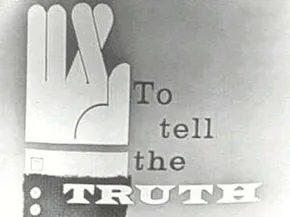
Deception is the currency here. To Tell the Truth put celebrity panelists on the hot seat. Three contestants stood before them. One had a true, often bizarre story. The other two were actors lying about it. The panel had to guess who was telling the truth.
The stakes? Surprisingly low by modern standards. If the panel guessed wrong, the challengers split $250. Get it right, and they split $150. A perfect score for the panel meant the contestants got nothing extra. It was about the thrill of the con, not the cash.
The show aired from 1956 to 1968. The catchphrase remains iconic: “Will the real [Name] please stand up?” It’s been revived several times. But the original format, with its mix of celebrity confusion and contestant creativity, set the template for a genre that still thrives today.
Secret Words and Rubber Ducks on You Bet Your Life
Groucho Marx brought his radio hit to television. You Bet Your Life was different. It wasn’t just about guessing. It was about listening.
Contestants answered questions for prize money. But there was a twist. The audience knew the “secret word.” The contestant did not. If they could answer correctly while subtly leading to that word, they won big.
And when they did? A rubber duck descended from the ceiling. A nod to Groucho’s 1933 film Duck Soup. The duck delivered $100. Simple. Effective. Funny.
Marx hosted the original run from 1950 to 1961. His wit was the draw. Later versions tried to replicate the success. Buddy Hackett. Bill Cosby. Neither could match the magic of the original. Without Marx, it was just another game show. With him, it was a cultural moment.
Tracking the Titans of Television
The landscape of game shows is vast. But a few names dominate the timeline.
The Longest-Running Show
The Price is Right holds the crown. It has been on the air longer than any other program in its category. It’s a institution.
The Tragic Loss of a Legend
Alex Trebek hosted Jeopardy! for 36 years. His death in 2020 left a void in daytime television that hasn’t been fully filled. He was the face of trivia for a generation.
The Academic Heavyweights
“It’s Academic” is the longest-running quiz show. High school students compete. It’s been on air since 1961. It proves that smart kids can still win big.
The Oldest Host
Pat Sajak holds the title of the oldest living game show host. At 74 (during the time of this data), he’s still going strong on Wheel of Fortune.
These shows aren’t just entertainment. They’re testaments to the enduring appeal of competition. We love to watch people try. We love to see them win. Or fail. It’s the same reason we watch sports. The stakes are real. The outcomes are uncertain. And the hosts? They’re the guides we trust to lead us through the chaos.
The duck is gone. The costumes are less frequent. But the desire to play the game remains.