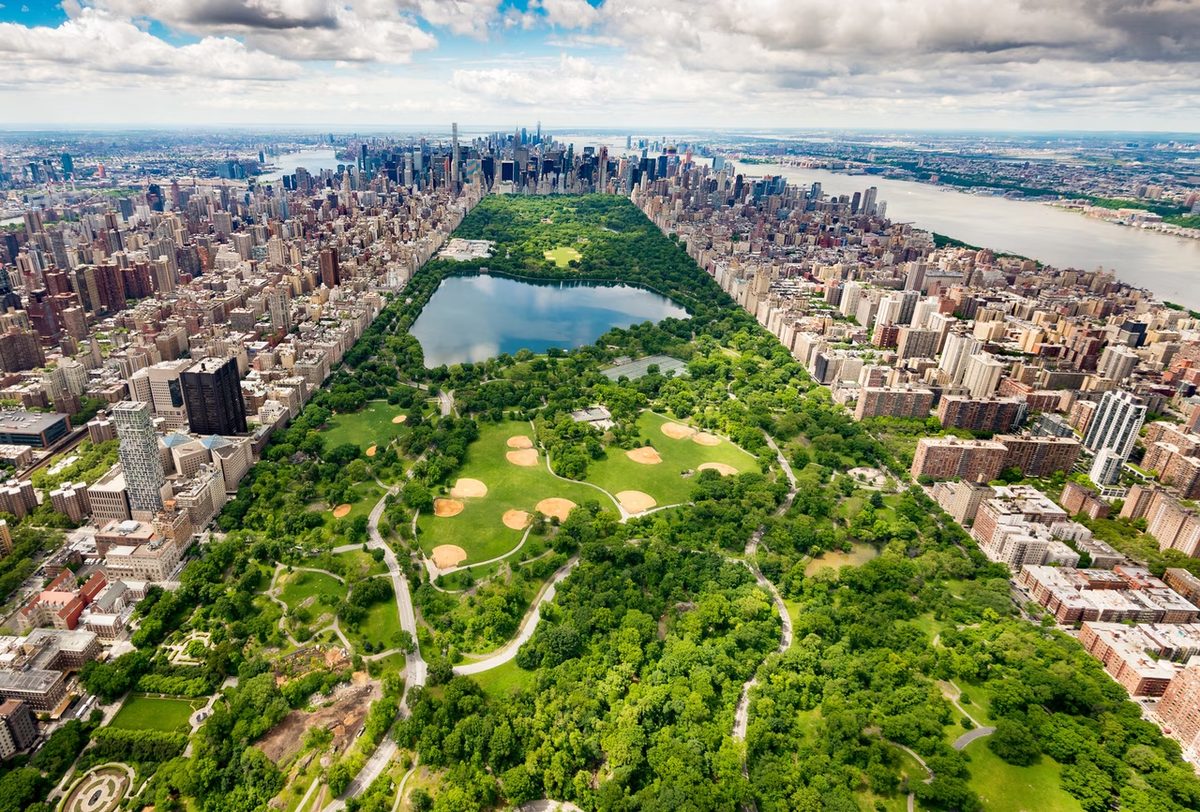
By the 1850s, New York had already overtaken Boston and Philadelphia to become the undisputed economic and population center of the United States. It was a city suffocating on its own success. The skyline was dominated by brick row houses and early business blocks, while the streets were filled with the noise of horse-drawn carriages and growing industrial activity. There were almost no green spaces for the common citizen. The air was thick. The sidewalks were full. Residents began to demand something that did not exist: their own public park for recreation and mental relaxation.
In 1853, the local authorities finally drew a line and chose a site. It wasn’t exactly a pristine meadow. It was a rocky, swampy tract of land in the middle of Manhattan, home to a few scattered communities, including Seneca Village, a thriving African-American neighborhood that was later displaced. A commission was established to oversee the transformation of this uneven terrain into a civilized one.
But who would design it?
In 1857, a landscape architecture competition was announced. The goal was to create a rural retreat in the heart of the city. Two men, Frederic Law Olmsted and Calvert Vaux came up with a plan called “Greensward”. It won. Their proposal was not just about planting trees; It was about creating a psychological escape. They envisioned a park that would feel like a natural landscape, even if every hill and valley was man-made.
The dynamics of the project largely depended on one man: Andrew Haswell Green.
Green became chairman of the Central Park Commission in 1857. He was not only an administrator; he was a relentless force. He realized that the original site was too small to make a real difference to the growing city. In 1858, he acquired an additional 26 hectares of land north of the original boundaries and extended the northern edge of the park to 110th Street. This extension was crucial. It gave Olmsted and Vaux the space they needed to create the expansive meadows and winding paths that characterize the park today.
Without Green’s aggressive land acquisition, Central Park could have remained a modest green space, easily swallowed up by the ever-crowded urban grid. Instead, it became a huge, manipulated ecosystem. Olmsted and Vaux’s competition proposal set the vision, but Green provided the political will and physical space to make it happen. The stage was set for one of the most ambitious landscape projects in human history.

Numbers behind the green lung
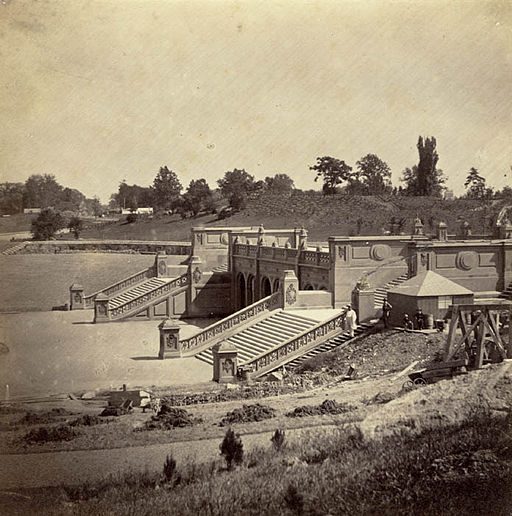
Central Park isn’t just a grassy spot in the middle of Manhattan. It is a vast 340-hectare wilderness area that took 16 years and hard work to build before finally opening to the public in 1873.
The magnitude is hard to grasp until you look at the stats. About 25 million visitors pass through its gates every year. That’s almost 70,000 people a day. They come from all over the world to escape the concrete network.
When the designers created the park, they didn’t just plant a few trees. They planted half a million of them. This created a dense canopy of leaves that cools the island in the summer.
Water plays a big role in the landscape. The largest body of water is the Central Park Reservoir. It’s a track for runners and a bare, reflective surface for photographers.
Sports are also part of the park’s DNA. In the winter you will find skating rinks and various basketball and tennis courts throughout the year.
Then there is the emotional anchor. Strawberry Fields is a memorial to John Lennon. It opened in 1985, a year after the ex-Beatle’s murder. The “Imagine” mosaic there attracts people who leave flowers, notes and flowers. It turns a public space into a place of quiet reflection.
Why is this important? Because in the city that never sleeps, Central Park offers a place to take a deep breath. The numbers tell about the magnitude of the story, but the experience is memorable.
The park survives millions of feet without collapsing. It takes care of half a million trees without losing its soul. It balances the noise of New York with the sounds of the wind in the leaves.
It’s not perfect. Crowds can be overwhelming. The maintenance costs of such a large space are enormous. But it is a unique experiment in urban planning.
Can a city really live so closely with nature? The data suggest that this is the case. Visitors prove it every day. The park is a testament to what happens when people decide to make room for something wild in the middle of the machine.
The reservoir fills. The ice skates glide. The flowers at Strawberry Fields freshen. The city is constantly spinning, but here time passes in a different way.