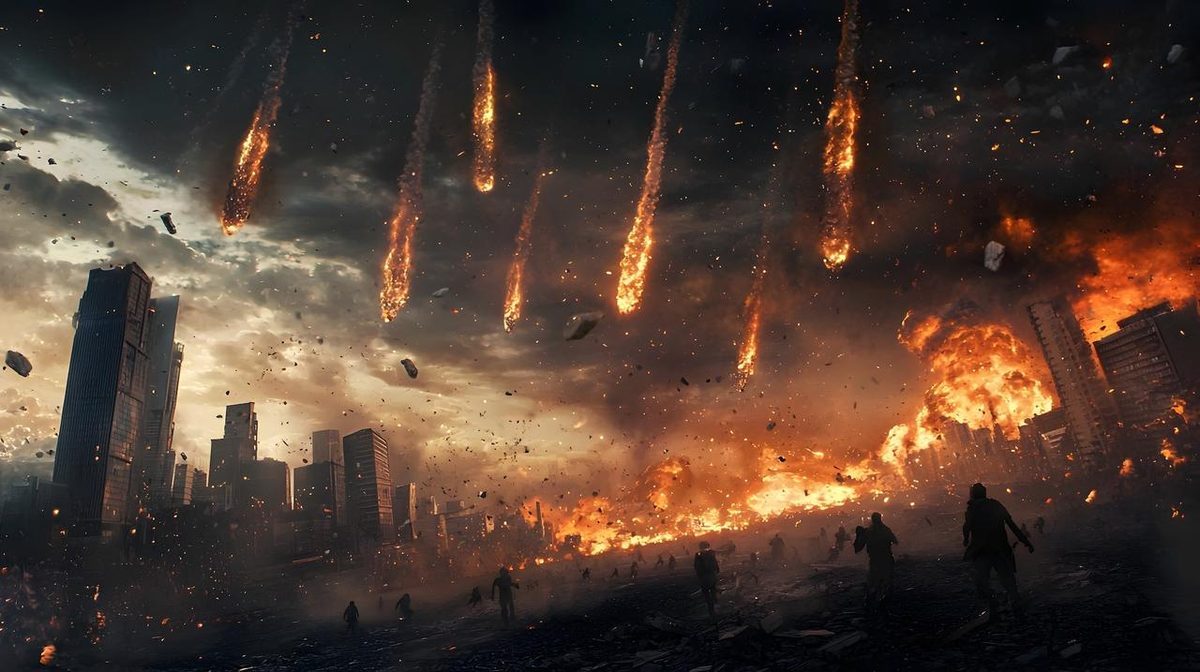
You have likely encountered the name 2024 YR4 buzzing around media feeds recently. Until late 2024, this object was virtually unknown to the public. Then it became a global headline overnight. The reason? Preliminary calculations suggested a one-in-32 chance it would strike Earth in 2032. That is statistically massive. It was unprecedented in the history of planetary defense. Since astronomers deployed systems to monitor the sky and catalog near-Earth objects, no asteroid had ever carried a collision probability so high.
Some enthusiasts immediately began simulating trajectories. They tried to pinpoint exactly where the impact might occur. If it hit a major city, the catastrophe would be total. Fortunately, the data shifted. As new observations accumulated over several nights, the risk of collision dropped to nearly zero by month’s end.
We are looking at the threat of asteroids and the hidden treasures they hold.
Tracking the Danger
Things are fine for now. The small asteroid, measuring between 40 and 90 meters in diameter, will miss us. Researchers will continue to track it anyway. They also monitor all other known objects just in case trajectories change. They do not want to miss a single threat. They keep their eyes wide open.
Near-Earth asteroids are numerous. Naturally, larger ones are more terrifying. What happens if one crashes into Earth? How much time would we have to react? What would be the damage? Could we stop it?
In this edition of L’œil de Futura, we answer these recurring questions. These fears are deeply embedded in our collective imagination through science fiction. We also discuss the unknown but highly sought-after treasures locked inside these rocks.
Why We Watch the Sky
The panic over 2024 YR4 highlights a critical truth. We are not defenseless against cosmic impacts. The event served as a stress test for our monitoring systems. It showed that even obscure objects can be tracked if we look hard enough.
The relief came from data accumulation. Initial sightings are often inaccurate. They rely on limited arcs of observation. As astronomers gather more data points, the orbital calculations become tighter. The uncertainty shrinks. The probability of impact dissolves.
This is not just about avoiding disaster. It is about understanding what we are facing. Asteroids are remnants from the solar system’s formation. They contain water, organic compounds, and precious metals. They are resources waiting to be tapped.
The Fiction vs. Reality Gap
Science fiction has conditioned us to expect the unexpected. We imagine giant impacts causing mass extinction. We dream of heroics in space to deflect a rock. Reality is quieter. It is bureaucratic. It involves telescopes and spreadsheets. But the stakes are real.
The near-miss of 2024 YR4 proves our systems work. It also proves they are necessary. We cannot ignore the sky. Every new discovery adds to our knowledge base. It helps us refine our models. It prepares us for the next unknown object.
Looking Ahead
The asteroid will miss us this time. But the work continues. We must stay vigilant. We must support the networks that scan the heavens. We must ask questions about where these rocks come from and what they can offer us.
If you have topics you want covered in future editions, leave a comment. The conversation about space and survival is just beginning.


The Algorithmic Mirror and the Human Cost
The previous section outlined the mechanics. This part explores the fallout. It isn’t just about code. It’s about who gets left behind when the code decides.
You don’t notice it happening. The feed adjusts. The recommendations shift. Suddenly, you are in a bubble that fits you perfectly. Or too perfectly. It’s comfortable. It’s also dangerous.
Why do these systems prioritize engagement over truth?
Because engagement keeps you scrolling. Truth often makes you stop. That’s the business model. It’s not a conspiracy. It’s just math. The math says that outrage travels faster than nuance. So the algorithm amplifies outrage.
The Filter Bubble Effect
This is where things get tricky. You think you’re seeing the whole picture. You aren’t. You’re seeing what the system thinks you want to see.
- You vote one way. The algorithm feeds you more of that.
- You buy things. The algorithm shows you similar things.
- You click on fear. The algorithm serves up more fear.
It creates a feedback loop. A closed circuit. You can’t escape it because the escape routes look like the entrance. This is the filter bubble effect. It isolates users. It polarizes society. It makes compromise impossible because you literally cannot see the other side.
Who Gets Left Behind?
Not everyone benefits from personalization. Some groups get hurt.
- Minorities. Algorithms often inherit biases from their training data. If the data is racist or sexist, the AI will be too. It’s not intentional. It’s statistical. But the result is real.
- The elderly. They might not spot the deepfakes. They might trust the wrong sources.
- The poor. They get targeted for predatory loans. Or worse. They get ignored by services that don’t see them as profitable.
“When you don’t pay for the product, you are the product. And sometimes, you’re the liability.”
This isn’t hyperbole. It’s how the ad-tech industry works. You are a data point. A label. A risk assessment.
The Deepfake Reality
We’ve all heard the word. Deepfake. It sounds like sci-fi. It’s not. It’s happening now.
A politician says something they never said. A celebrity appears in a video they never filmed. The faces are perfect. The voices are spot-on. The context is fake.
Why does this matter?
Because trust is eroding. If you can’t believe your eyes, what can you believe? Nothing. And that emptiness? That’s where misinformation wins.
It’s easy to make one fake video. It’s hard to prove it’s fake. The burden of proof shifts to you. The viewer. You have to be your own fact-checker. That’s a lot of work. Most people don’t do it. They just share.
The Privacy Paradox
We say we care about privacy. We don’t act like it.
We click “accept all cookies.” We ignore the terms of service. We trade our location data for a free map app. It’s a convenience trade. A small one. But it adds up.
Every click. Every pause. Every like. It’s all recorded. It builds a profile. A digital