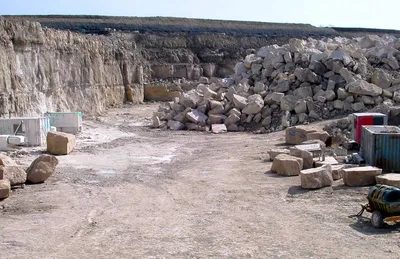
Quarries are the industrial engines behind the buildings you walk through and the roads you drive on. They fall into two distinct categories based on their output: dimension stone mines and aggregate pits. The difference matters because the extraction methods, costs, and end uses diverge sharply between the two.
The high-precision game of dimension stone
If you see a marble column or a granite facade, that material came from a dimension stone quarry. These sites produce prismatic blocks of rock. The palette includes marble, granite, limestone, sandstone, and slate.
The process is slow, selective, and expensive. Operators cannot just blast the rock. They have to free specific blocks from the surrounding mass. Why? Because the final product, after cutting and polishing, goes into primary construction for buildings and monuments. It also serves as decorative facing for interiors and exteriors. A crack in the wrong place ruins the block. So, precision beats volume here.
Aggregate quarries and the blast
Sand, gravel, and crushed rock quarries play a different game. They use standard surface-mining techniques. The goal is volume, not individual block integrity.
The standard procedure involves drilling and blasting. Operators pack a large number of charges and fire them simultaneously. The result? Up to 20,000 tons of broken stone in a single blast.
That raw rock isn’t useful yet. It gets crushed into smaller pieces. Then, screening separates the material into uniform classes. This crushed stone has three main jobs:
– Concrete aggregate
– Road building
– Industrial flux in blast furnaces (specifically for limestone) and chemical applications
The contrast is stark. One method treats rock as a precious object to be freed. The other treats it as fuel for the machine, breaking it apart to feed the infrastructure that holds modern life together. Which method fits depends entirely on what you need the rock to become.