Water is the most common substance on Earth, yet it remains one of science’s greatest puzzles. For over a century, physicists have debated why water behaves so differently from other liquids—why ice floats, why it expands when cooled below 4°C, and why it sustains life.
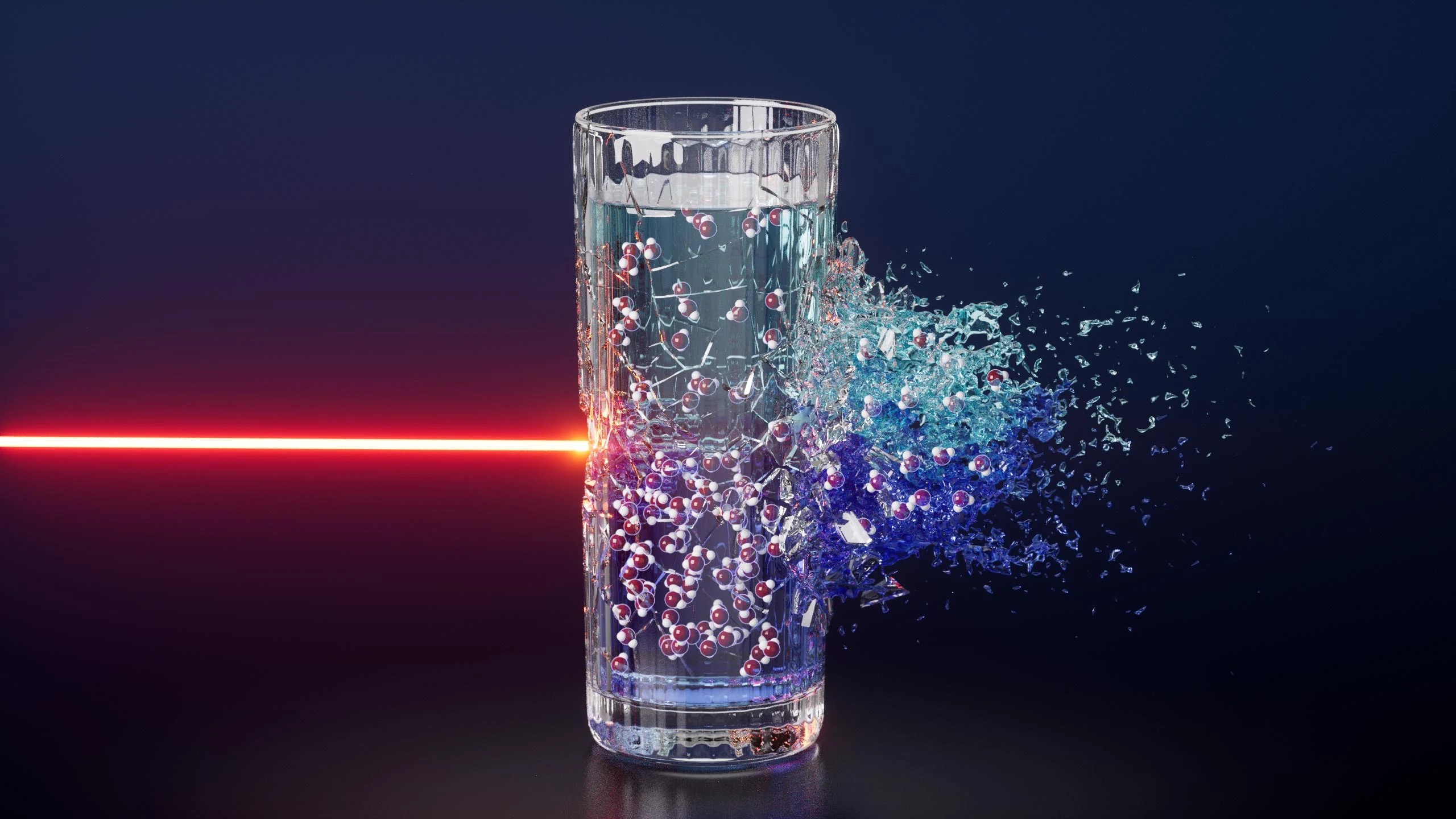
Now, researchers at Stockholm University have found the answer. By using advanced X-ray laser technology, they have identified a critical point in deeply supercooled water—a hidden state that explains its bizarre physical properties. The findings, published in the journal Science, suggest that water’s unique behavior stems from a delicate balance between two distinct liquid forms.
The Anomaly of Water
To understand why this discovery matters, one must first look at how water defies standard physics.
Most materials become denser as they cool. If water followed this rule, ice would sink, and lakes would freeze from the bottom up, destroying aquatic ecosystems. Instead, water reaches its maximum density at 4°C. As it cools further toward freezing, it expands. This expansion continues and accelerates if water is supercooled (kept liquid below 0°C).
Alongside density, other properties like compressibility and heat capacity become increasingly erratic as temperature drops. Scientists have long suspected that these anomalies were caused by a structural shift within the water molecules themselves, but proving it required observing water in a state that is notoriously difficult to maintain: liquid water at extremely low temperatures and high pressures, just before it turns to ice.
Catching Water in the Act
The breakthrough was made possible by ultra-fast X-ray pulses at facilities in South Korea. These lasers allowed scientists to observe water molecules in real-time, capturing their behavior before crystallization could occur.
“What was special was that we were able to X-ray unimaginably fast before the ice froze and could observe how the liquid-liquid transition vanishes and a new critical state emerges,” says Anders Nilsson, Professor of Chemical Physics at Stockholm University.
The team identified a critical point occurring at approximately -63°C and 1,000 atmospheres of pressure. At this specific threshold, the distinction between two different liquid structures of water disappears.
Two Liquids, One Critical Point
The study reveals that under low-temperature, high-pressure conditions, water can exist in two distinct liquid forms. These forms differ in how their molecules are arranged and bonded.
- Low Temperature/High Pressure: Two distinct liquid phases exist.
- The Critical Point: As temperature rises and pressure drops, these two phases merge into a single, unified state.
This critical region is highly unstable. Water molecules fluctuate rapidly between the two structural forms, unable to settle on one. These microscopic fluctuations ripple outward, influencing the macroscopic properties of water we observe in everyday life. In essence, the “bizarre” behavior of water at room temperature is a residual echo of this critical point, which lies just beyond normal ambient conditions.
A “Black Hole” for Water Dynamics
The researchers also observed a strange dynamic near this critical point: the system’s behavior slows down significantly.
“It looks almost as if you cannot escape the critical point if you entered it, almost like a Black Hole,” says Robin Tyburski, a researcher in Chemical Physics at Stockholm University.
This slowing effect highlights the profound influence of the critical point on water’s molecular dynamics. It suggests that water is constantly “tugging” between two structural identities, a tension that defines its physical character.
Why This Matters for Life and Science
The implications of this discovery extend far beyond theoretical physics. Water is the only substance known to exist in a supercritical state under ambient conditions where life thrives.
“I find it very exciting that water is the only supercritical liquid at ambient conditions where life exists and we also know there is no life without water. Is this a pure coincidence or is there some essential knowledge for us to gain in the future?” asks Associate Professor Fivos Perakis.
For more than a century, scientists have debated the underlying model of water’s behavior, dating back to the work of Wolfgang Röntgen. This discovery provides experimental evidence that settles the debate: water does have a critical point in the supercooled regime.
The next challenge for scientists is to determine how this critical point influences broader processes in biology, geology, and climate science. Understanding this “hidden switch” may unlock new insights into how water facilitates chemical reactions, stabilizes climates, and sustains life itself.
Conclusion:
By pinpointing the critical point in supercooled water, scientists have finally explained the microscopic origins of water’s macroscopic anomalies. This discovery not only resolves a century-old scientific debate but also opens new avenues for understanding the fundamental role water plays in sustaining life and shaping our planet.