April’s literary landscape blends reflection with anticipation, mirroring a shift in scientific exploration. This month’s non-fiction offerings range from solitary immersion in nature to confronting the fundamental questions of violence, revisiting the moon, and future-proofing the human brain. These books aren’t just about discovery; they’re about reckoning with change and the enduring power of curiosity.
Living on the Edge: Nature and Isolation
Bernd Heinrich’s The Common Uncommon invites readers into a life spent largely off-grid, in a self-built cabin amidst the vast forests of Maine. For four decades, Heinrich has observed the subtle shifts of the natural world, witnessing firsthand the impact of climate change on the ecosystems around him. This isn’t just a naturalist’s memoir; it’s a stark reminder that even in isolation, we remain deeply connected to a world undergoing rapid transformation. Heinrich’s story parallels Henry David Thoreau’s experiment at Walden Pond, yet his modern experience highlights the urgency of ecological awareness.
The Science of Stopping Violence
Gary Slutkin’s The End of Violence proposes a radical approach: treating violence as an epidemic. Drawing on his experience battling infectious diseases – from TB in San Francisco to cholera in Somalia – Slutkin argues that violence spreads through exposure and social acceptance, much like a pathogen. His Cure Violence Global program applies epidemiological principles to interrupt cycles of aggression, with documented success. The book challenges conventional notions of punishment and suggests that violence can be “cured” through targeted intervention, a concept both promising and provocative.
Reading the Sky: Clouds and Climate Change
Vincenzo Levizzani’s The Book of Clouds offers more than just aesthetic appreciation of the sky. It provides a rigorous grounding in cloud physics, exploring their formation, behavior, and the impact of climate change on their patterns. By combining scientific detail with cultural references – from Shelley’s poetry to modern meteorological tools – Levizzani bridges the gap between observation and understanding. This is a call to pay attention, to decode the silent language of the atmosphere before it’s too late.
The Immensity of Numbers
Richard Elwes’ Huge Numbers tackles the abstract world of mathematical scale. From the smallest units to the largest imaginable values, Elwes explores how counting has shaped human thought. The book isn’t just about size; it’s about the limits of human comprehension and the systems we create to grapple with infinity. It’s a playful yet profound exploration of how we define and process the boundaries of existence.
Future-Proofing the 21st Century Brain
Hannah Critchlow’s The 21st Century Brain confronts the challenges of a hyper-connected, rapidly evolving world. The book asks whether humanity is undergoing an evolutionary transition, driven by technology and cultural shifts. Critchlow argues that humans possess innate capacities – problem-solving, empathy, creativity – that can be harnessed to navigate this new era. Her optimism is a counterpoint to fears of algorithmic control and digital addiction, suggesting that adaptability remains our greatest strength.
Luck, Perception, and Neurological Software
Nobuko Nakano’s Lucky People dives into the psychology of fortune. The book posits that luck isn’t random but a product of neurological patterns, cultivated through positive self-image, generosity, and consistent habits. Nakano suggests that shifting perception – from threat detection to opportunity recognition – can rewire the brain for success. This isn’t just about believing in luck; it’s about actively creating the conditions for it.
The Biology of Wrongdoing
Kathryn Paige Harden’s Original Sin tackles the age-old question of moral responsibility. The book examines the interplay between genetics, experience, and wrongdoing, challenging traditional notions of blame and forgiveness. Harden doesn’t offer easy answers but forces a confrontation with the uncomfortable reality that our actions are shaped by forces beyond our conscious control.
Listening to Your Inner Landscape
Giulia Enders’ Organ Speak builds on her bestseller Gut, extending the exploration of bodily intelligence. Enders argues that our organs communicate in subtle ways, offering insights into our physical and emotional well-being. By learning to “listen” to these internal signals, we can gain a deeper understanding of health, recovery, and the interconnectedness of mind and body.
Returning to the Moon
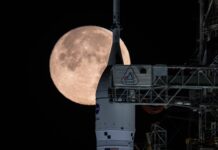
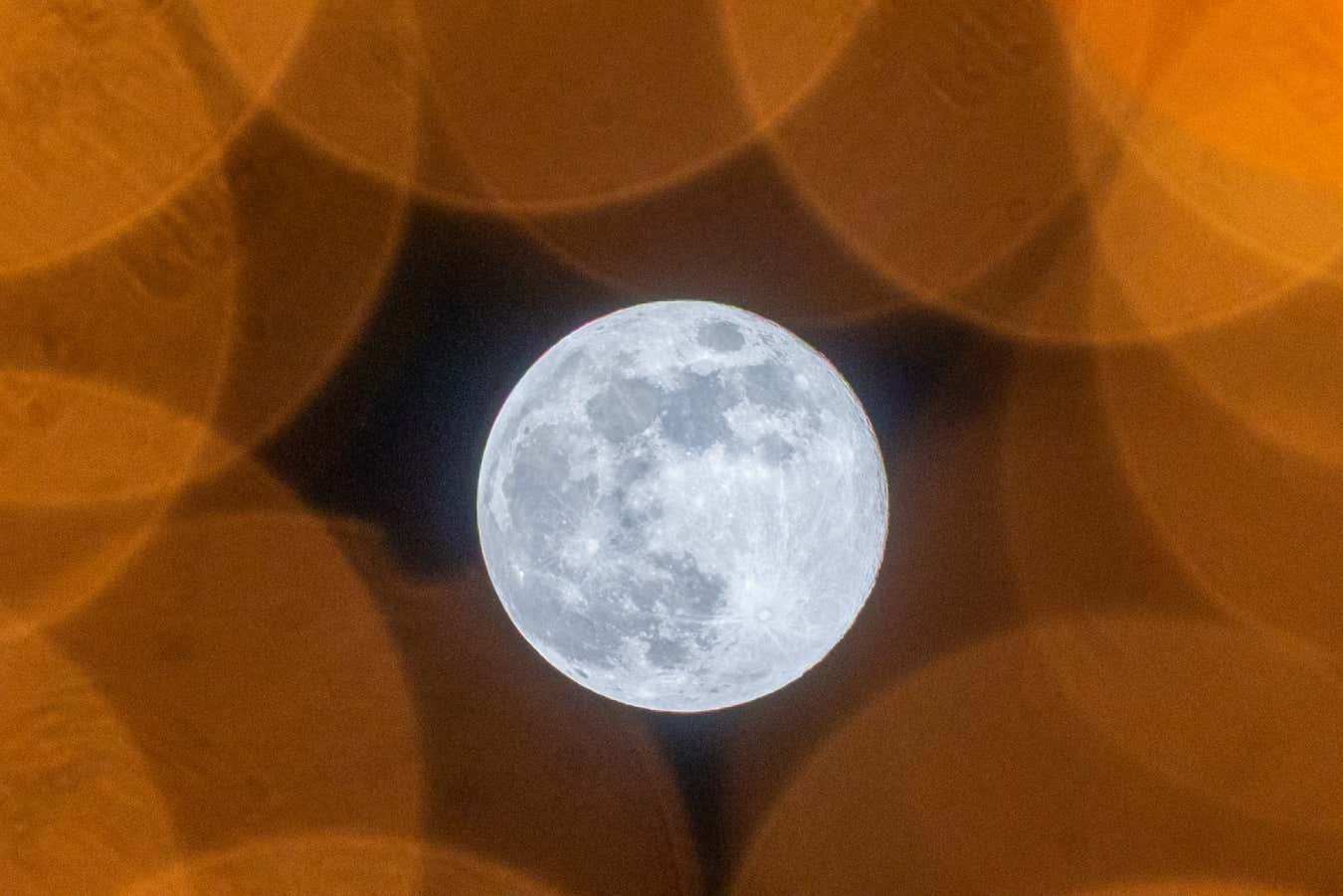
Christopher Cokinos’ Still as Bright provides a historical and cultural lens on humanity’s fascination with the moon. From ancient myths to Galileo’s telescopic observations, the book traces our evolving relationship with Earth’s satellite. Timed with the Artemis II mission, it serves as a reminder of the moon’s enduring power to inspire wonder and scientific inquiry.
The Magic Above Us
Lucy Rogers’ Up blends scientific curiosity with personal adventure. The book explores the beauty and mystery of the atmosphere, from kite markets in India to bat migrations in Borneo. Rogers, an engineer with a passion for flight, grounds her wonder in rigorous observation, inviting readers to look up and rediscover the magic of the world above.
Chemistry: The Invisible Force
Ijeoma Uchegbu’s Chain Reaction reminds us that chemistry underpins every aspect of life. From DNA to pharmaceuticals to the persistent threat of “forever chemicals,” the book highlights the power and complexity of molecular interactions. It’s a call to appreciate the science that holds our chaotic world together.
The Rise of Evidence-Based Policy
Helen Pearson’s Beyond Belief charts the growing movement to base policy on scientific evidence rather than opinion. The book examines how data-driven decision-making is transforming fields from policing to education, challenging conventional wisdom and pushing for more effective interventions. This is a critical examination of how evidence can – and should – shape the future of governance.
These books collectively represent a moment of reckoning. They force us to confront the limits of human understanding, the fragility of our ecosystems, and the enduring power of curiosity. They are not just explorations of science; they are reflections on what it means to be human in an increasingly complex world.