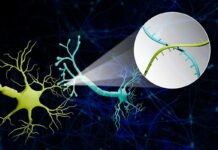
For decades, neuroscientists viewed the brain’s communication infrastructure primarily through the lens of neurons—the electrically active cells that fire signals to one another. However, a groundbreaking study published in Nature on April 22 has uncovered a previously unknown, vast network of connections that operates independently of these familiar neural pathways. This hidden system, composed of star-shaped support cells called astrocytes, links distant brain regions in flexible and dynamic ways, suggesting a fundamental shift in our understanding of how the brain organizes information and resources.
Beyond Support: The Rise of Astrocytes
Astrocytes were historically dismissed as mere “housekeeping” cells. Their primary role was thought to be supportive: feeding neurons, clearing away metabolic waste, and maintaining the chemical environment necessary for neural function. While essential, this view cast them as passive infrastructure rather than active participants in brain function.
Recent research, however, has challenged this passive narrative. Scientists are increasingly recognizing that astrocytes play a critical role in information exchange. The new study by Melissa Cooper, a neuroscientist at New York University’s Grossman School of Medicine, and her colleagues provides the first clear visual map of how these cells connect across the brain, revealing a structure that is both widespread and highly selective.
Mapping the Invisible Network
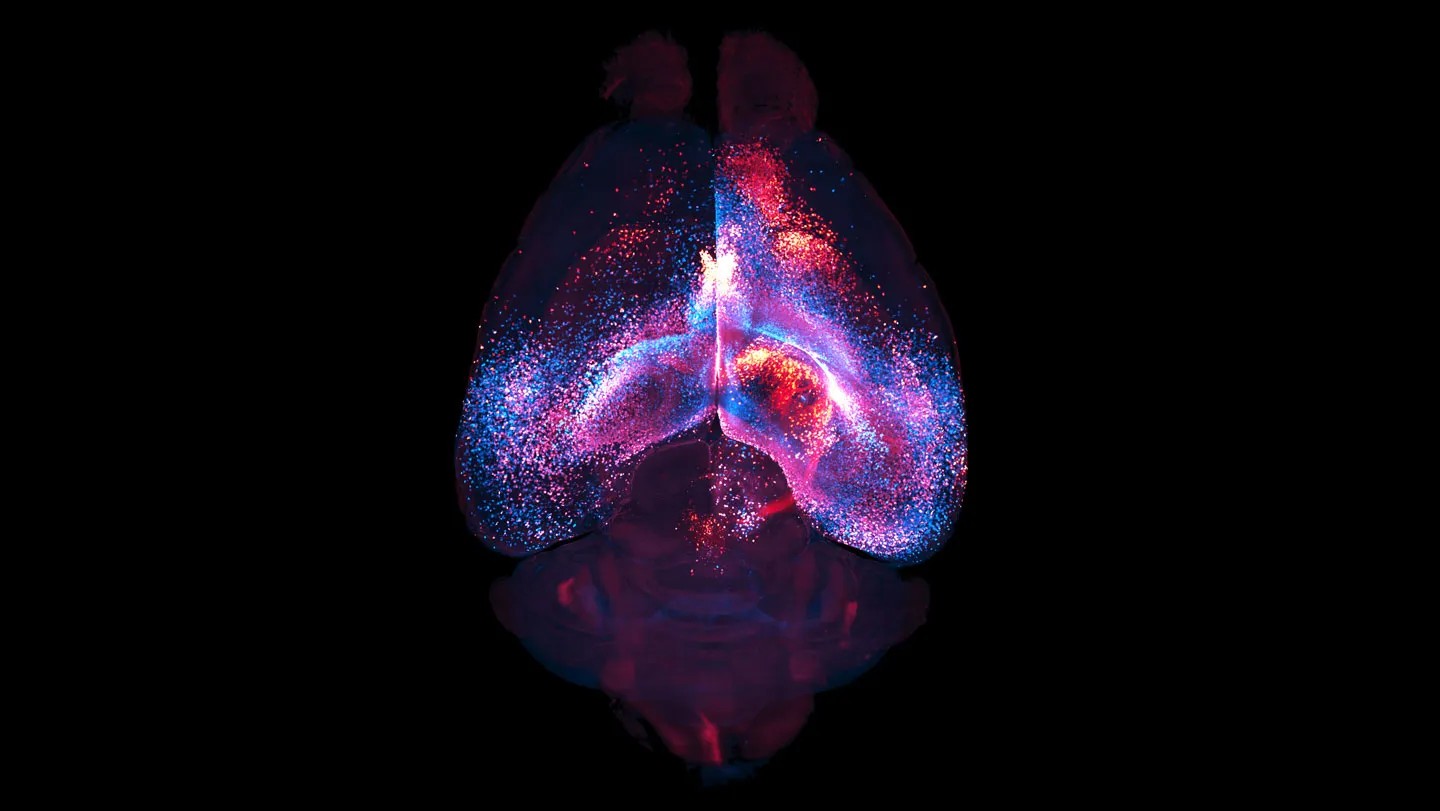
To visualize these elusive connections, the research team employed a clever chemical technique. They introduced a fluorescent tag into the brains of mice, marking molecular cargo as it moved through gap junctions —tiny pores that connect adjacent astrocytes. By clearing the brain tissue to make it transparent, the scientists could use microscopes to trace the paths these molecules took, effectively mapping the “traffic flow” of the astrocyte network.
The results overturned the long-held assumption that astrocytes tile the brain in a uniform, local pattern. Instead, the mapped networks resembled “galaxies across the brain,” featuring long-range connections that link specific regions. Crucially, these links often occur in areas where neurons do not directly communicate, suggesting that astrocytes facilitate dialogue between brain zones that were previously thought to be isolated from one another.
“It means that astrocytes are directly linking these brain regions that we didn’t know could talk to one another before,” explains Cooper.
A Dynamic System That Adapts
One of the most significant findings is that this astrocyte network is not static; it is plastic and responsive to environmental changes. In experiments where mice had whiskers on one side trimmed—reducing sensory input to the corresponding brain area—the astrocyte network on the opposite side of the brain physically remodeled itself. The connections shifted and the network shrank in response to the reduced activity.
This adaptability suggests that astrocytes may act as a resource management system. Bess Frost, a neurobiologist at Brown University who was not involved in the study, compares the system to the underground fungal networks that connect trees in a forest. Just as mycelium monitors the health of trees and transports nutrients where they are needed most, astrocyte networks may monitor neuronal health and allocate energy or nutrients dynamically across the brain.
Implications for Brain Health and Disease
The discovery of this flexible, long-range communication system raises urgent questions about its role in neurological disorders. Conditions such as Alzheimer’s disease, traumatic brain injury (TBI), and stroke have long been linked to dysfunction in gap junctions. If astrocytes serve as a critical conduit for maintaining brain health and resource distribution, their malfunction could contribute to the progression of these diseases.
Conversely, understanding how these networks remodel themselves could open new avenues for therapy. If scientists can learn how to stimulate or protect these connections, they might be able to enhance the brain’s ability to heal after injury or compensate for neurodegeneration.
The Road Ahead
While the study used mice, experts believe the findings are likely applicable to humans. “I would be completely shocked if humans do not have the same thing going on in their brains,” Frost notes. However, a major challenge remains: there is currently no straightforward way to visualize these networks in living humans. Future research will need to develop non-invasive imaging techniques to confirm the presence and behavior of these networks in people.
This discovery marks a pivotal moment in neuroscience. It reveals a “big missing piece” of brain architecture that has been present all along but invisible to previous methods. As researchers begin to decode the functions of this astrocyte subway system, they may finally answer long-standing questions about how the brain integrates information, maintains homeostasis, and responds to disease.
In summary, the identification of long-range astrocyte networks fundamentally reshapes our model of brain connectivity, highlighting a dynamic support system that may hold the key to understanding—and potentially treating—major neurological disorders.