


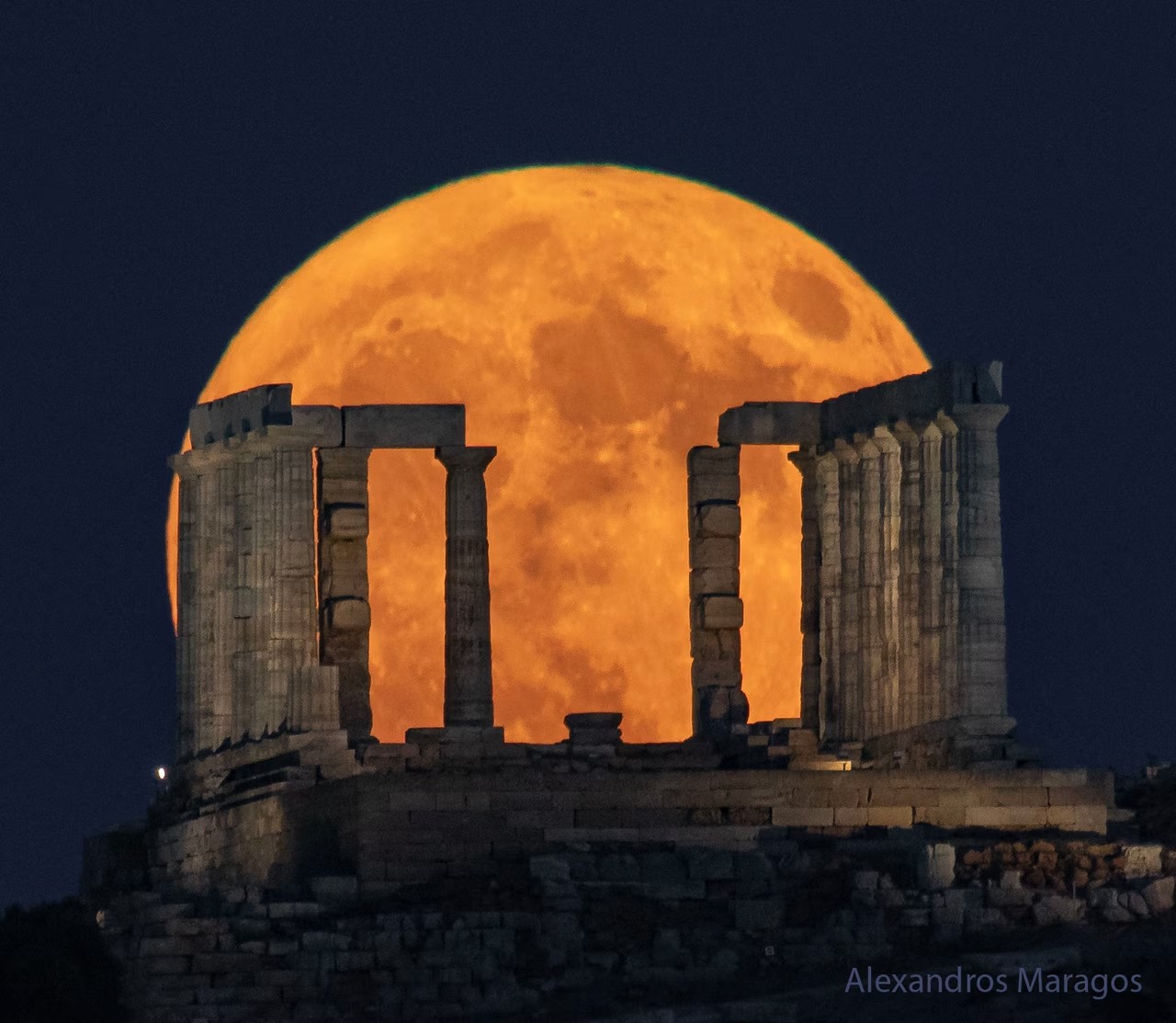
People spent the night staring upward. The internet was buzzing. Everyone wanted to catch a glimpse of the “Super Blue Moon.” It sounds like a cosmic event reserved for sci-fi movies. It promises something rare. Something otherworldly.
But here is the thing. The hype is inflated. The reality is much more mundane, and honestly, a bit of a letdown if you’re expecting magic.
The Truth About a Supermoon
First, let’s decode the “Super” part. It’s not a brand name. It’s orbital mechanics.
A supermoon happens when a full moon coincides with perigee. That’s the point in the moon’s elliptical orbit where it sits closest to Earth. Simple physics.
Because it’s closer, it looks bigger. Estimates say it appears about 14% larger. It also shines roughly 30% brighter.
But does your eye see that difference? No. Not really.
The human eye is terrible at detecting small changes in brightness and size against a dark sky. To the naked observer, a supermoon and a normal full moon look almost identical. The difference is measurable by instruments. It’s negligible to the casual stargazer.
The Blue Moon Myth
Now for the color. This is where the terminology gets tricky.
A blue moon does not turn blue. The sky doesn’t filter the light. There’s no atmospheric phenomenon turning the satellite into a sapphire.
The phrase is a misnomer. It refers to timing, not hue.
There are two definitions for a blue moon, and they don’t always align with public expectations.
- The Calendar Definition: The second full moon in a single calendar month.
- The Seasonal Definition: The third full moon in an astronomical season that has four full moons, instead of the usual three.
The event on August 19 followed the seasonal definition. A season typically has three full moons. Sometimes, because of the mismatch between the lunar month (~29.5 days) and the calendar season (~91 days), a fourth full moon squeezes in. The third one becomes the “blue” moon.
It’s a linguistic glitch from the early 20th century that stuck. It has nothing to do with color.
Why We Care Anyway
So why the excitement?
If the size difference is invisible and the color is imaginary, why did thousands of people look up?
Attention.
The media machinery loves a hook. “Super Blue Moon” sells clicks. It drives engagement. It gets people off their couches and into their yards.
And that’s not a bad thing.
The agitation around this phenomenon may be exaggerated, but it successfully highlights our natural satellite.
For many, it’s the only night they’ll bother to look up. It’s an excuse to appreciate the night sky. It’s a shared cultural moment. People take photos. They share them. They feel connected to something larger than their daily grind.
The science is dry. The optics are tricky. But the spectacle? That’s real.
Next time you hear about a celestial event with a flashy name, check the mechanics. You might find the reality is less magical, but no less beautiful for it.
The moon doesn’t care what we call it
If you’re still relying on traditional feeds to keep up with the bleeding edge of science and technology, you’re probably already three steps behind. The news cycle doesn’t wait for your daily digest. It moves in real-time, often breaking before you’ve even finished your morning coffee. That’s why shifting your consumption habits to faster, more direct channels isn’t just a convenience. It’s a necessity for anyone who wants to stay ahead of the curve without wading through hours of cluttered content.
Why WhatsApp and Google News Matter Now
The landscape of digital news consumption has shifted dramatically. Algorithms on major platforms often prioritize engagement over accuracy, burying significant scientific breakthroughs under clickbait and sensationalism. By following dedicated sources on WhatsApp and Google News, you create a curated pipeline. You get the facts first. No noise. No algorithmic manipulation designed to keep you scrolling for ads.
Consider the speed of discovery. When a new paper drops on arXiv, or a major tech company announces a breakthrough in quantum computing, the information travels instantly on these platforms. You receive alerts directly to your phone. This immediacy allows you to react, share, or dive deeper before the mainstream media even has time to file their story. It’s about control. You decide what enters your attention economy.
How to Set Up Your Feed
Getting started is surprisingly straightforward, but it requires a bit of intentional setup to avoid information overload.
- Join the Right WhatsApp Channels : Look for official channels from reputable science publishers, university research departments, or trusted tech journalists. Avoid random groups that thrive on speculation. Stick to sources that verify their claims.
- Leverage Google News Alerts : Go beyond just following categories. Set up custom alerts for specific keywords like “CRISPR,” “fusion energy,” or “semiconductor supply chain.” This ensures you get notified only when relevant, high-impact stories break.
- Verify Before Sharing : Speed is useless if it’s built on misinformation. Always cross-reference the initial alert with the original source. Did the study actually say that? Or is the headline misleading? This step is critical in an era where viral falsehoods spread faster than truth.
The Real Impact of Staying Informed
Why does this matter beyond just being “in the know”? Because scientific and technological developments directly impact your life. Understanding the nuances of climate technology, for example, isn’t just academic. It influences policy, investment, and even your daily choices. When you’re informed, you’re empowered to make better decisions.
You can spot the difference between genuine innovation and hype. You can engage in smarter conversations. You can advocate for evidence-based policies. In a world where misinformation is a public health risk, accurate, timely information is a defensive tool. It protects you from manipulation. It keeps you grounded in reality.
The speed of information is no longer a luxury. It’s a survival skill in the modern age.
Don’t wait for the evening news to tell you what’s happening. The future is being written right now, in labs and server rooms across the globe. If you’re not paying attention in real-time, you’re missing the most important part of the story. And that’s a risk you can’t afford to take.


