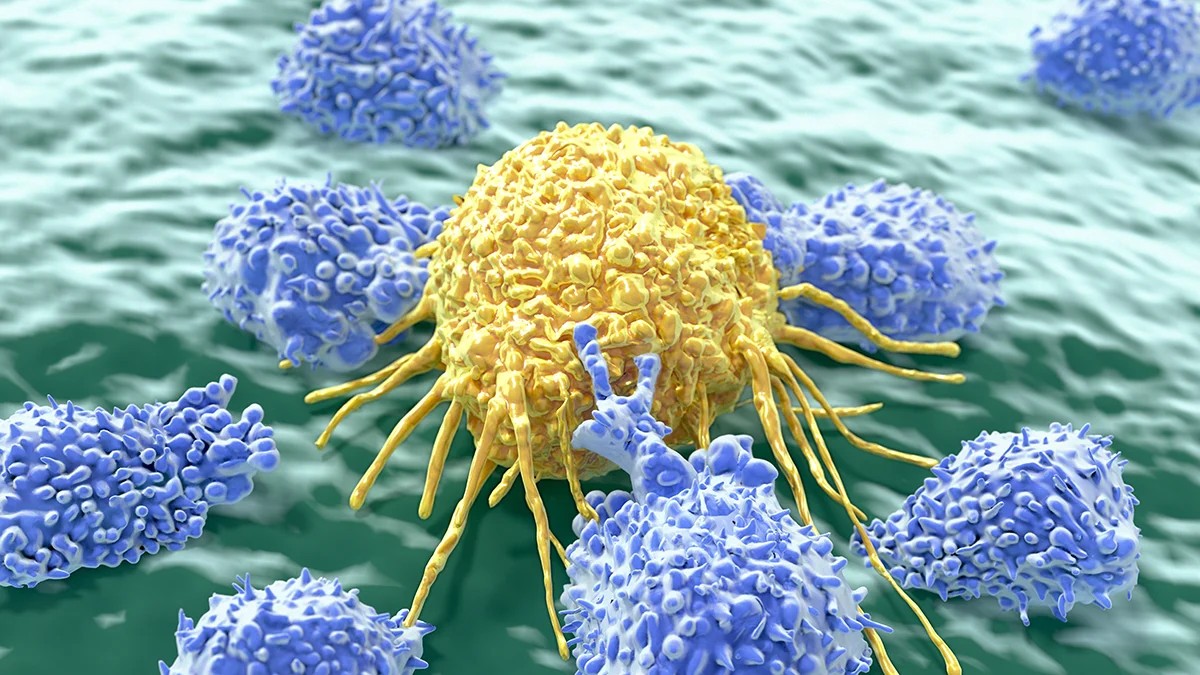
Riboflavin. Or as the nutrition label calls it, vitamin B2.
It’s the stuff keeping your skin intact. Metabolizing fats. Doing the heavy lifting so your cells don’t just stop. A normal, good, boring process.
But new research flips the script.
Cancer cells don’t just tolerate this vitamin. They armor up with it. Specifically, they use riboflavin to block a specific, brutal form of cell death known as ferroptosis.
“Vitamin B2 plays a protective role for cancer cells against ferroptosis.”
— Vera Skafar, University of Würzburg
Here’s the mechanics. It’s ugly and precise.
Ferroptosis happens when lipid damage rips through the cell membrane. The cell gets marked. Scheduled for waste disposal. Controlled demolition.
Usually, cancer hates this.
A team at the University of Würzburg found that starving cancer cells of B2 makes them squishy. Vulnerable. Suddenly, the ferroptosis trigger works again. The shield drops.
How does the shield work?
There’s a protein named FSP1 (ferroptosis suppresser protein 1). It’s been the darling of recent studies, alongside another guy called GPX4, acting as bodyguards for the cell membrane.
But FSP1 needs fuel.
The researchers screened thousands of genes. They found FSP1 relies heavily on RFK. That’s the gene that processes vitamin B2. No RFK function, no usable B2, no fuel for the shield.
The biology holds up. The pathway is clear. B2 feeds FSP1 via RFK. Cancer survives.
But wait. There’s a cheat code.
In the petri dish, the team dropped a compound called roseoflavin. It’s a B2 mimic. A twin. But a traitor.
Roseoflavin slips into the cell. The cancer cell takes it for real riboflavin. Except it doesn’t help FSP1. It disrupts the defense. In lab cells, this little molecule promoted ferroptosis like nothing else.
So the idea pops up. Obvious to some, insane to others.
Use roseoflavin (or a custom variant) to trick cancer. Let it drink the fake B2. Let its defenses collapse from the inside out. While the rest of your body eats dairy, eggs, and spinach for real B2 without a second thought.
“A previously underappreciated approach… to enhance ferroptosis.”
The study doesn’t say stop taking B2. Obviously not. You need it to exist. The problem is the overlap. The same mechanism clearing biological waste also protects the tumor if the conditions align.
Tricky.
We’re aiming for a sniper shot. Not a blanket.
Right now, it’s early days. But the implications bleed beyond oncology. Ferroptosis is just oxidative decay. Rust for cells. It ties into strokes. Neurodegenerative disease. Tissue damage after a heart attack.
Is the shield helping cancer cells survive? Yes. But is it stopping natural cell death elsewhere?
“Pathological processes in neurodegeneration… tissue damage.”
We are just scratching the surface of this rust. B2 is involved. We just didn’t see it. Or maybe we did. Maybe we were just looking for poison.