Researchers at Washington University have achieved a significant breakthrough in Alzheimer’s research: a single injection of gene therapy reduced amyloid plaques – a hallmark of the disease – by roughly half in mice, even those already exhibiting advanced plaque buildup. This novel approach, borrowing from cancer immunotherapy, genetically modifies brain cells to aggressively clear harmful proteins, offering a potentially more effective and less invasive treatment than current options.
The CAR-Astrocyt Immunotherapy
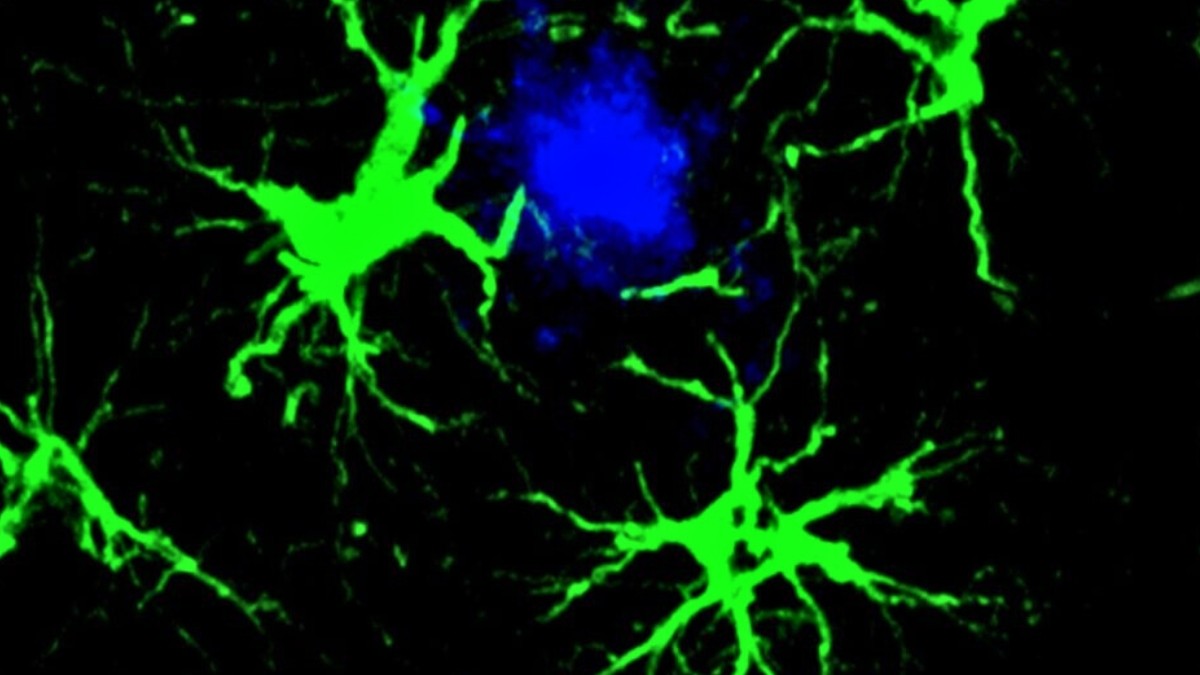
The team engineered astrocytes, star-shaped cells in the brain responsible for maintaining its environment, to act as “super cleaners” targeting amyloid beta proteins. This was accomplished using a harmless virus to deliver a gene coding for a chimeric antigen receptor (CAR) directly into the astrocytes. Once reprogrammed, these cells became singularly focused on eliminating amyloid beta plaques.
Why this matters: Current Alzheimer’s treatments, like monoclonal antibodies, require frequent, high-dose infusions and carry risks such as brain swelling. This new immunotherapy could potentially offer a long-lasting solution with a single injection, reducing both burden on patients and side effects.
Study Results: Prevention and Reduction
The study divided mice genetically predisposed to developing Alzheimer’s-like plaques into two groups: young mice before plaque formation and older mice with existing plaques. Both groups received the CAR-astrocyte gene therapy via a single injection.
- Prevention: Young mice treated before plaque development remained entirely free of amyloid beta accumulations by six months of age.
- Reduction: Older mice with existing plaques showed a roughly 50% reduction in plaque volume after three months, compared to the control group.
“Consistent with antibody drug treatments, this new CAR-astrocyte immunotherapy is more effective when given in the earlier stages of the disease,” notes co-author David Holtzman. “But where it differs…is in the single injection that successfully reduced the amount of harmful brain proteins in mice.”
Future Implications: Beyond Alzheimer’s
While human trials are still years away, this research represents a significant step forward in neurodegenerative disease treatment. The team emphasizes the need for further optimization and safety testing, but the potential extends beyond Alzheimer’s. The CAR-astrocyte approach could theoretically be adapted to target other brain threats, including tumors.
“This study marks the first successful attempt at engineering astrocytes to specifically target and remove amyloid beta plaques…These results open up an exciting new opportunity to develop CAR-astrocytes into an immunotherapy for neurodegenerative diseases and even brain tumors,” says senior author Marco Colonna.
This method could ultimately change how we approach brain disease, shifting from chronic management to potential long-term correction.