The James Webb Space Telescope (JWST) has captured the clearest image yet of the environment surrounding a supermassive black hole, offering a key new understanding of how these cosmic engines grow. The observations, focused on the Circinus galaxy 14 million light-years away, reveal that the intense infrared glow previously attributed to powerful outflows actually originates from a dense disk of gas and dust spiraling into the black hole. This finding challenges long-held assumptions about how active black holes function and their role in galaxy evolution.
Unveiling the Black Hole’s Inner Workings
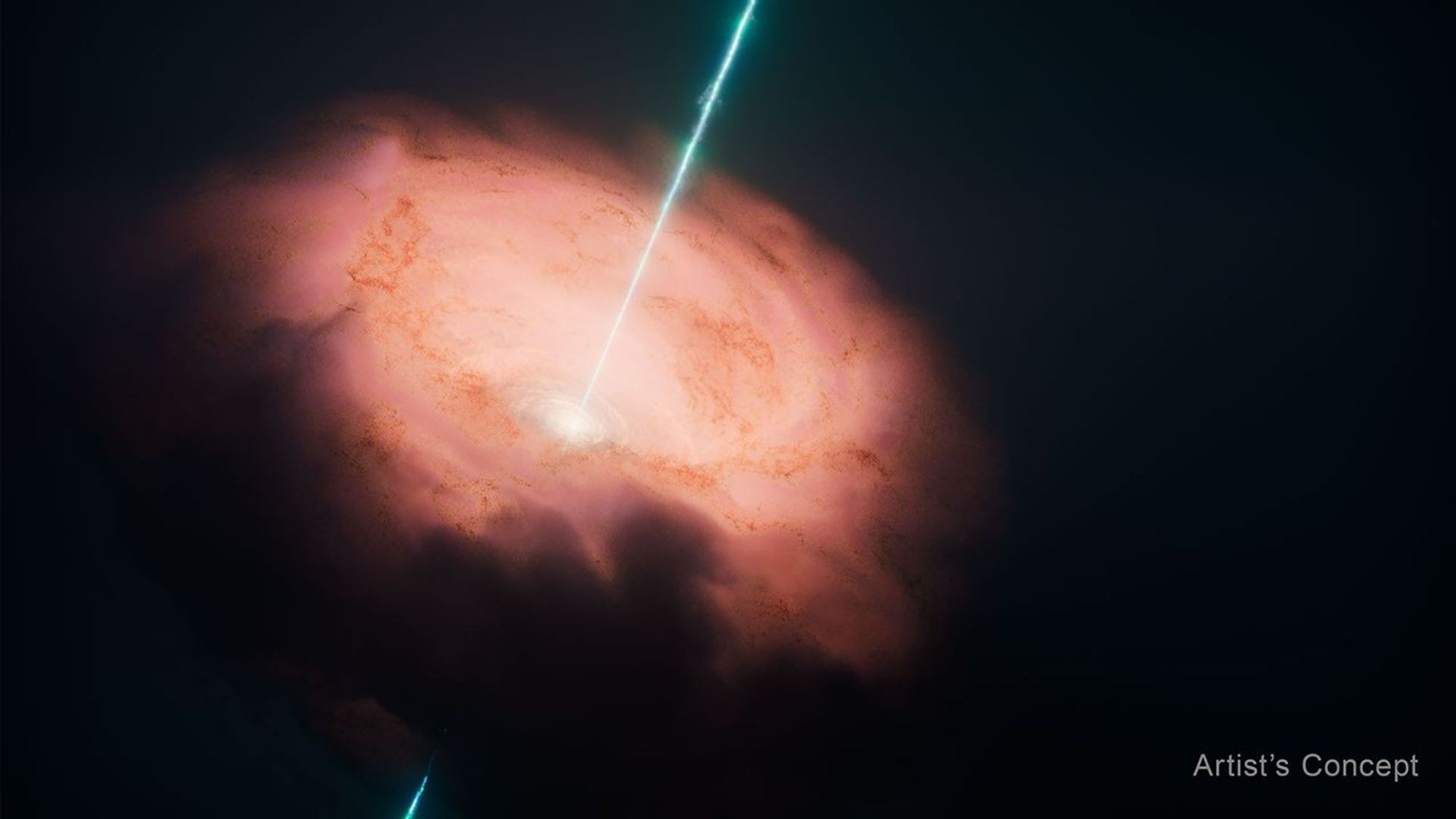
For decades, astronomers believed that much of the infrared radiation near active black holes came from material being violently ejected outwards. However, JWST’s high-resolution infrared imaging has now shown that the dominant source of this energy is a flattened disk of hot dust and gas directly feeding the black hole. This disk, known as a torus, comprises approximately 87% of the observed infrared emission.
The team, led by Enrique Lopez-Rodriguez of the University of South Carolina, used a specialized high-contrast mode on JWST, effectively doubling the telescope’s resolving power from 6.5 to 13 meters. This allowed them to isolate and map structures at the galaxy’s center that were previously hidden by the surrounding dust. The result: a detailed view of the black hole’s accretion disk, acting as the primary reservoir of material being drawn inward.
Challenging Old Models
Previous telescopes lacked the resolution to distinguish between the light emitted by the accretion disk, the dusty torus, and outflows, blending them into a single unresolved source. JWST’s ability to separate these components is transformative. Only about 1% of the infrared emission comes from a faint outflow, indicating that black hole outflows play a minor role in the overall energy budget compared to the infalling material. The remaining 12% originates from dust further out, heated by the black hole’s radiation.
Implications for Galaxy Evolution
Understanding black hole growth is fundamental to understanding how galaxies evolve. As black holes feed, they can release tremendous energy, which either suppresses or stimulates star formation and shapes the overall structure of the galaxy. By clearly separating the material falling inward from the dust being pushed outward, these new observations provide critical insight into this process.
“We need a statistical sample of black holes, perhaps a dozen or two dozen, to understand how mass in their accretion disks and their outflows relate to their power,” Lopez-Rodriguez explained.
The research team plans to apply this technique to other nearby black holes, aiming to build a comprehensive picture of how these cosmic giants grow and influence their host galaxies. The dusty torus observed in Circinus is believed to be common among active black holes, making this a vital step toward unlocking the mysteries of galaxy evolution.