A re-examination of 250-million-year-old fossils from Western Australia has uncovered a more diverse community of early marine amphibians than previously known. The discovery, detailed in the Journal of Vertebrate Paleontology, shows that these aquatic predators rapidly diversified and spread across continents shortly after the catastrophic end-Permian mass extinction. This event, one of the deadliest in Earth’s history, paved the way for the rise of modern marine ecosystems at the dawn of the Age of Dinosaurs.
The Lost Fossils and Their Rediscovery
The original specimens, collected during expeditions in the 1960s and 1970s from the Kimberly region of Western Australia, were initially identified in 1972 as belonging to a single species: Erythrobatrachus noonkanbahensis. However, the original fossils were later lost, prompting a renewed search through museum collections in Australia and the United States. In 2024, researchers successfully located and reassessed the fragmented remains.
Two Distinct Predators: Erythrobatrachus and Aphaneramma
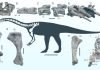
Detailed analysis, including high-resolution 3D imaging, revealed that the fossils actually represented at least two distinct types of trematosaurid temnospondyls: Erythrobatrachus and Aphaneramma. Erythrobatrachus was a larger, broader-headed predator reaching approximately 40 cm (16 inches) in length, likely an apex hunter in its environment. Aphaneramma, also around the same size, possessed a long, thin snout, suggesting it specialized in catching smaller fish. Both amphibians swam through the water column, occupying different niches within the same habitat.
Global Distribution and Rapid Evolution
What makes this discovery particularly significant is that Aphaneramma fossils have also been found in deposits of similar age in Svalbard (Norway), the Far East, Pakistan, and Madagascar. This suggests that these early marine tetrapods dispersed rapidly across interconnected supercontinents during the first two million years of the Mesozoic Era. The fossils provide concrete evidence that life recovered quickly after the end-Permian extinction, with amphibians filling predatory roles before the dinosaurs fully took over the seas.
The fossils confirm that the earliest marine tetrapods didn’t just survive the extinction but flourished, spreading across the globe in less than a million years.
These findings underscore the resilience of life in the face of catastrophe and provide crucial insight into the early evolution of marine ecosystems. The Australian trematosaurid remains demonstrate that the recovery from the end-Permian crisis was far more dynamic and geographically widespread than previously understood.