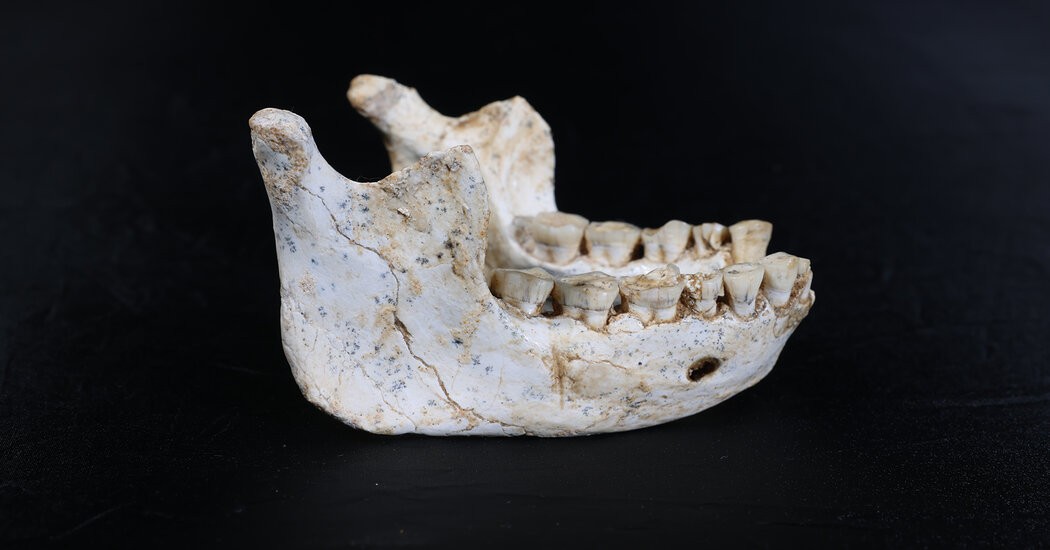
New discoveries in Morocco have pushed back the known timeline of human evolution by nearly 100,000 years, filling a major gap in our understanding of how Homo sapiens emerged. Fossils unearthed from a cave site near Casablanca, dating to approximately 773,000 years ago, provide crucial evidence about the period when modern humans began to diverge from other hominin species.
A Lost Period in Human History
For decades, paleontologists have struggled to piece together the evolutionary chain between earlier hominins and Homo sapiens. The African fossil record between 600,000 and one million years ago has been surprisingly sparse, leaving a critical period largely unrepresented. These newly discovered fossils—including jawbones, vertebrae, and teeth—fill that void, offering insights into a pivotal moment in human history.
The Grotte à Hominidés: A Prehistoric Snapshot
The fossils were found in Grotte à Hominidés, a cave that once served as a prehistoric den. The site’s location along the Atlantic coast provides a rare glimpse into the environment that shaped early humans. The area was a thriving ecosystem of wetlands, swamps, and savannas, teeming with wildlife: panthers, hippos, crocodiles, hyenas, and jackals all roamed this region. This suggests that early hominins adapted to a diverse and dynamic landscape.
Distinguishing the Remains
The remains are distinct from those found at the Jebel Irhoud site (300,000 years old), the previously oldest known Homo sapiens fossils. This means the Casablanca fossils represent an earlier, potentially transitional phase in human evolution. Researchers believe this period was when the African lineage split from Eurasian hominins, leading to the development of Neanderthals and Denisovans.
Why This Matters: Rethinking the Human Story
The scarcity of fossils from this era has been a major obstacle to understanding how modern humans evolved. These findings suggest that our evolutionary story is more complex than previously imagined, and that key adaptations may have occurred earlier than we thought. The fossils may help scientists refine existing theories on hominin migration patterns and the genetic factors that drove the emergence of Homo sapiens.
The discovery underscores the importance of continued paleontological exploration in Africa. The region holds the key to unlocking the secrets of human origins, and each new find brings us closer to a complete picture of our evolutionary past.