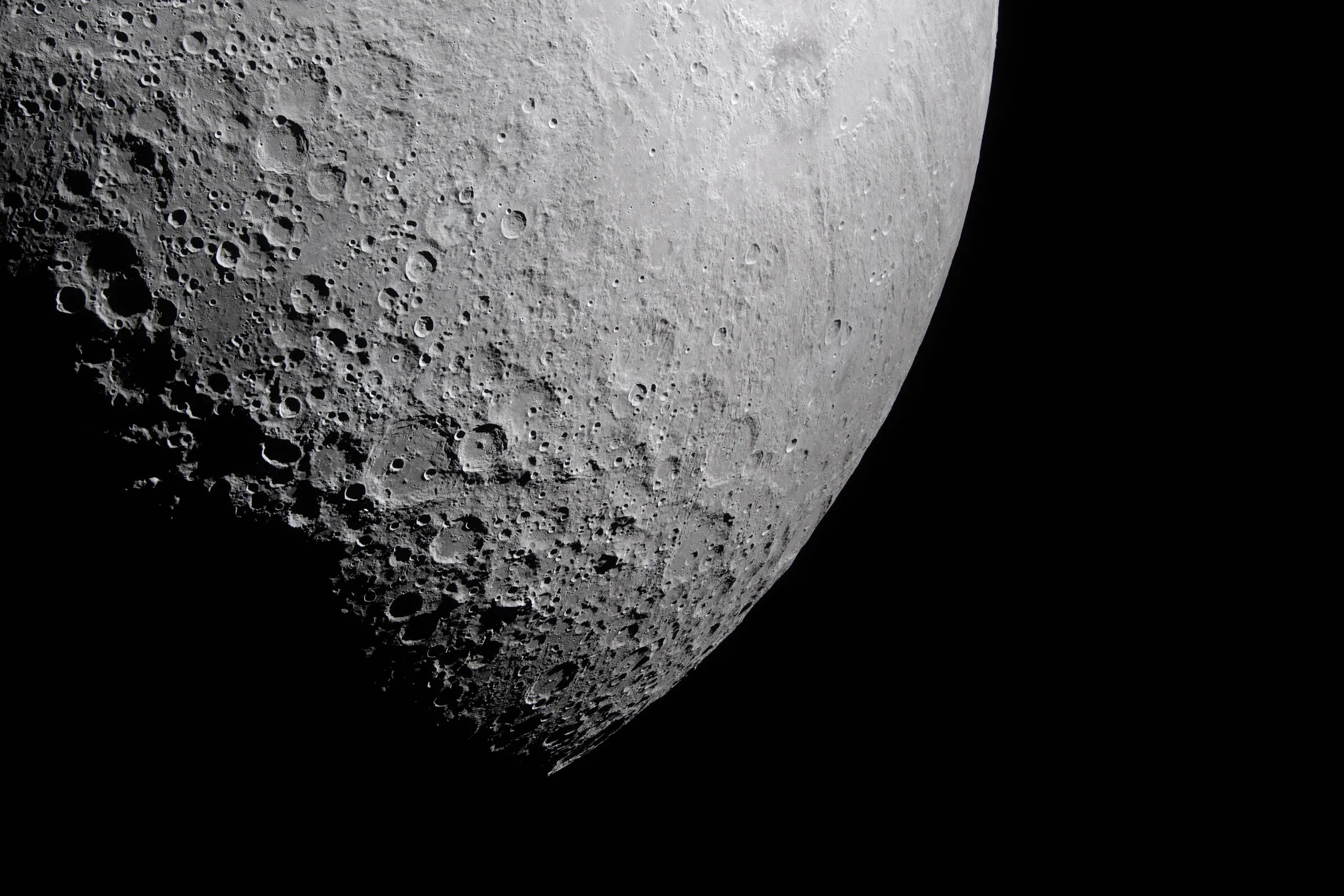
On April 6, 2026, the crew of NASA’s Artemis 2 mission captured a rare perspective of our lunar neighbor: a glimpse of the Moon’s far side. Taken from the Orion spacecraft during a lunar flyby, the image offers a window into a region of the Moon that remains hidden from Earth’s view.
Breaking a 50-Year Silence
The Artemis 2 mission marks a historic milestone in space exploration. Launched on April 1 and concluding on April 10, the mission sent four astronauts on a journey around the Moon, representing the first crewed lunar mission since the final Apollo mission in 1972.
During this voyage, the crew pushed the boundaries of human reach, traveling a distance of 252,756 miles (406,771 kilometers) from Earth—the farthest humans have ever ventured into deep space.
Understanding the “Far Side”
To understand why this photograph is significant, one must look at the mechanics of our lunar relationship. The Moon is tidally locked to Earth, a phenomenon where its rotation matches its orbital period. This results in a permanent orientation:
– The Near Side: The hemisphere that always faces Earth.
– The Far Side: The hemisphere that perpetually faces away from us.
While often colloquially referred to as the “dark side of the moon,” this is a scientific misnomer. The far side receives just as much sunlight as the near side; it is simply “dark” only in terms of visibility from our planet.
40 Minutes of Cosmic Silence
The capture of this image occurred during a period of profound isolation for the astronauts. As the Orion capsule passed behind the lunar mass, the Moon acted as a physical shield, blocking all radio signals between the spacecraft and mission control on Earth.
For approximately 40 minutes, the crew experienced total communication blackout. This photograph serves as a visual record of those silent minutes—a moment when the crew was physically and electronically severed from Earth, observing a landscape that remains one of the most mysterious frontiers in our solar system.
This image captures more than just lunar geography; it documents a moment of profound isolation and the first human steps toward long-term lunar exploration in over half a century.