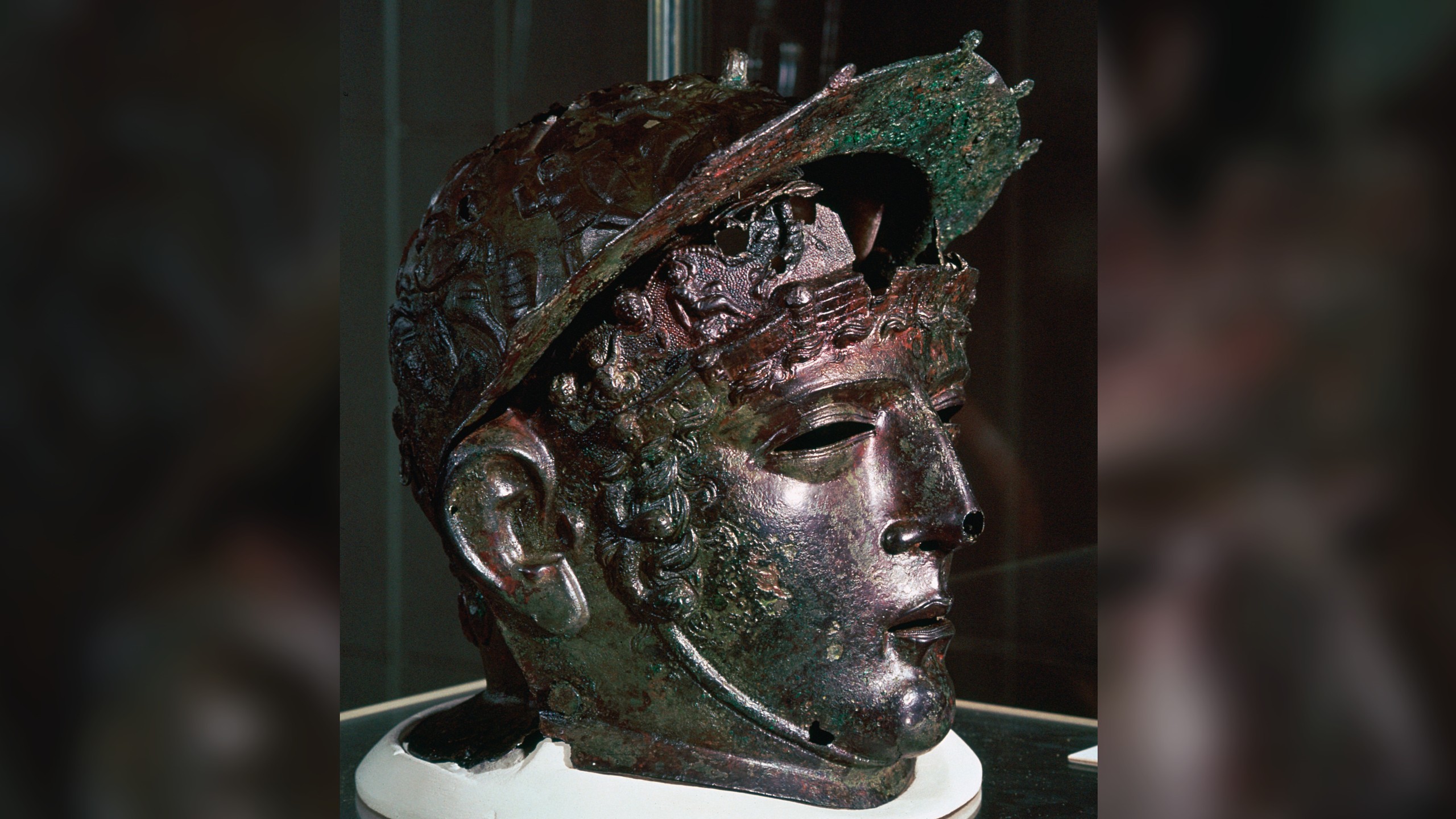
The Ribchester Helmet, discovered in England in 1796, is no ordinary piece of Roman military equipment. This bronze helmet, complete with an ornate face mask, offers a rare glimpse into the spectacle and extravagance of Roman cavalry displays. The find, unearthed by a young boy in a field near the Roman fort of Bremetennacum Veteranorum (modern Ribchester), has been a fixture in the British Museum since 1813.
A Helmet Beyond Practicality
The helmet consists of two key parts: a decorated bowl and the striking, full-face mask. The mask, weighing approximately 1.3 kilograms, depicts a beardless young man with an impassive expression. The design is far from functional: tiny eye and nostril holes suggest it was never intended for actual combat. Instead, the mask’s purpose was likely ceremonial or for display.
The bowl itself is a masterpiece of Roman craftsmanship. It depicts a scene of cavalry overpowering infantry in battle – six horsemen triumphing over eleven foot soldiers, with fallen enemies already littering the ground. The inclusion of victory symbols like palmettes, captured shields, and spears reinforces the theme of dominance. Streamer attachments, indicated by holes in the helmet’s neck, further suggest a deliberate emphasis on visual presentation.
Medusa, Military Honors, and Mock Battles
The face mask’s design adds another layer of complexity. The youth’s curling hair transforms into serpent heads – a clear reference to the myth of Medusa and the Gorgons, a common motif in Roman military iconography. Crowning his head is the corona muralis, a city-wall shaped diadem that was one of Rome’s highest military honors.
The true purpose of the helmet was revealed in a 2019 study by archaeologists Jamie Kaminski and David Sim. They propose that it was used in hippika gymnasia, elaborate cavalry tournaments that combined military training with public entertainment. These events involved mock battles between elite riders dressed in flamboyant gear, often imitating Greek, Trojan, or Amazonian warriors.
Forgotten Hoard and Accidental Discovery
The Ribchester Helmet was likely stored with other military equipment at Bremetennacum Veteranorum, possibly awaiting future use or eventual recycling. The fort was abandoned in the late 2nd century, leaving the hoard buried for over 1,700 years until a curious boy stumbled upon it.
The Ribchester Helmet stands as a remarkable testament to Roman military culture. It’s not just a piece of armor; it’s a symbol of status, spectacle, and the performative side of Roman warfare. The helmet’s impracticality underscores that it was designed not to win battles, but to impress audiences with the power and prestige of the Roman army.