Paleontologists have identified a previously unknown species of Spinosaurus, the massive, fish-eating dinosaur, marking the first definitive discovery of a new Spinosaurus in over a century. The new species, named Spinosaurus mirabilis, lived approximately 95 million years ago during the Cretaceous period.
Discovery in the Sahara Desert
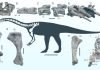
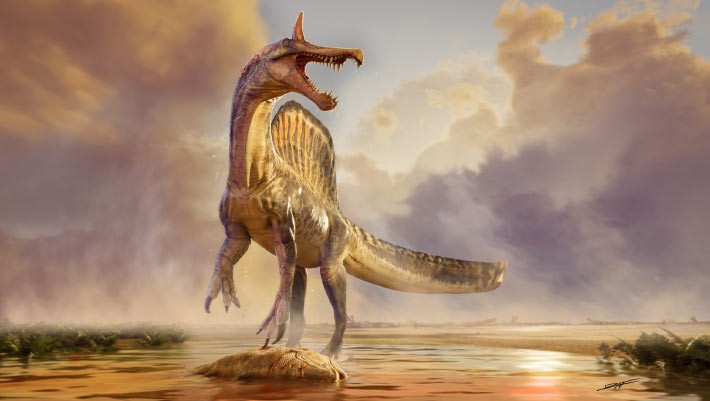
The fossils were unearthed by a team led by University of Chicago Professor Paul Sereno in the remote Jengueb fossil area of Niger, deep within the central Sahara. The most notable feature of Spinosaurus mirabilis is a dramatically large, scimitar-shaped crest atop its skull – a structure unlike anything previously seen in this group of dinosaurs.
“The scale of this crest was so unexpected that we initially overlooked its significance,” researchers explained, recalling the 2019 excavation. Later, in 2022, the team uncovered two additional crests, confirming the uniqueness of the species. The crest appears to have been covered in keratin, and likely displayed bright coloration during the dinosaur’s lifetime.
Challenging Existing Theories
The discovery is significant because it challenges prevailing assumptions about spinosaurid habitats. Until now, most Spinosaurus fossils came from coastal regions, leading scientists to believe these dinosaurs may have been largely aquatic predators.
However, the Niger site is located between 500 and 1,000 kilometers from any ancient shoreline. This suggests that Spinosaurus mirabilis thrived in a forested inland environment with extensive rivers. Researchers propose that this species was adapted to wading in shallow water, ambushing large fish. Professor Sereno describes it as a “hell heron” – a large, sturdy predator capable of stalking prey in both deep and shallow waters.
The findings were published today in the journal Science. The discovery represents a critical step in understanding the evolution of spinosaurid dinosaurs and their adaptability to diverse environments.
The discovery of Spinosaurus mirabilis adds another piece to the puzzle of these ancient predators, demonstrating that they were not confined to coastal habitats as previously thought. This suggests spinosaurids were more versatile than assumed, capable of thriving in a broader range of ecosystems.