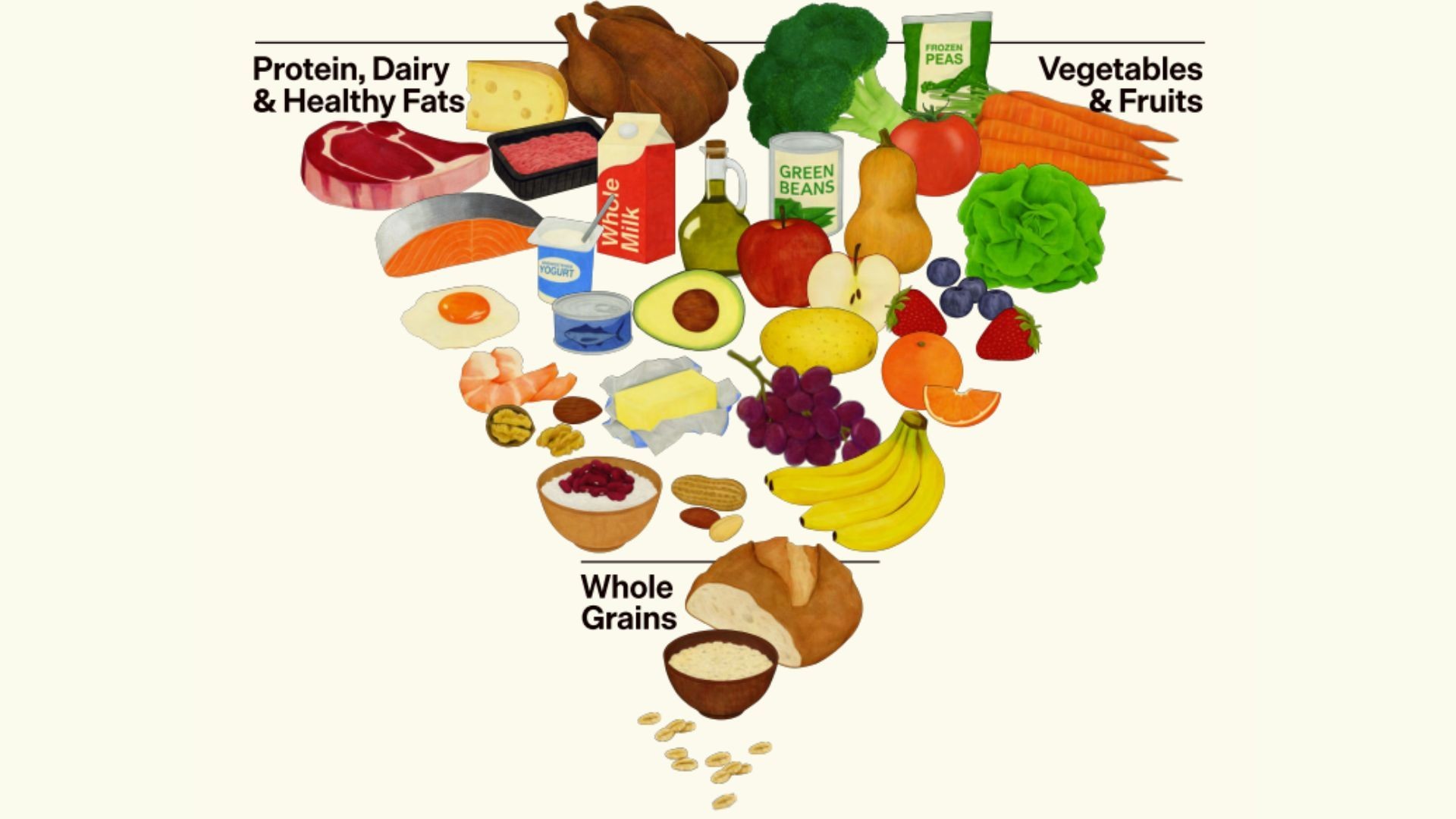
The U.S. government has dramatically overhauled its official dietary advice, replacing the 2011 MyPlate guide with a new, inverted food pyramid that emphasizes high protein intake, full-fat dairy, and even traditional saturated fats like beef tallow. Released on January 7th by the Departments of Agriculture and Health and Human Services, the guidelines mark a significant departure from previous recommendations while retaining some established principles.
The New Food Hierarchy
The “New Pyramid” visually prioritizes meats, dairy, and what officials now classify as “healthy fats” at the top, alongside fruits and vegetables. Whole grains occupy the base, suggesting a reduced role in the standard American diet. This contrasts sharply with MyPlate, which allocated equal visual space to all food groups, encouraging balanced portions. The change in emphasis reflects a growing debate over optimal nutrition, with some experts arguing that current guidelines have failed to address rising obesity and related health crises.
Protein Intake Surge & Fat Reconsideration
The updated guidelines recommend a baseline protein intake of 1.2 to 1.6 grams per kilogram of body weight – a substantial increase from the previous 0.8 grams for average adults. For a 150-pound individual, this translates to a jump from roughly 54 to over 108 grams of daily protein. This shift suggests a recognition of protein’s role in satiety, muscle maintenance, and metabolic health.
The guidelines also re-evaluate fats, listing beef tallow, butter, and olive oil alongside healthier options like avocados and nuts. While still advising moderation in saturated fat consumption (limiting it to 10% of daily calories), the inclusion of traditional fats signifies a move away from blanket demonization and toward a more nuanced understanding of dietary lipids.
Controversy & Scientific Backlash
The release of these guidelines was delayed for months after Health Secretary Robert F. Kennedy Jr. rejected initial recommendations from a 20-person scientific advisory committee, which favored plant-based diets. Critics, including Harvard epidemiologist Walter Willett, argue that the meat-heavy focus will exacerbate health problems and environmental concerns. Marion Nestle, a New York University nutritionist, bluntly stated that the guidelines essentially “recommend heavily meat-based diets.”
Implications & Federal Programs
These national guidelines directly influence school lunches, military meals, and federal assistance programs like SNAP. The White House has announced a two-year phased implementation across these sectors, meaning the new recommendations will soon shape food access for millions of Americans. The vague definition of “highly processed” foods further complicates matters, leaving room for interpretation and potential loopholes.
The updated guidelines reflect a bold, if controversial, realignment of nutritional priorities. Whether this shift leads to improved public health or further dietary confusion remains to be seen, but the debate over optimal nutrition is now undeniably more urgent.